If wholegrains are your priority
You want wholegrain flakes and fibre to count for more in your choice than chocolate or crunch. Manger Bouger recommends choosing wholegrain or semi-wholegrain starchy foods when they are made from cereals.


To choose a wholegrain muesli while keeping breakfast sweet, start by checking the ingredients, then compare fibre, sugars and fat per 100 g. A flake-based muesli or a fruit recipe with no added sugar may suit different tastes; neither claim is a substitute for checking the nutritional information and allergens for the specific product you choose.
You want wholegrain flakes and fibre to count for more in your choice than chocolate or crunch. Manger Bouger recommends choosing wholegrain or semi-wholegrain starchy foods when they are made from cereals.
You like fruit in your bowl, but want to distinguish a recipe with “no added sugar” from a sugar-free product and compare the figures per 100 g.
You need to check for gluten, milk, nuts, sesame or soya. The word “wholegrain” alone is not enough to establish whether a recipe suits your dietary requirements.
For a sweet breakfast, start with your main priority, then check the other details on the label of the exact recipe. Comparing nutritional values per 100 g puts packs of different sizes on an equal footing.
| Criteria | What to check | Who it may suit |
|---|---|---|
| Wholegrains and fibre | How prominent wholegrain flakes are in the ingredients, and the fibre content per 100 g. | If the cereal ingredients matter more to you than the toppings, make sure you can identify the wholegrain flakes rather than relying on the front of the pack alone. Around 37% of consumers would put this need first. |
| Sweetness and sugars | The “of which sugars” figure per 100 g, and whether the recipe contains sugar, syrup or dried fruit. | If you want fruit in your bowl without choosing solely on the basis of a “no added sugar” claim, the declared sugar content becomes a deciding factor. Around 27% of consumers would make this their main criterion. |
| Texture and toppings | The ingredients that provide the crunch, followed by the sugars and fat per 100 g. | If chocolate, nuts or crunchy pieces are your main reason for buying, texture matters just as much as the rest of the recipe. Around 18% of consumers would put it first. |
| Allergens and dietary requirements | Allergens highlighted in the ingredients, and any precautionary trace warnings on the pack. | If you need to avoid certain ingredients, an appealing recipe is only suitable if its label meets your requirements. Around 18% of consumers would put suitability first. |
The Kellogg’s Country Store product listing combines wholegrain oats and wheat with 19 g of sugars per 100 g. So the presence of wholegrains alone doesn’t tell you how much sugar this recipe contains.
Look for the cereals in the ingredients, then compare the “of which sugars” figure per 100 g with that of other mueslis.
A fruit-based recipe may contain naturally occurring sugars even when it carries a “no added sugar” claim.
Read the claim alongside the ingredients list and the “of which sugars” figure for the specific product.
According to the E.Leclerc listing for a Grainea muesli with milk chocolate chips, this product contains 24 g of sugars and 14 g of fat per 100 g. These figures apply to this product, not to all crunchy mueslis.
If you like this texture, compare its ingredients and nutritional values per 100 g with those of a flake-based muesli.
Cereal, fruit, seed and nut mixes may contain several ingredients you need to check. The DGCCRF states that allergens used in prepacked food must be highlighted in the ingredients list.
Check the label on the exact pack, including any trace warnings, rather than relying on an older product description.
Country Store is worth considering if you’re looking for a muesli that combines several cereals and fruit.
The organic flake-based muesli with dried fruit lets you compare the proportions of different cereals in a specific recipe.
The Auchan range lets you explore different breakfast cereal recipes, from flakes to mixes with added toppings.
The Country Crisp recipes with nuts or chocolate listed in the Auchan range may appeal if you’re drawn to a crunchy mix.
These Joybuy products offer two ways to put together a sweet breakfast: start with oat flakes and add your own toppings, or choose crunchy cereal clusters with nuts. Compare their ingredients before deciding which texture suits you.
 Image unavailable
These flakes are a good choice if you’d rather put together your own sweet bowl with whichever toppings you like. The pack contains 500 g of organic oat flakes, not a ready-made muesli mix with toppings. Check the allergen information on the packaging.
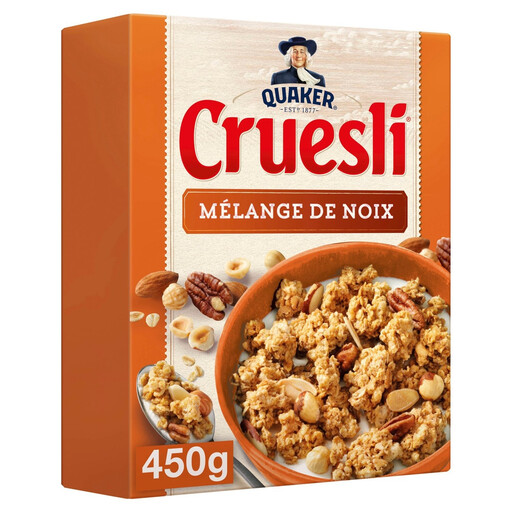 Image unavailable
This cereal cluster mix with nuts is ideal when you fancy something crunchy. The pack contains 450 g; to decide whether it’s right for you, compare the sugars and fat per 100 g and check the allergens on the packaging.
Compare the ingredients and nutritional values per 100 g, particularly sugars, fat and fibre. The DGCCRF explains that nutritional information given per 100 g or 100 ml makes it easier to compare products; information per serving can then help you work out the amount you actually serve.
No: fruit can contain naturally occurring sugars. The Auchan listing for a Bjorg Superfruits muesli carries a “no added sugar” claim while also stating that it contains naturally occurring sugars. Check the “of which sugars” figure per 100 g for the product you choose.
Check the ingredients and any trace warnings on the exact pack before buying. According to the DGCCRF, allergens used as ingredients must be highlighted on prepacked food; a muesli’s name alone can’t tell you whether it is suitable for your dietary requirements.