Anyone who wants to check the wholegrain content
For a quick weekday breakfast, you want to know whether wholegrains really make up a significant part of the recipe, rather than judging by the look of the packet.


Choose a granola whose first ingredients clearly include wholegrains, then compare the sugars and fibre per 100 g across the recipes you’re considering. For a weekday breakfast, check the allergens for the exact variant too: the presence of wholegrains alone tells you nothing about these other factors.
For a quick weekday breakfast, you want to know whether wholegrains really make up a significant part of the recipe, rather than judging by the look of the packet.
You’d like to stick with a chocolate or fruit recipe while comparing the ‘of which sugars’ figure per 100 g. Granola made with wholegrain oats can still contain sugars.
If you’re looking for a particular protein content or need to avoid an allergen, check the ingredients list and the information for your chosen variant, as well as its wholegrain content.
| What to compare | What to check | Who is it for? |
|---|---|---|
| Wholegrain content | Look for wholegrain cereals among the first ingredients and check their percentage if it’s provided. The DGCCRF states that ingredients are listed in descending order by weight. | I want to put together my breakfast bowl quickly without relying on the packet’s appearance alone. Around 42% of consumers prioritise checking the type of cereals used. |
| Sugars and flavour | Compare the ‘of which sugars’ figure per 100 g across the recipes you like. | If I choose chocolate or fruit granola, I want to know how much sugar it contains without ruling out my preferred flavour straight away. This comparison comes first for around 33% of consumers. |
| Allergens and protein | Check the allergens and any ‘may contain’ statements on the exact packet. If protein matters to you, compare the figures per 100 g. | I need to avoid certain ingredients, or I’m looking for a recipe with a stated protein content: this is what determines my purchase. It’s the top priority for around 25% of consumers. |
A claim on the front of the packet doesn’t tell you what proportion of the recipe is made up of wholegrains. The ingredients list shows where these cereals feature in the recipe.
Check the first ingredients and the percentage of wholegrains, if it’s shown for the variant you’re considering.
The Bjorg and Auchan product pages list 12 g of sugars per 100 g for Bjorg Chocolat and Fruits Rouges granola. The Auchan page for JORDANS Chocolat Noir lists 4.5 g per 100 g. So you can’t work out the sugar content from the presence of wholegrains alone.
Compare the ‘of which sugars’ figure per 100 g for the exact recipes, whatever your preference for chocolate or fruit.
Depending on the ingredients used, there may be different things to look out for in each granola. A product range name is no substitute for checking the packet you’re buying.
If you have an allergy or avoid certain ingredients, check the allergens highlighted on the packet and any ‘may contain’ statements for that variant.
Two documented organic granolas use wholegrain oats as their base: Chocolat and Fruits Rouges.
The Chocolat Noir and Protéines Cranberries et Pommes varieties show how ingredients and nutritional information can differ from one recipe to another.
The product page for Granola with quinoa Bio shows how much wholegrain oats feature in this particular recipe.
These Joybuy products offer two cereal-based recipes to consider for a weekday breakfast: one with nuts and the other with chocolate. Compare their ingredients before choosing the one that best suits your priorities.
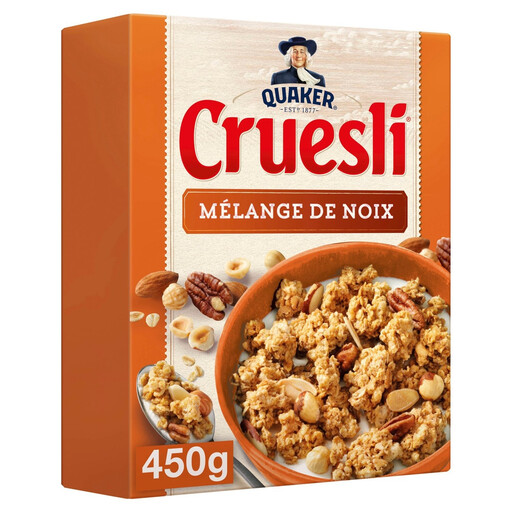 Image unavailable
Worth considering if you’re looking for a cereal-based recipe with nuts for breakfast. The pack contains 450 g. Check the cereal ingredients, nutritional values per 100 g and allergen information on the variant you buy.
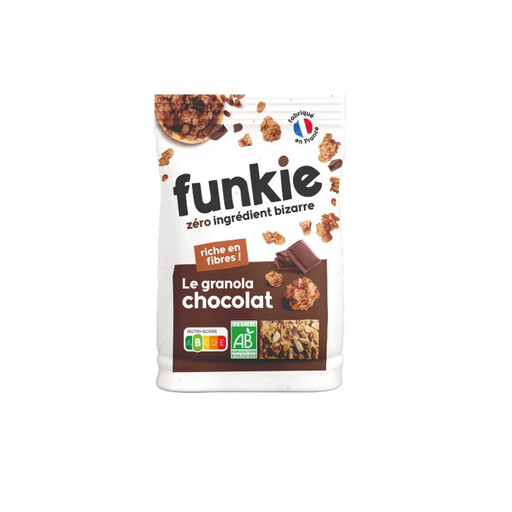 Image unavailable
Worth considering if you prefer chocolate granola for breakfast. The pack contains 300 g. Compare the ‘of which sugars’ figure per 100 g, then check the allergens and storage instructions on the packaging.
Look for a cereal clearly labelled as wholegrain among the first ingredients, then check its percentage if one is given. The DGCCRF states that ingredients are listed in descending order by weight, so the ingredients list is more useful than the packet illustration alone when assessing the recipe’s cereal base.
No. Sugar content depends on the recipe. The Bjorg and Auchan product pages list 12 g of sugars per 100 g for Bjorg Chocolat and Fruits Rouges, while the Auchan page for JORDANS Chocolat Noir lists 4.5 g per 100 g. Compare the same nutritional figure across the products you’re considering.
Read the ingredients list and any ‘may contain’ statements on the packet of the exact variant. For pre-packed foods in France, the DGCCRF states that allergenic ingredients must be highlighted in the ingredients list.
Follow the storage instructions on the packaging you bought and reseal the packet after use. Instructions can vary by recipe, so don’t assume they’re the same as those for another granola.