Busy shoppers who compare labels
You want a granola that’s easy to serve and want to compare sugars, fibre where listed, protein and salt on the same per-100 g basis.


To choose a granola you can serve quickly for breakfast, first check which wholegrain cereals appear in the ingredients list, then compare the sugars per 100 g. An organic or chocolate recipe won’t necessarily be the best choice if keeping sugars down is your priority. If you need to avoid certain allergens, check the ingredients and any ‘may contain’ warnings on the pack too.
You want a granola that’s easy to serve and want to compare sugars, fibre where listed, protein and salt on the same per-100 g basis.
You’re looking for a recipe that clearly lists wholegrain cereals, while prioritising the ‘of which sugars’ figure. Check for nuts and gluten too, depending on your dietary requirements.
You prefer a recipe made with wholegrain oats, perhaps with chocolate or fruit, without assuming that the organic label tells you anything about sugars or allergens.
To compare granolas in different pack sizes, start with the ingredients list, then check the nutritional information per 100 g. The DGCCRF states that nutrition declarations are given per 100 g or 100 ml.
| What to look for | What to check | Who is this for? |
|---|---|---|
| Wholegrain cereals and fibre | Look for cereals described as wholegrain in the ingredients; compare fibre per 100 g if it’s listed. | If I want a clearly identifiable wholegrain cereal base, the word ‘granola’ isn’t enough. Around 29% of consumers prioritise this composition and fibre. |
| Sugars | Compare the ‘of which sugars’ figure per 100 g, then check the recipe’s ingredients. | I can enjoy a chocolate recipe while still wanting to choose based on its sugar content first. This is the main priority for around 29% of consumers. |
| Allergens | Check which allergens are emphasised in the ingredients list and look for any ‘may contain’ warnings on the pack. | If an ingredient or trace could be a problem, making sure the recipe is suitable comes before its flavour. Around 24% of consumers put this check first. |
| Pack size and availability | Check the net weight and make sure the purchase or collection options suit you. | To make this breakfast part of my routine, I mainly look for a convenient size that’s easy to find when I do my shopping. Ease of purchase is the priority for around 18% of consumers. |
A search by name can bring up products from different categories, which aren’t comparable to breakfast cereals.
Check the product description and ingredients list before looking at the nutritional information.
These claims alone don’t tell you how much sugar the granola contains.
Compare the ‘of which sugars’ figure per 100 g and check which wholegrain cereals are in the recipe.
Depending on the recipe, granola may contain cereals with gluten, nuts or sesame, among other allergens. The DGCCRF states that allergenic ingredients must be emphasised on the label.
Check the ingredients and any trace warnings on the pack you’re buying, even if you’re already familiar with the range.
The range includes granolas made with toasted oat flakes, including a recipe with almonds, hazelnuts and seeds.
Bjorg’s Organic Chocolate Granola combines wholegrain oats and chocolate.
Carrefour Bio’s Granola with Quinoa is an own-brand recipe made with wholegrain oats.
These two granolas let you compare a nut-based recipe with an organic chocolate option for a quick breakfast. Check the labels against whichever criteria matter most to you.
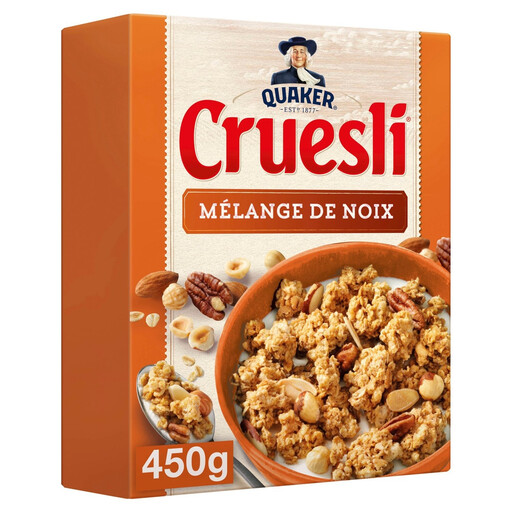 Image unavailable
If you’re looking for nutty granola for breakfast, first check that it’s suitable for your dietary requirements.
450 g pack. This product contains gluten and several types of nuts.
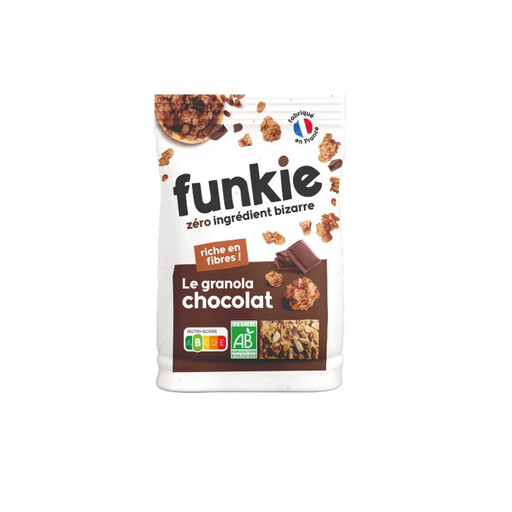 Image unavailable
This organic chocolate recipe suits those who prefer that flavour. If sugar content is a factor in your choice, compare the per-100 g figure on the pack.
300 g pack. This product contains gluten and sesame.
Check the nutritional information per 100 g to compare sugars, fat, protein and salt on the same basis. Look at fibre too, if it’s listed, then check the ingredients to identify the wholegrain cereals.
Look for allergenic ingredients emphasised in the ingredients list, as required by the DGCCRF. Also check for any ‘may contain’ warnings on the specific pack you’re thinking of buying.
No. The organic label doesn’t tell you how much sugar a product contains. Whether it’s organic or not, compare the ‘of which sugars’ figure per 100 g.
Follow the instructions on your pack and seal it carefully after use. For its granola with almonds, hazelnuts and seeds, Jordans recommends storing it in a cool, dry place.