People keeping an eye on their sugar intake
You want to compare recipes without relying on the claims on the front of the pack. French Health Insurance recommends checking the nutritional information against the amount you actually eat.


When shopping with diabetes in mind, choose a granola by first checking that wholegrains are clearly listed among its main ingredients. Then compare the sugars and carbohydrates per 100 g, and work out how those figures relate to the portion you’ll serve. The word ‘wholegrain’ alone isn’t enough to judge a recipe.
You want to compare recipes without relying on the claims on the front of the pack. French Health Insurance recommends checking the nutritional information against the amount you actually eat.
You’d like to keep granola on the breakfast menu while checking that the grains are explicitly described as wholegrain and comparing the fibre content per 100 g.
You avoid certain recipes because of their allergens or ingredients. Check the ingredients list and any ‘may contain’ warnings for every product, even when it’s from a familiar brand.
Start with the ingredients list and the figures per 100 g, then consider what your portion will contribute to breakfast.
| What to check | Look for | Who is this for? |
|---|---|---|
| Sugars | The ‘of which sugars’ figure per 100 g, and where sugar, honey or syrup appears in the ingredients list. | If I want to limit sugar, I compare recipes before deciding how much to serve. Around 36% of consumers put this need first. |
| Wholegrains and fibre | An explicit mention of wholegrains among the first ingredients, and the fibre content per 100 g. | I’m mainly looking for granola with an identifiable wholegrain base, rather than a claim that appears only on the pack. This is the top priority for around 29% of consumers. |
| Portion and carbohydrates | The carbohydrate content per 100 g, followed by the amount of granola you’ll actually serve alongside the rest of the meal. | My bowl may contain a different amount from the serving suggested on the pack, so I want to relate the nutritional figures to my portion. This is the top priority for around 21% of consumers. |
| Allergens and ingredients to avoid | Allergens highlighted in the ingredients list and any ‘may contain’ warnings. | If I need to avoid an ingredient, I check every recipe before comparing its other features. Around 14% of consumers make this their top priority. |
These terms don’t all tell you what kind of flakes have been used. Some product listings specifically describe the oats as wholegrain; others simply call them oats.
If wholegrains are your top priority, look for an explicit mention in the ingredients list and check where it appears. The DGCCRF notes that ingredients are listed in descending order by weight.
A claim about sugars or a Nutri-Score rating alone won’t tell you about the carbohydrates, ingredients or the amount you’ll eat.
Compare the nutritional information per 100 g, then work out what it means for your portion, as French Health Insurance recommends.
Ingredients and ‘may contain’ warnings vary between granolas, even when the products are from the same brand.
Check the highlighted allergens and any ‘may contain’ warnings on the product you choose.
The range includes granolas with fruit, chocolate, nuts or seeds.
The brand includes an organic red berry granola made with wholegrain oats.
The Organic Plain Granola combines wholegrain oats and barley.
The listing for the Plain Granola describes a recipe with oat flakes as its first ingredient.
The range includes a nut granola.
These two granolas may suit you if you fancy nuts or chocolate. When shopping with diabetes in mind, compare their ingredients lists and nutritional information with your criteria before deciding on a portion.
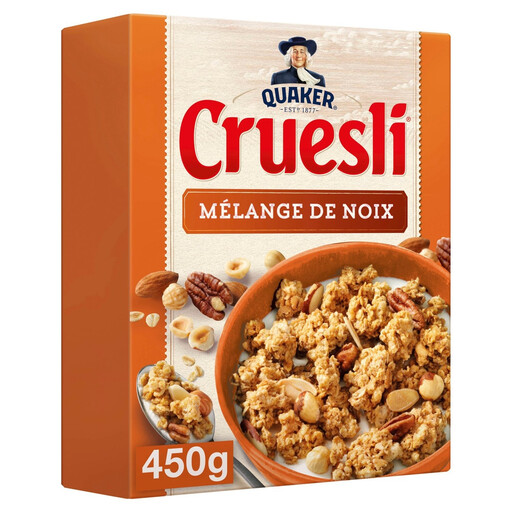 Image unavailable
Worth considering if you’re looking for a nut granola. The pack contains 450 g. Before buying, compare the sugars, carbohydrates and allergens listed for this recipe, then relate the figures to your portion.
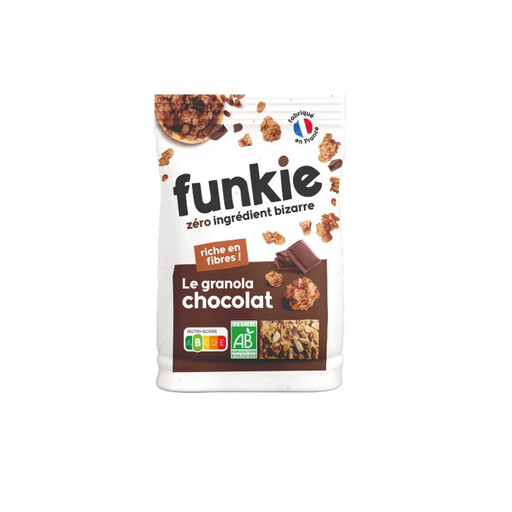 Image unavailable
Worth considering if you prefer chocolate granola. The pack contains 300 g. Check how the grains are described in the ingredients list and compare the sugars and carbohydrates per 100 g before deciding on your portion.
No. Wholegrains alone don’t tell you how much sugar or carbohydrate you’ll consume. Check the ingredients and figures per 100 g, then take your portion and the rest of your breakfast into account.
Look for explicit wording such as ‘wholegrain oats’ or ‘wholegrain barley’ in the ingredients list. The DGCCRF explains that ingredients are listed in descending order by weight; a mention of ‘oats’ alone doesn’t tell you whether they’re wholegrain.
No. When choosing a recipe and portion, check the sugars and carbohydrates per 100 g, as well as any ingredients that matter to you. French Health Insurance then recommends relating the nutritional information to the amount you actually eat.