For a large family, start by choosing a granola that clearly identifies its wholegrains in the ingredients list. Then compare the nutritional values per 100 g, particularly sugars and fibre where listed, and check the allergens and storage instructions for the pack size you’re considering. A high proportion of wholegrain oats isn’t enough on its own to tell you which of two recipes to choose.
Who is this guide for?
Families looking to identify wholegrains
If the ingredients matter more to you than the look of the packaging, look for a clear description such as ‘wholegrain oats’ in the ingredients list. The Carrefour product pages for Bjorg and Jordans granolas also state the proportion of wholegrain oats in these specific recipes.
Households comparing recipes
If sugar levels are important to your choice, compare the nutritional values per 100 g before choosing between packs. The French Directorate-General for Competition Policy, Consumer Affairs and Fraud Control (DGCCRF) states that nutrition information is given per 100 g or 100 ml.
Large families choosing a pack size
When several people eat granola regularly, pack size and how to store it after opening become practical considerations. Check the ingredients for each product: a larger pack doesn’t tell you anything about the proportion of wholegrains.
Which criteria should you check first?
First, identify the wholegrains in the recipe, then compare the nutritional information and pack size with your household’s habits.
| Criteria |
What to check |
Who is it for? |
| Wholegrains |
A wholegrain cereal should be clearly named in the ingredients, along with its proportion if this is stated. |
I want to identify a wholegrain base without relying on the word ‘granola’ or the look of the pack. Around 42% of consumers put this check first. |
| Nutritional composition |
Sugars and fibre per 100 g, as well as any other nutritional values that are useful for your comparison. |
When choosing between two recipes that suit me, I want to compare their sugar content and composition on the same basis. Around 33% of consumers prioritise this. |
| Pack size and storage |
The net weight and storage instructions after opening, based on how quickly your household will get through it. |
With several of us eating breakfast together, I’m looking for a pack that suits our needs without overlooking storage. Around 25% of consumers prioritise this practical consideration. |
Common misconceptions to avoid
-
Assuming ‘granola’ means it contains wholegrains
The product name and appearance don’t tell you whether the oats used are wholegrain. For example, the Auchan Granola Nature product page lists 80.7% oat flakes, but doesn’t describe them as wholegrain in the ingredients shown.
Look for the word ‘wholegrain’ alongside the cereal in the ingredients list on the pack you choose.
-
Judging the whole recipe by one claim
The proportion of wholegrains alone doesn’t tell you how much sugar or fat a granola contains, or which allergens it may include.
Compare the nutritional values per 100 g and read the ingredients list before choosing between two recipes.
-
Relying only on the ingredients shown online
Carrefour notes that the online information for Jordans Almond, Hazelnut and Seed Granola may temporarily differ from the product itself.
Check the label on the pack you actually buy, especially if allergens or the proportion of wholegrains are important to your choice.
Brands to consider
Bjorg
Carrefour’s 350 g Bjorg Organic Chocolate Granola contains 71% wholegrain oat flakes, according to its product information.
- The proportion of wholegrain oats is specified for this recipe.
- As it contains chocolate and cane sugar, it’s also worth comparing the nutritional values and the ingredients on the pack.
Jordans
For its 400 g Almond, Hazelnut and Seed Granola, Carrefour states that the recipe contains 56% wholegrain oat flakes and 24% barley flakes.
- The proportion of wholegrain oats is clear for this recipe.
- Check the allergens and ingredients on the pack you buy, particularly if the online product information differs from the packaging.
Carrefour Bio et Carrefour Sensation
These ranges include various granolas. Carrefour’s product range includes, for example, a 750 g Carrefour Sensation granola.
- The available pack sizes let you choose according to your household’s consumption.
- Neither the pack size nor an organic label proves that a particular product’s cereals are wholegrain.
Auchan
The product information for Auchan Granola Nature, 350 g, states that it contains 80.7% oat flakes.
- The proportion of oat flakes is stated for this recipe.
- The description ‘oat flakes’ alone doesn’t tell you whether they count as wholegrains.
Grainea et Marque Repère E.Leclerc
The E.Leclerc catalogue includes a 350 g Grainea nut granola among its breakfast products.
- You can compare this pack size with your household’s usual consumption.
- Check the ingredients of the product you’re considering before choosing it for its wholegrains.
Products available on Joybuy
These two packs give you the chance to explore different sizes and recipes of granola or cereal clusters for family breakfasts. Always check the ingredients to confirm whether a recipe contains wholegrains.
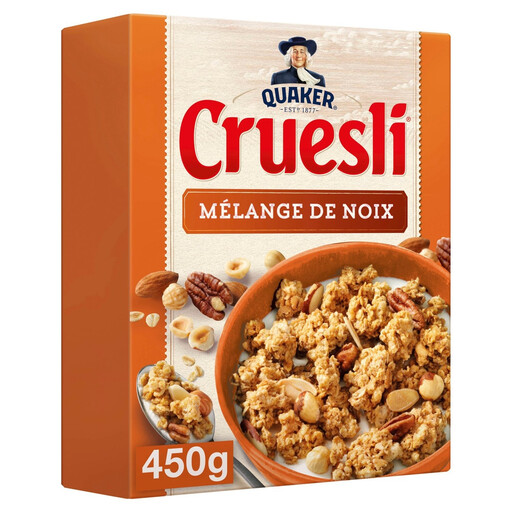 Image unavailable
QUAKER Cruesli Mixed Nuts Cereal Clusters, 450 g
This 450 g pack may suit a household that regularly eats cereal clusters. To compare it with a wholegrain granola, check the ingredients, their proportions and the allergens on the packaging.
View on Joybuy
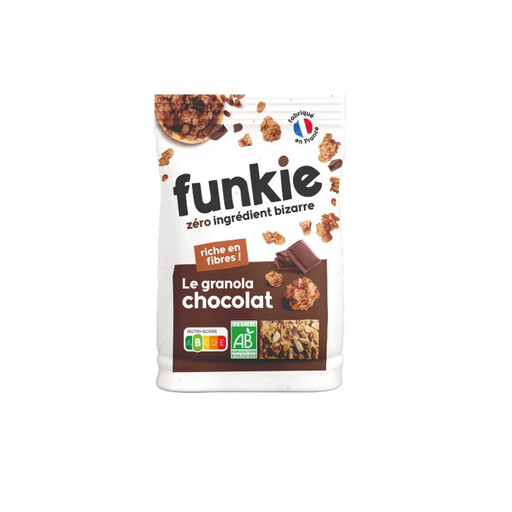 Image unavailable
FUNKIE Organic Chocolate Granola, 300 g
This 300 g pack may suit you if you’d like to try a chocolate recipe before choosing a larger pack. Joybuy’s product information states that this product contains 57% wholegrain oats. Check the sugar content, allergens and storage instructions on the packaging too.
View on Joybuy
Frequently asked questions
How can you identify wholegrains in granola?
Look for clear wording in the ingredients list, such as ‘wholegrain oats’. If a proportion is given, it tells you how much of the recipe that ingredient makes up. The word ‘granola’ on its own doesn’t provide this information.
Should you compare values per portion or per 100 g?
Start with the values per 100 g to compare packs of different sizes on the same basis. The DGCCRF states that nutrition information is given per 100 g or 100 ml. You can then check the portion you actually serve at home.
What should you check if someone in your household has an allergy?
For every recipe you’re considering, read the ingredients list and any ‘may contain’ warnings on the pack you actually buy. The DGCCRF states that allergenic ingredients must be emphasised in the ingredients list.


