Households keeping an eye on fibre
They compare the nutritional information for wholegrain crispbreads rather than relying on the product name alone. The fibre content of the products reviewed by Auchan varies by recipe.


When choosing wholegrain crispbreads to take with you, start by comparing the fibre per 100 g and the ingredient list: the word ‘wholegrain’ alone doesn’t tell you how the recipes differ. A rye crispbread with a short ingredient list suits those who value simplicity, while a recipe containing bran and seeds calls for a closer look at the ingredients and allergens. Whichever you choose, make sure the crispbreads are protected during your journey.
They compare the nutritional information for wholegrain crispbreads rather than relying on the product name alone. The fibre content of the products reviewed by Auchan varies by recipe.
They look for a recipe with ingredients and allergens that are easy to check, as well as a way to carry the crispbreads without crushing them.
They’re choosing between a crunchy rye crispbread and a cereal-based crispbread with a different texture. It’s important to check the ingredients for each product individually.
For a snack on the go, start with what matters most to your household, then check the exact recipe and packaging.
| Priority | What to check | Who is it for? |
|---|---|---|
| Fibre | Compare the fibre per 100 g and look for wholegrain cereals in the ingredient list. | If fibre guides my purchase, I want to be able to tell apart two recipes that are both labelled wholegrain. Among consumers with this priority, around 36% would put it first. |
| Transport | Check the condition of the pack and the storage instructions. Use a container that protects the crispbreads from moisture and being crushed. | If I’m eating my crispbreads on the journey, I want them to stay dry and whole. Around 29% of consumers would make ease of transport their top priority. |
| Ingredients and allergens | Read the ingredients and allergen information on the pack of the exact product you’re buying. | When I’m preparing a snack for someone who needs to avoid an ingredient, knowing what’s in the recipe comes before everything else. Around 21% of consumers would prioritise this check. |
| Taste and texture | Check the main cereal and whether the recipe contains bran, seeds or other added ingredients. | If several people will be sharing the pack, I’m mainly looking for a taste and texture everyone will enjoy. Around 14% of consumers would put this first. |
Auchan’s product information lists 26 g of fibre per 100 g for Wasa Fibres, 11 g for LU Cracotte Fibres and 8.6 g for Pasquier Grilletine.
Compare the fibre per 100 g, then check the ingredients. The product name alone isn’t enough to make this comparison.
Cereals and other ingredients vary from one product to another. The Wasa Complet recipe listed by Carrefour includes wholemeal rye flour, for example.
If you have an allergy or dietary restriction, check the ingredients and allergen information on the pack you choose, even when buying it again.
A crunchy snack can get crushed or absorb moisture while you’re travelling.
Follow the product’s storage instructions and put the portion you’re taking with you in a protective container.
Two rye crispbreads show how recipes can differ.
Cracotte Fibres is a cereal-based crispbread made with wholemeal wheat and rye.
Grilletine offers toasted wholemeal wheat crispbreads in a pack of 18 slices.
Carrefour offers crunchy wholemeal rye crispbreads in a 250 g pack.
This product is a rye crispbread that’s handy for a snack on the go. If you’re choosing it based on fibre content or an allergen, check the information on the pack for this specific variant.
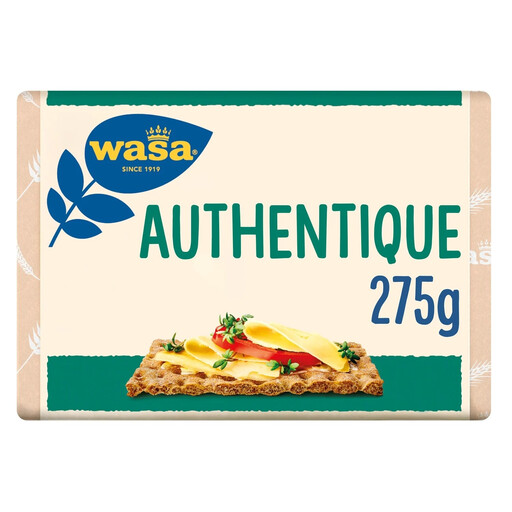 Image unavailable
A good option if you’d like to take crunchy rye crispbreads with you on your journey. The pack weighs 275 g. Check the ingredients, allergens and packaging if you need to divide it into portions before you leave.
Check the fibre per 100 g in the nutritional information, then compare the ingredient lists. Manger Bouger recommends choosing wholegrain or semi-wholegrain starchy foods, but this guidance doesn’t replace comparing the recipes.
Don’t assume so just because they’re labelled ‘wholegrain’: the products featured here contain rye or wheat, depending on the recipe. Check the ingredients and allergen information on the exact pack before choosing it.
Put your portion in a container that protects it from moisture and being crushed, and follow the storage instructions on the product. Check the packaging if you need portions that are already separated.
To choose a recipe, start with the product name, ingredient list and nutrition declaration. In France, the Directorate-General for Competition, Consumer Affairs and Fraud Control (DGCCRF) includes these among the details required on food labels.