People looking for wholegrains and fibre
You want to identify the wholegrain cereal used and compare the fibre listed per 100 g. A ready-to-serve bowl isn’t necessarily your top priority.


To order wholegrain breakfast cereals, first look for wholegrains in the ingredients list, then compare fibre, sugar and salt per 100 g. Porridge oats are a good choice if you want a simple base and are happy to prepare them. For ready-to-serve flakes or a crunchy mix, check the exact recipe, its allergens and pack size before adding it to your basket.
You want to identify the wholegrain cereal used and compare the fibre listed per 100 g. A ready-to-serve bowl isn’t necessarily your top priority.
You’re looking for cereals the household will enjoy, while comparing the sugar content of ready-to-eat recipes. Manger Bouger points out that some cereals aimed at children and teenagers can be very high in sugar.
You want to choose an amount that suits your household and check the ingredients before ordering, especially if you need to avoid an allergen.
First choose the type of cereal that suits your breakfast, then compare recipes on a like-for-like basis. The French Directorate General for Competition Policy, Consumer Affairs and Fraud Control (DGCCRF) notes that nutritional values per 100 g make it easier to compare products.
| Criterion | What to check | Who is it for? |
|---|---|---|
| Wholegrains and fibre | Whether wholegrain cereals are listed in the ingredients and the fibre content per 100 g. | If I’m mainly looking for a wholegrain base, I want to be able to identify it on the pack rather than judge by appearance. Wholegrains and fibre are the main priority for around 33% of consumers. |
| Sugar | The “of which sugars” figure per 100 g and the ingredients list for each recipe. | When choosing ready-to-serve cereals for the household, I want to compare sweetened recipes without assuming that a “wholegrain” claim tells me everything I need to know. Around 25% of consumers put managing sugar intake first. |
| Texture and preparation | The product type — oats, flakes, muesli or granola — and its ingredients. | In the morning, I might prefer flakes I can serve straight away or be happy to prepare oats; texture also influences my choice. This is the top priority for around 25% of consumers. |
| Pack size and product information | Net weight, ingredients, allergens and nutritional information. | Before filling my basket, I want an amount that suits my household and enough information to rule out any recipe that isn’t suitable. Pack size and ordering information come first for around 17% of consumers. |
These claims describe different characteristics. None of them means you can skip checking the ingredients of the product you’ve chosen.
Look for wholegrains in the ingredients, then compare fibre, sugar and salt separately per 100 g.
Carrefour and E.Leclerc offer a range of pack sizes and recipes; a large pack won’t necessarily suit your household’s consumption.
Check the net weight and choose an amount you can store and use.
Muesli and granola can contain a mixture of ingredients. The DGCCRF states that allergens in prepacked foods must be emphasised on the label.
Check the ingredients and allergen information for the exact product before ordering, then check the packaging when it arrives if you need to avoid an allergen.
The French product listing for Special K Nature includes whole wheat, barley and rice. This applies to Special K Nature, not all Kellogg's cereals.
Nestlé Céréales says its cereals provide at least 8 g of wholegrains per 30 g serving. This is information provided by the manufacturer.
The Carrefour catalogue lists Quaker Cruesli products among its breakfast cereals.
The Carrefour catalogue includes Jordans granola, including recipes with almonds, hazelnuts or seeds.
The Carrefour catalogue includes own-brand plain oats, flakes, muesli and granola.
The E.Leclerc catalogue includes Bio Village products made with oats or wheat, as well as muesli and cornflakes.
This selection includes porridge oats, a Quaker Cruesli mix and two ready-to-serve cereals. Choose the type that suits your breakfast, then check the ingredients and nutritional values of the variety you order.
 Image unavailable
These oats are a good choice if you’re looking for an oat-based breakfast rather than a ready-to-serve crunchy mix.
500 g pack. Before ordering, check the ingredients, fibre per 100 g and allergen information for this product.
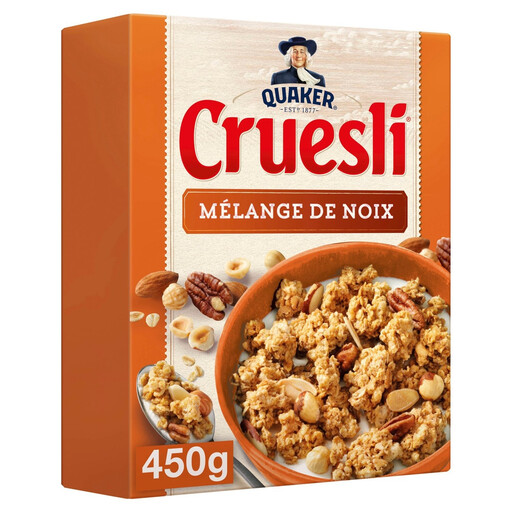 Image unavailable
This mix of cereals and nuts is for anyone who prefers a crunchy texture.
450 g pack. Check the nuts listed, other allergens and sugar per 100 g for this variety.
 Image unavailable
These oats are worth considering if you want to choose how to prepare your own oat-based breakfast.
500 g pack. To compare them with other oats, check the ingredients list, fibre and sugar per 100 g.
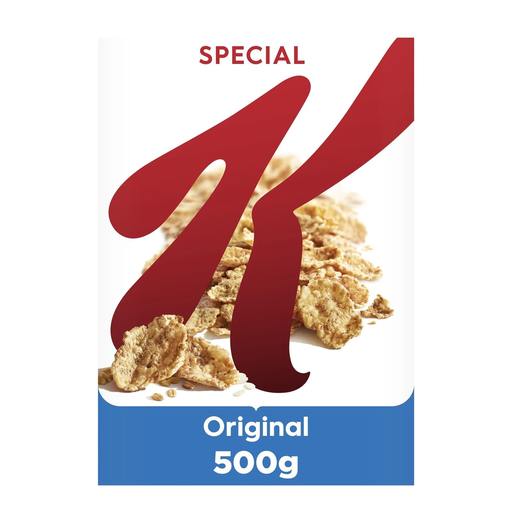 Image unavailable
This product is worth comparing if you prefer ready-to-serve cereals to oats that need preparing.
500 g pack. Check the ingredients, sugar and fibre in Special K Original: information about Special K Nature doesn’t apply to this variety.
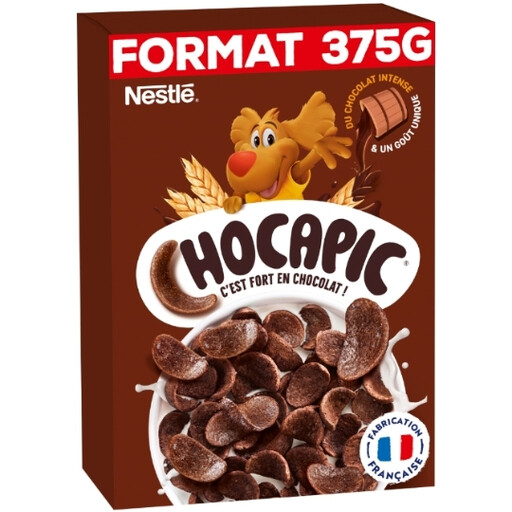 Image unavailable
This product is worth considering if you’re looking for ready-to-serve Chocapic cereal and want to compare it with other recipes.
375 g pack. Check the wholegrain content stated for this variety, along with the sugar, fibre and allergens on the label.
Look for a clear description, such as “whole wheat” or “whole oats”, in the product name and ingredients list. To compare two recipes, also check the fibre per 100 g rather than relying on the appearance of the pack alone.
No. Santé publique France says that when Nutri-Score appears on the packaging, it provides simplified nutritional information; it doesn’t replace the ingredients list or nutritional values. Also compare sugar, fibre and salt per 100 g, then check the allergens.
Make sure the product page is for the variety and pack size you want, then check the ingredients, allergens, net weight and nutritional information. If you need to avoid an allergen, check the label on the pack again when it arrives.
No: these claims describe different characteristics from “wholegrain”. Check the ingredients list for the exact product to see which cereals it contains, then compare recipes using the nutritional values.