Holidaymakers who like to customise their bowl
Plain oats let you add your own toppings or fruit. This option means having a bowl to hand and planning to bring or buy those extras during your stay.


For a holiday rental, plain oats are a good choice if you can provide a bowl and something to serve them with. You can then put together each breakfast using whatever is available at your accommodation. For a quicker option, consider ready-to-serve flakes or a muesli- or granola-style mix. Compare the ingredients, nutritional values per 100 g and allergens for the exact product you’re considering.
What you can prepare in your rental and the needs of everyone staying there matter just as much as the words ‘wholegrain cereal’ on the pack.
Plain oats let you add your own toppings or fruit. This option means having a bowl to hand and planning to bring or buy those extras during your stay.
Ready-to-serve flakes mean one less thing to prepare before heading out or setting off. It’s still worth comparing the sugar, fibre and salt in each recipe rather than choosing on convenience alone.
If allergies or dietary preferences are a concern, check the exact product you’re buying, including its allergen information. A muesli with added ingredients and plain oats may have very different compositions.
First decide whether you want a base to add to or something ready to serve, then check the label on the pack you’re planning to take.
Consider these if : you want to choose what to add to your bowl yourself.
You’ll need : a bowl and something available at your rental to serve them with.
Consider these if : you need a breakfast you can pour and serve quickly.
Bear in mind : convenience alone doesn’t tell you about the nutritional content.
Consider these if : you’d like a mix with extra ingredients or textures.
Check : added ingredients vary by recipe, so read the ingredients list carefully.
| What matters | What to check | Who is this for ? |
|---|---|---|
| Base ingredients | Look for wholegrain cereal in the ingredients list and check what else is in the recipe. | If I want to add my own fruit or breakfast toppings, a simple base matters more to me. Around 36 % of consumers put this need first. |
| Quick to serve | Compare the sugar, fibre and salt per 100 g, then consider how much you plan to serve. | When mornings are busy during our stay, I’m mainly looking for a product that’s ready to pour. Around 29 % of consumers would make quick serving their priority. |
| Allergens and ingredients | Read the highlighted allergen information and any ‘may contain’ warnings on the exact product. | If several people are sharing breakfast, I need to be able to check the ingredients for each of them. This is the main concern for around 21 % of consumers. |
| Pack size | Match the net weight to the number of mornings you’ll be away and check the storage instructions. | For a short stay, I’d rather have a pack we can finish or take home without hassle. Pack size would come first for around 14 % of consumers. |
The presence of whole oats or wheat doesn’t tell you everything about the rest of the pack : other ingredients and nutritional values can vary.
Compare the sugar, fibre and salt per 100 g, then read the full ingredients list. The DGCCRF says that presenting values per 100 g makes it easier to compare products.
Ingredients added to muesli or granola vary from one product to another. According to the DGCCRF, allergens must be highlighted on the labels of prepacked foods sold in France.
Check the packaging of the product you’re buying, including any warnings, rather than relying on the range name alone.
You could be left with an opened pack after a short stay, while a pack that’s too small might not cover all the mornings you have planned.
Estimate how much your group will need, then check the net weight, best-before date and storage instructions on the pack.
These examples show some recipe types worth comparing ; the features of one product don’t necessarily apply to an entire brand.
Quaker describes its Quaker Oats as whole oat flakes that can be served with whatever is available at your accommodation.
According to Nestlé Céréales, FITNESS Original Nature contains whole wheat as its first listed ingredient and comes in ready-to-serve flakes.
Kellogg's describes Special K Nature as flakes made with rice, whole wheat and barley.
Carrefour France stocks various ranges of oat flakes, muesli and granola.
Carrefour France stocks a Jordans granola with almonds, hazelnuts and seeds.
This selection includes oats to serve with your own toppings and muesli- or Cruesli-style mixes. Choose according to what you can prepare at your rental, the ingredients you want and the pack size ; the selection doesn’t include plain, ready-to-serve flakes.
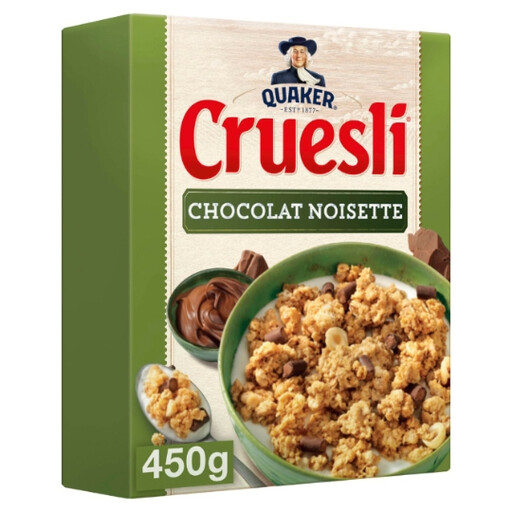 Image unavailable
This mix is a good fit if you’d like a breakfast with chocolate and hazelnut rather than a plain base. Check the allergens for this variant and think about what you’ll do with the 450 g pack after your stay.
 Image unavailable
Consider these oat flakes if you’d like to put together each bowl with the toppings available at your rental. Compare the 500 g pack with the number of breakfasts you’ll need and check the label if you need to take any allergens into account.
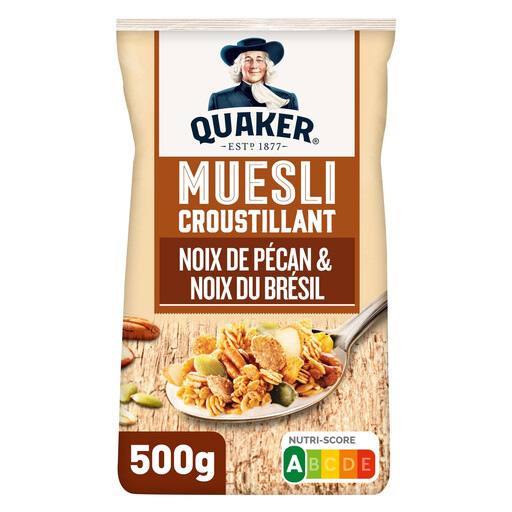 Image unavailable
This muesli is for anyone looking for a mix with pecans and Brazil nuts. Before sharing it, read all the allergen information on the pack and check whether the 500 g size is right for the length of your stay.
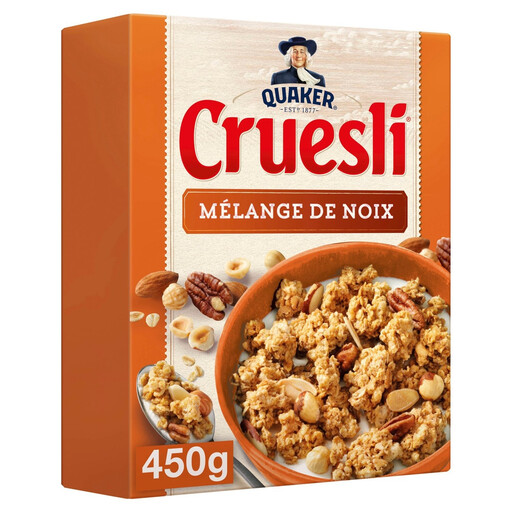 Image unavailable
This Cruesli is a good choice if you’re after a nut mix rather than plain oats. Check which nuts are included and look for any other allergen information on the exact variant ; the pack contains 450 g.
 Image unavailable
These flakes are another base you can top with whatever you like at your accommodation. For a short stay, consider the 500 g pack size and check the label if the ingredients or allergens are important to you.
Look for a specific description, such as ‘whole oats’ or ‘whole wheat’, in the ingredients list. Then check the rest of the recipe : the presence of a wholegrain cereal doesn’t tell you how much sugar, fibre or salt the product contains.
Start with the values per 100 g to compare products on a like-for-like basis. The DGCCRF says that this format makes comparisons easier ; then consider the amount you actually plan to serve.
Read the highlighted allergen information and any warnings on the exact pack. Some mixes contain cereals with gluten, milk or tree nuts, for example ; the range name alone isn’t enough to judge a different variant.
Count how many breakfasts you’ll need and how many people will be eating, then match that to the net weight. Also check the best-before date and storage instructions if the pack will be opened or taken home with you.