People short on time during the working week
If you have little time in the morning, think about whether you want a ready-to-eat bowl or oats to prepare hot or cold. Saving time doesn’t mean you should overlook the recipe or the portion you serve.


For a weekday breakfast, start by choosing an option that fits the time you have, then compare the ingredients, sugars, fibre and your usual serving size. Oats give you a base to customise, muesli brings several ingredients together, and ready-to-eat cereal takes little preparation. The words “wholegrain cereal” alone aren’t enough to tell you how the recipes compare.
If you have little time in the morning, think about whether you want a ready-to-eat bowl or oats to prepare hot or cold. Saving time doesn’t mean you should overlook the recipe or the portion you serve.
Look for wholegrain cereal in the ingredients list, then compare the fibre per 100 g and, if shown, per serving. Two wholegrain recipes can have different nutritional values.
A muesli blend or flavoured cereal may suit your household’s preferences, but the exact ingredients matter. Check the allergens and any ‘may contain’ warnings on the pack you choose.
For a weekday breakfast, start with your main priority, then check the nutritional information and ingredients list for each product.
| Criteria | What to check | Who is it for? |
|---|---|---|
| Wholegrains and fibre | Where wholegrain cereals appear in the ingredients list, and the fibre per 100 g and then per serving. | I want to identify the wholegrain cereal and compare the fibre in my bowl. Around 40% of consumers put this need first. |
| Quick preparation | Whether it can be eaten straight away or prepared cold; if you prefer porridge, check how long it takes to make. | Before I leave for work or get the children ready, I need a bowl that fits the time I have. Speed would be the top priority for around 30% of consumers. |
| Sugars and recipe | The sugars per 100 g and the ingredients list; also compare the figures with your usual serving size. | If I choose a wholegrain cereal, I still want to know how much sugar it contains before adding anything else. Around 20% of consumers would prioritise this comparison. |
| Allergens and taste | Allergens, any ‘may contain’ warnings and the exact ingredients in the mix. | For a bowl shared with the family, I want a recipe that suits everyone’s needs and tastes. This would be the top priority for around 10% of consumers. |
Recipes vary. Quaker France lists 1.1 g of sugars per 100 g for Quaker Oats, while Jordans France lists 19.0 g per 100 g for Spécial Muesli. These products have different ingredients.
Compare the sugars per 100 g with the portion you plan to serve, rather than relying on the wording on the front of the pack.
Jordans Spécial Muesli contains wholegrain cereals and nuts, among other ingredients. If someone has an allergy, the product name is no substitute for checking the exact product.
Check the allergen information and any ‘may contain’ warnings every time you buy it.
If it appears on the packaging, Nutri-Score gives you a quick overview, but it doesn’t tell you about the ingredients or the portion you eat.
When comparing similar cereals, use it alongside the sugars, fibre, salt and ingredients list.
These examples relate to specific ranges or products, so always check the pack you’re thinking of buying.
The All-Bran range may appeal if you’re comparing the stated fibre content.
Its ready-to-eat cereals suit anyone looking for a quick breakfast.
Quaker Oats can be served cold or made into porridge.
Spécial Muesli is for people who prefer a ready-made mix.
The retailer’s own-brand products include different types of cereal, including plain oats.
These E.Leclerc ranges include options to consider if you’re looking for oats.
This selection brings together oats, a ready-to-eat cereal and a Cruesli nut mix to help you compare weekday breakfast options. Check the nutritional details and allergen information for the product you choose, especially if they’re important to your decision.
 Image unavailable
Worth considering if you want to make your own bowl, either cold or as porridge.
Quaker France describes Quaker Oats as 100% wholegrain oats and lists 9.0 g of fibre and 1.1 g of sugars per 100 g. If you’re making porridge, allow time for preparation and check the allergen information on the pack.
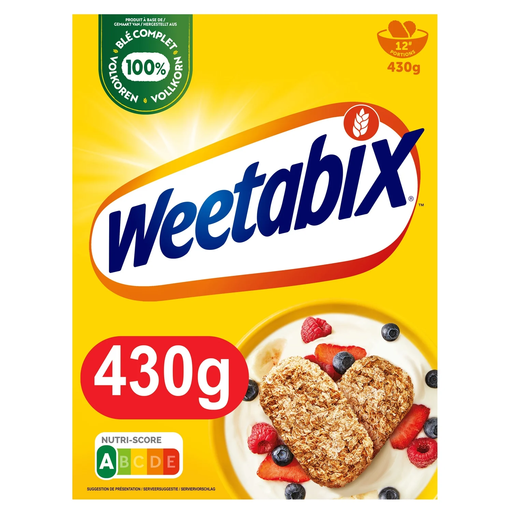 Image unavailable
Consider this if you’re looking for a simple cereal bowl during the week.
Before choosing this product, check the packaging for the ingredients, sugars, fibre, suggested serving size and any allergens relevant to you.
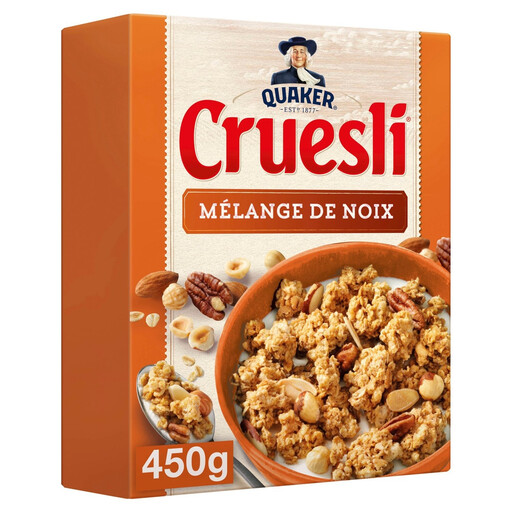 Image unavailable
This nut mix is for anyone who prefers crunchy cereal clusters to plain oats they can customise themselves.
If you have a nut allergy, check the ingredients and any ‘may contain’ warnings for this product. Also compare its sugars and fibre per 100 g with those of other cereals you’re considering.
 Image unavailable
These oats are an option if you prefer to start with a base you can customise to your taste.
To see if they suit your morning routine, check the preparation instructions, then look at the sugars, fibre and allergen information on the pack.
 Image unavailable
Worth considering if you want to make your own bowl with oats.
Compare the nutritional values of this product with other oats, and check the instructions if a cold or very quick preparation is important to you.
Look for a clearly named wholegrain cereal in the ingredients list, such as wholegrain oats or whole wheat. Then check the fibre per 100 g and per serving: recipes containing wholegrains aren’t all the same.
No. If it’s shown, use it as an additional guide when comparing similar products, then check the ingredients, sugars, fibre, salt and serving information.
First, check the ingredients and allergen information for the specific product, including any ‘may contain’ warnings if relevant. Then compare the sugars per 100 g with those of other similar recipes.