Households that make espresso regularly
A grinder lets you switch to whole beans for short or long coffees. You’ll need space for the machine and must keep up with the emptying, rinsing and descaling described by Que Choisir.


If you make espresso regularly and are happy to empty, rinse and descale the machine, a grinder could make switching to whole beans worthwhile. Que Choisir reports that the coffee cost per cup is two to three times lower than for pod espresso, though this doesn’t tell you the total cost. Pods still make sense if you want a quick brew that takes up little space. A portafilter machine may suit you if you don’t mind a few more steps, while a filter coffee maker is mainly for those who want long coffee. For milk-based drinks, check the milk system and how it needs to be cleaned.
How often you make espresso, the drinks you enjoy and how much time you want to spend preparing them matter more than simply wanting to give up pods.
A grinder lets you switch to whole beans for short or long coffees. You’ll need space for the machine and must keep up with the emptying, rinsing and descaling described by Que Choisir.
For cappuccinos or lattes, consider the milk system as well as how the coffee is brewed. A steam wand, carafe or milk circuit needs cleaning according to the model. Philips, for example, describes regular cleaning for the milk components on its Saeco machines.
Pods are still an option if speed and a compact footprint are your priorities. However, check which pod format the machine accepts and how to sort the used pods for recycling.
Start with the drink you make most often, then weigh up each option against how frequently you’ll use it, the maintenance you’re prepared to do and the consumables it requires.
| Criteria | What to check | How you use it |
|---|---|---|
| Drinks you make | For espresso, compare a grinder, pods and a portafilter machine. If you make several cups of long coffee, consider a filter coffee maker. For milk-based drinks, check the milk system and how it needs to be cleaned. | I mainly make long coffee for several people: a filter coffee maker suits this without espresso functions. If espresso is what I drink most, I’ll compare the other three options instead. |
| Frequency and consumables | Compare the cost of making the same number of espressos over a set period, taking the machine and its maintenance into account. The ratio published by Que Choisir is for coffee per cup from a grinder compared with pod espresso; it doesn’t include all household costs. | I make several espressos a day, so the cost of consumables matters to me. Que Choisir puts the coffee cost per cup from a grinder at two to three times less than for pod espresso, but I still need to consider the machine and its maintenance. |
| Preparation and maintenance | For a grinder, check the manual for instructions on the trays, brew group and descaling. With a portafilter machine, allow for manual dosing and cleaning. If it has a milk system, check the cleaning routine for that model. | I prefer a ready-to-use pod and minimal fuss, so pods may suit me. If I choose whole beans, I need to be able to keep up with the recommended maintenance, including cleaning the milk system if I make milk-based drinks. |
| Packaging waste | Separate coffee grounds from individual packaging. In France, ADEME recommends putting aluminium or plastic pods in the paper and packaging recycling stream. For other materials, check the labelling and local collection rules. | I want to avoid individual packaging, so whole-bean or ground coffee is worth considering. If I stick with pods, I’ll check what they’re made of before recycling or composting them. |
| Pod format | Before keeping or buying a pod machine, identify its system and check the compatible products in the manual. Don’t assume that every pod will fit every machine. | I want to be able to buy more pods for my machine, so I’ll check the exact format rather than relying on the drink name alone. |
Switching to whole beans means emptying the trays, cleaning the brew group and descaling the machine as instructed. Que Choisir covers these tasks in its grinder tests. They’re part of regular use, not just the initial set-up.
Check the manual for the model you’re considering to find out how to access the brew group, start the descaling process and clean the milk system, if there is one.
Also allow time for cleaning and budget for any maintenance products the model requires.
Que Choisir’s comparison of grinders and pods is based on the coffee used to make a comparable espresso. It doesn’t, by itself, tell you the total cost of the machine and its maintenance, or the cost of milk-based drinks or filter coffee.
Compare the same number of drinks over the same period, then factor in the machine, coffee and maintenance.
A pod that belongs in packaging recycling isn’t necessarily suitable for composting. Que Choisir also distinguishes between plant-based pods that can be composted at home and those that need industrial composting.
Check the labelling on your pods and your local council’s guidance before deciding how to dispose of them.
These brands feature in Que Choisir’s comparisons. Their inclusion doesn’t guarantee that a particular machine has specific features.
Worth considering if you’re choosing between a grinder and a portafilter machine. The right option depends on the features and steps involved for each model.
A brand to compare model by model if you’re looking for a grinder machine for espresso or automatic drinks.
Worth considering among automatic grinder machines if the recipes on offer are important to you.
These options offer three ways to move on from pods: a grinder machine for whole beans, a portafilter machine for manual brewing and a pour-over coffee maker for long coffee. First, make sure they suit the drinks you want and the maintenance routine you’re prepared to follow.
 Image unavailable
This grinder machine is for households looking to switch to whole beans and make milk-based drinks too. The model name indicates that it has the LatteGo system. Check which recipes are available on this variant and allow time to clean the milk system.
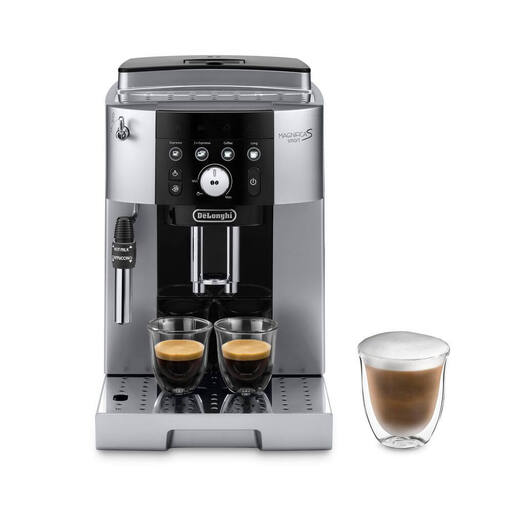 Image unavailable
This automatic grinder machine is a good option if you’re switching from pods to whole beans for espresso. If you plan to froth milk, check what using and cleaning the steam wand involves before choosing this variant.
 Image unavailable
This automatic machine is designed for households that want to make different types of coffee from whole beans and use a milk system. The product name lists six coffee varieties and a touchscreen. Check which drinks are available and how to clean the milk system.
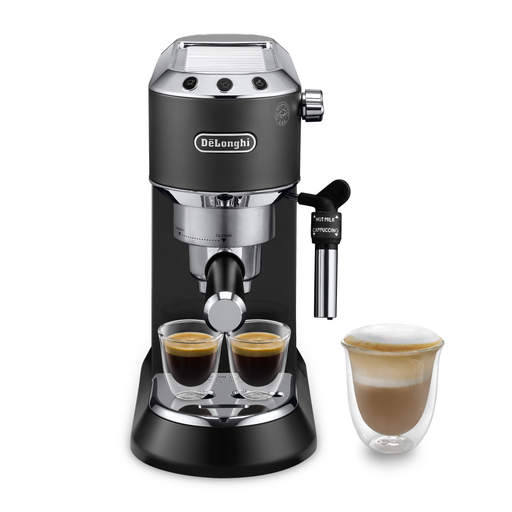 Image unavailable
This portafilter machine is for making espresso manually, rather than using an automatic grinder. It has a stated pressure of 15 bar. Allow time to dose the coffee and clean the portafilter. If you want to use whole beans, check whether you’ll need a separate grinder and confirm the capacity of this variant’s water tank.
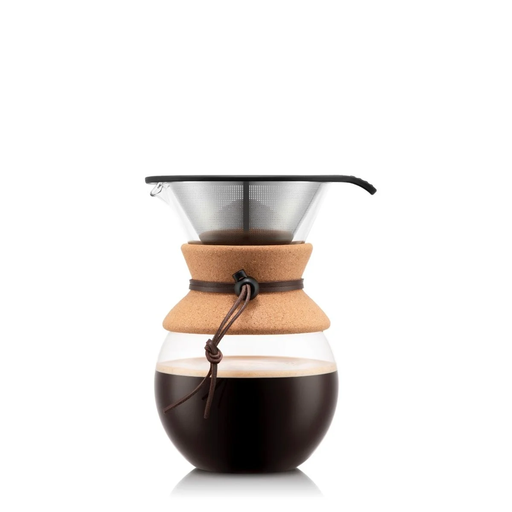 Image unavailable
This manual pour-over coffee maker is for making long coffee with ground coffee, rather than espresso. It has a stated capacity of 1 L and a permanent filter. You’ll need to pour in the hot water by hand and handle the glass carafe carefully.
No. Que Choisir says that coffee for an espresso made with a grinder costs two to three times less per cup than pod espresso, but this comparison doesn’t include the machine and its maintenance. Compare the same number of drinks over the period you expect to use the machine.
Yes, there are generally more tasks to do. You’ll need to empty the trays and follow the instructions for cleaning the brew group and descaling the machine. For milk-based drinks, add the recommended cleaning routine for the steam wand, carafe or milk circuit. How often you need to do this depends on the model.
No. Que Choisir says that most machine brands only accept one type of pod. Identify your machine’s system and check the manual before choosing pods.
ADEME says to put these pods in the recycling bin, bag or container for paper and packaging. Check your local council’s collection guidance to find out how to sort them at home.
No. Que Choisir distinguishes between pods that can be composted at home and those that need industrial processing. Check the product labelling and local collection options before putting a pod in your compost.