
Livraison le jour même ou le lendemain

Qualité garantie

Débloquez vos offres de bienvenue: Livraison GRATUITE | Jusqu'à -80 % | 30 jours d'essai gratuits à JoyPlus
Téléchargez l'application
The promise of a dazzling smile often leads us to the whitening toothpaste aisle. But faced with a jungle of products and flashy slogans, it's hard to know which way to turn. Between formulas with "immediate" effects and "miracle" ingredients, it's easy to choose a treatment that's disappointing, or even counterproductive for your enamel.
As the Head of Product Recommendations at Joybuy, my mission is to help you sort through the options. Together, let's break down the pitfalls to avoid and the essential criteria for choosing a whitening treatment that is effective and, most importantly, safe for your oral health.
Before you head to the checkout, learn to spot the marketing claims that often hide a less-than-brilliant reality.
For a dazzling smile without sacrificing your dental health, here are the three points you absolutely must check.
The effectiveness of a whitening toothpaste all comes down to its active ingredients. There are three main families:
A good whitening toothpaste should never compromise on protection. The presence of fluoride is non-negotiable: it's the number one defence against cavities and for remineralising enamel. If you have reactive teeth, you must opt for a whitening toothpaste for sensitive teeth, which is specifically formulated to be less abrasive and contain soothing agents.
Avoid non-transparent brands. Favour those that clearly display the full list of ingredients (INCI) and comply with European standards. This is an essential guarantee of trust and safety.
Because every smile is unique, here are our targeted recommendations for 2026.
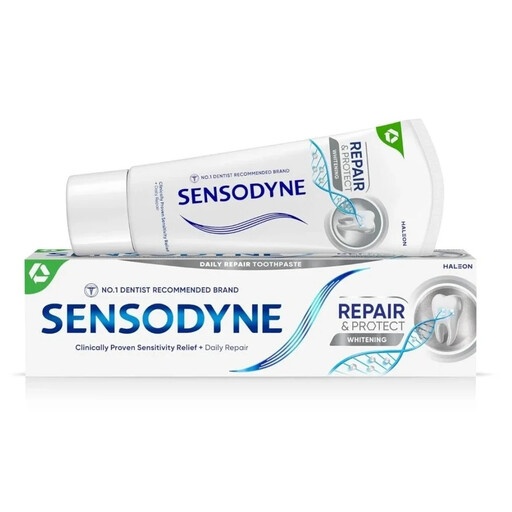
Why we recommend it: It's the perfect solution for those who want a brighter smile without triggering their tooth sensitivity. Its formula is specifically designed to protect sensitive teeth while restoring their natural whiteness.
It sidesteps the harshness trap with a low-abrasion formula, designed for safe daily brushing on sensitive teeth.
Its dual action: it soothes sensitivity while gently polishing away surface stains.
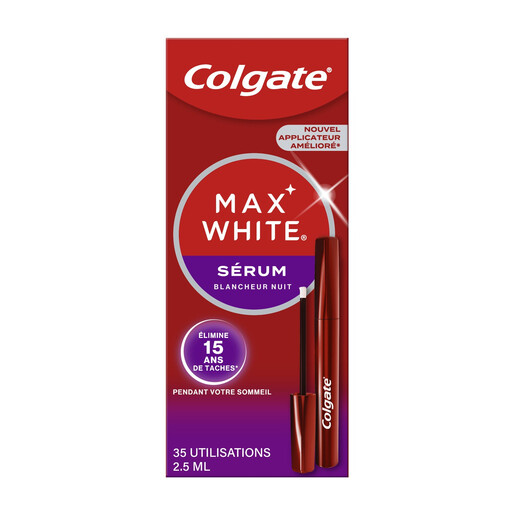
Why we recommend it: For deep action on stubborn stains. This overnight serum is used in addition to brushing to tackle deep-set discolouration that has built up over years.
It doesn't fall for the 'instant results' promise. This is a long-term treatment over several weeks, clearly positioned as an intensive care product, not just a toothpaste.
Its serum formula is applied at night for targeted action while you sleep. Colgate's promise? To remove up to 15 years of stains caused by food and drink.
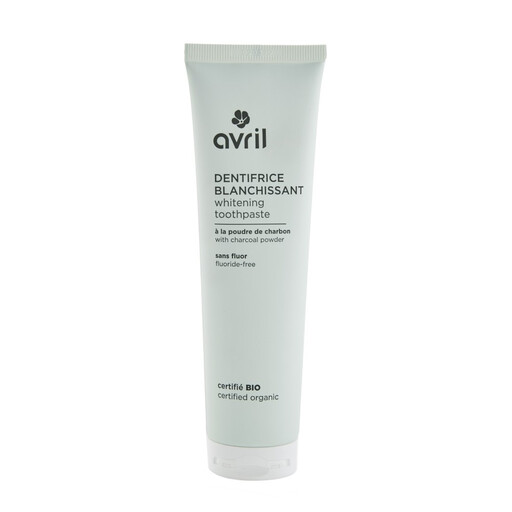
Why we recommend it: For fans of organic and French-made products who demand total transparency. This toothpaste ticks all the boxes.
It stands out from the usual "greenwashing" thanks to its Cosmos Organic certification by Ecocert. This strict label guarantees that 99% of ingredients are of natural origin and 25% are organic.
Its formula combines charcoal powder, which helps polish away stains, with soothing organic aloe vera. The absence of fluoride meets the demand of a segment of consumers.
Discover our full selection of whitening treatments that meet our quality charter and current safety standards.
Absolutely. A toothpaste that is too abrasive can scratch and weaken enamel in the long run. That's why you should favour formulas approved for daily use and labelled "low abrasion" or "gentle on enamel". If in doubt or if you have sensitivity, toothpastes designed for sensitive teeth remain the safest choice.
It all depends on the product and your teeth. Formulas with optical brighteners give an immediate illusion of whiteness, but it doesn't last. For a real effect on surface stains (from coffee, tea, etc.), you need to be patient: expect to see a noticeable lightening after two to four weeks of twice-daily use.
Activated charcoal has a polishing action that can help remove surface stains. However, its effectiveness depends on the overall formula. The most important thing is to choose a reputable brand and, above all, to check for the presence of fluoride. Many charcoal toothpastes do not contain it, which is a real problem for cavity protection.