
Livraison le jour même ou le lendemain

Qualité garantie

Débloquez vos offres de bienvenue: Livraison GRATUITE | Jusqu'à -80 % | 30 jours d'essai gratuits à JoyPlus
Téléchargez l'application
Coffee, tea, red wine and tobacco can leave surface stains on your enamel. A whitening toothpaste can help to reduce them over time with regular brushing, but not all formulas are created equal. Before you buy, it’s important to understand the difference between removing external deposits and actually lightening your teeth’s natural shade.
Some purple or blue formulas, such as Colgate Max White toothpaste or Signal White Now toothpaste, use optical pigments. These can temporarily tone down the appearance of yellow hues after brushing, without permanently changing the internal colour of your tooth.
An instant visual effect doesn’t mean old stains have disappeared. To tackle marks from coffee or tea, also check for cleansing or polishing agents, and the recommended frequency of use.
Cleansing particles can help remove surface stains. However, brushing too vigorously or using an unsuitable formula can quickly become uncomfortable. The result also depends on the toothbrush you use, the pressure you apply and how long you brush for.
If you have sensitive teeth, it’s best to choose a toothpaste for sensitive teeth designed for daily use, rather than a highly polishing formula used excessively.
The quest for whiter teeth shouldn’t make you forget the basics of oral hygiene. For adults, check the fluoride content and its concentration on the packaging. Several products featured here indicate a level of 1,450 ppm fluoride, while some references show 1,400 ppm.
A toothpaste without fluoride, such as some charcoal formulas, doesn’t serve the same purpose of cavity prevention. If you already receive fluoride from another source or have a specific dental condition, seek advice from a healthcare professional.
For surface stains, look for terms such as anti-stain, micro-polishing particles, hydrated silica, pyrophosphates or sodium bicarbonate. These ingredients indicate a cleansing action, but on their own they don’t guarantee a deep change in tooth shade.
Charcoal toothpaste can be appealing because of its appearance and natural positioning. However, check whether it contains fluoride, whether it’s suitable for frequent use and whether the texture is pleasant. A charcoal formula isn’t automatically gentler or more effective.
Fluoride helps protect teeth against cavities when used as directed. Check for the mention of “sodium fluoride”, “stannous fluoride” or another source of fluoride, along with the concentration expressed in ppm.
Also follow the instructions regarding age, amount and frequency of use. Most products in this selection recommend brushing for two minutes, twice a day, without swallowing the toothpaste.
If you experience discomfort with hot or cold, choose a formula explicitly designed for sensitive teeth. For tender gums or persistent bleeding, a toothpaste for healthy gums can complement your routine, but it doesn’t replace a dental opinion.
Ongoing bleeding, pain, swelling or worsening sensitivity warrant a check-up. Toothpaste alone cannot identify the root cause of the problem.
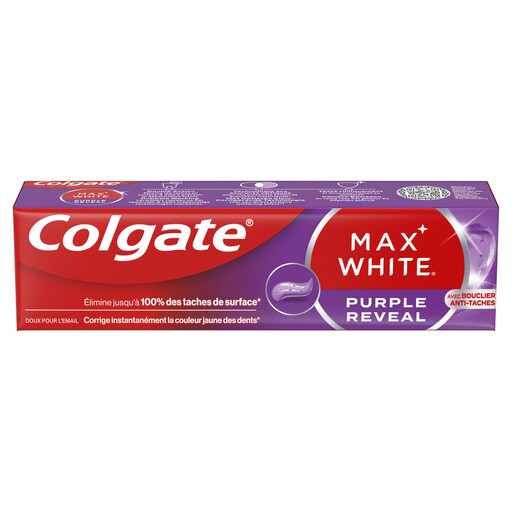
Why this choice suits this profile: Its 75 ml size and daily-use formula make it ideal for starting a whitening toothpaste routine, especially if you want to reduce surface stains.
The listing shows a purple formula with an optical effect, but also a fluoride content of 1,450 ppm. So the visual effect shouldn’t be mistaken for permanent whitening.
Contains fluoride, claims to act on surface stains and offers a minty flavour.
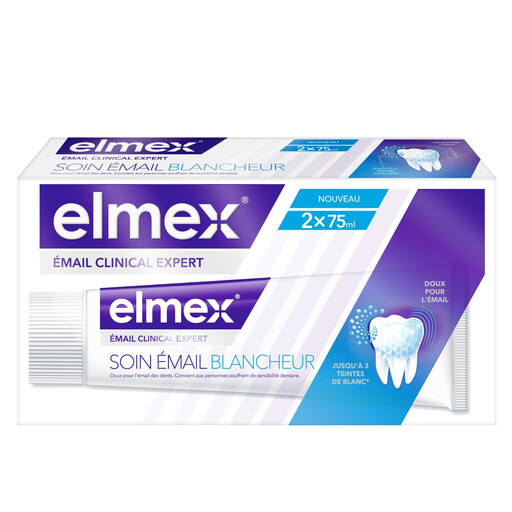
Why this choice suits this profile: This duo of 75 ml tubes is aimed at those who enjoy a well-established routine and pay close attention to enamel care.
The description distinguishes between the whitening technology, enamel care and suitability for sensitive teeth. It also recommends a usage period of four weeks.
150 ml duo, fluoride formula and product described as alcohol-free, with daily-use instructions.
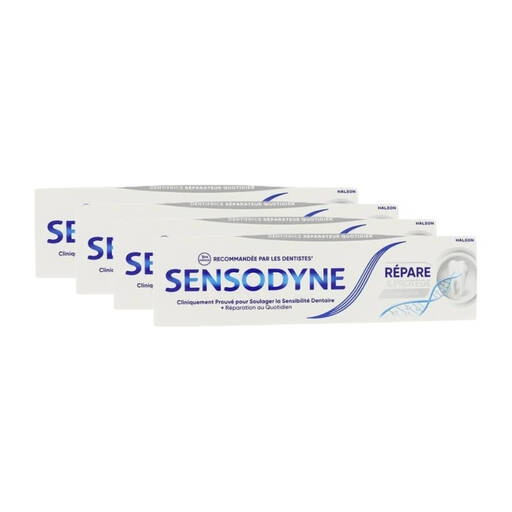
Why this choice suits this profile: This pack of four tubes is ideal for households or regular users looking for a whitening formula suitable for sensitive teeth.
The formula combines a whitening action described as gentle with ingredients designed to relieve sensitivity. If symptoms persist, the listing recommends seeing a dentist.
300 ml pack, fluoride content indicated and recommended use twice a day with a soft toothbrush.
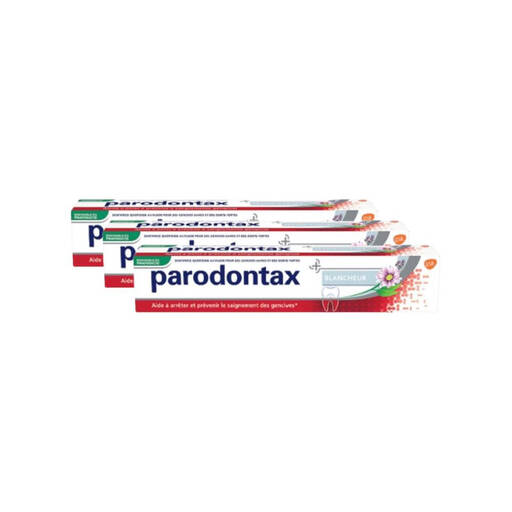
Why this choice suits this profile: This product is aimed at adults who want to maintain whiter teeth while following a routine focused on gum health and plaque removal.
This product doesn’t just promise whiteness – its description also highlights plaque cleaning and gum care. However, persistent bleeding should be checked by a professional.
Pack of three tubes, claimed action on surface stains and formula containing fluoride according to the product listing.
We’ve put together a comprehensive, real-time list of products that fully meet these strict selection criteria and European safety regulations.
A whitening toothpaste fits into your daily oral care routine and mainly works on external deposits. A whitening serum is more of a supplementary treatment, with targeted application and a specific duration of use.
For example, Colgate Max White Whitening Serum 25 ml contains hydrogen peroxide, according to its product listing. This type of treatment must be used exactly as directed, without being swallowed, and application should be stopped if irritation occurs. There’s no point in using multiple whitening products without considering your teeth’s sensitivity.
It can mainly remove or reduce surface stains. Formulas containing blue or purple pigments can produce a temporary optical effect. For a deeper change in tooth shade, only a professional can determine the right treatment.
Yes, as long as you choose a product that states it’s suitable for sensitive teeth and follow the instructions. If the discomfort gets worse, stop using it and ask your dentist for advice.
It depends on the formula. Some products are designed for daily use, while others recommend a course of a few weeks. Always refer to the packaging and don’t extend a specific treatment beyond the manufacturer’s recommendations.