People keeping an eye on added sugars
Your first consideration is the wording of the claim and the product’s ingredients. A sweetened recipe may catch your eye, but remember to check its sugar content and format too.


For a snack, choose according to what matters most to you: reducing added sugars, enjoying a classic white chocolate bar or taking a ready-to-eat biscuit with you. ‘No added sugars’ does not mean ‘sugar-free’: check the exact claim, the sugars per 100 g, the ingredients and the allergens. A sweetened recipe may also come in a large pack intended for baking rather than as a snack-sized portion.
Your first consideration is the wording of the claim and the product’s ingredients. A sweetened recipe may catch your eye, but remember to check its sugar content and format too.
You’re mainly looking for a bar to enjoy or share, rather than a recipe with reduced sugars. The ingredients list and nutritional information help you make an informed choice.
You prefer a biscuit or bar that’s ready to eat. Check whether it’s white chocolate, a coating or a more complex recipe, and look at the allergens for the specific product.
Start by deciding whether your priority is sugars, ingredients, format or taste: these criteria won’t necessarily lead you to the same product.
Worth considering: if you’re looking for an alternative to a classic recipe and are happy to check the exact claim and which sweeteners are used.
Bear in mind: the Torras buttons sold by Diamond Nutrition France contain maltitol and come in a 1 kg bag, a format aimed at baking.
Worth considering: if you’d prefer a white chocolate bar to enjoy or share, without looking for a sugar-reduction claim.
Bear in mind: according to Lindt France, the Lindt EXCELLENCE Extra Creamy White bar contains 57 g of sugars per 100 g.
Worth considering: if a ready-to-eat format matters more to you than buying a white chocolate bar.
Check: the coating is only one part of the recipe; the Pepero biscuit described by Joybuy lists wheat, milk, soya and nuts among its ingredients.
| Criterion | What to check | Who is it for? |
|---|---|---|
| Claim and sugars | The exact wording, followed by ‘of which sugars’ per 100 g; also look for polyols or other sweeteners in the ingredients. | If I’m looking to reduce added sugars, I want to know exactly what the packaging promises before choosing a recipe. Around 36% of consumers would put this need first. |
| Ingredients and allergens | The ingredients list, declared allergens and any ‘may contain’ warnings for the product you’re buying. | When choosing a recipe with biscuits, a coating or nuts, I need to be able to check the ingredients that matter to me. Around 29% of consumers would make this their top priority. |
| Snack format | The net weight and presentation: bar, portions, bag or large pack for baking. | If I’m taking my snack with me or sharing it, I prefer a format that suits the occasion. This would be the top criterion for around 21% of consumers. |
| Classic or sweetened recipe | The ingredients in the classic bar and those in the sweetened alternative, without assuming that the difference alone has a health effect. | I prefer the taste of a traditional white chocolate recipe, even if it doesn’t meet a ‘sugar-free’ requirement. Around 14% of consumers would put this preference first. |
These phrases are not interchangeable. EU rules on nutrition claims regulate wording such as ‘no added sugars’, but that claim does not mean a product contains no sugars.
Read the wording on the packaging, then check the ‘of which sugars’ line and the ingredients list, rather than relying on the phrase ‘sugar free’ in a search.
The presence of a sweetener isn’t enough to show that a product meets a medical or personal health goal.
Compare its ingredients and nutritional information with your buying criteria, without assuming it will affect your blood sugar or weight.
A 1 kg bag of chocolate buttons, a 100 g bar and a biscuit in a packet aren’t prepared or carried in the same way.
Check the net weight and intended use before choosing a pack for regular snacks.
A large bag may leave you with more than you need if you only use a few pieces for each snack.
The other components in a biscuit or bar may change which ingredients and allergens you need to check.
Read the label for the specific product, especially for milk, wheat, soya or nuts if they’re part of the recipe.
These products illustrate different recipes and formats; a feature mentioned for one product won’t necessarily apply to other products from the same brand.
An option to explore if you’re looking for a sweetened white chocolate recipe, particularly for baking.
The 100 g EXCELLENCE Extra Creamy White bar is an example of classic white chocolate.
Another classic white chocolate bar to consider if you’re comparing the ingredients in different recipes.
The range includes a 170 g white chocolate baking bar listed by Auchan.
The 90 g milk and white chocolate bar listed by Joybuy is a blend, not a bar made entirely of white chocolate.
These Joybuy products include classic white chocolate bars, a baking bar, and biscuits or bars with white chocolate. If a claim about sugars is your main consideration, check its wording on each pack before choosing.
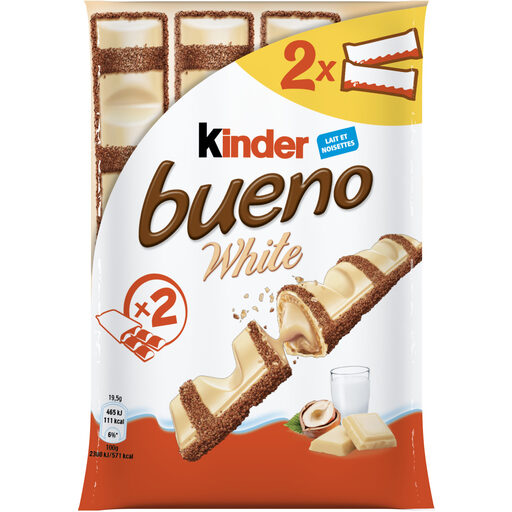 Image unavailable
Worth considering if you’d prefer a snack in bar form rather than a white chocolate bar. The listed ingredients include milk, soya and hazelnuts; check the sugars and the packaging for each portion to suit your needs.
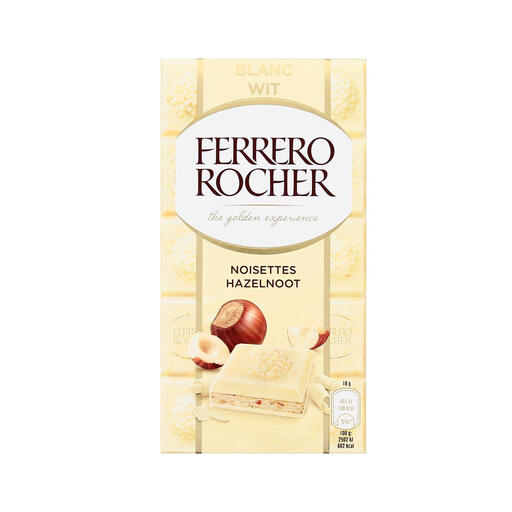 Image unavailable
A white chocolate and hazelnut option to consider if you’re looking for a block to enjoy rather than a sweetened recipe. The listed ingredients include milk, hazelnuts and soya; also check the ‘may contain’ warnings on the packaging.
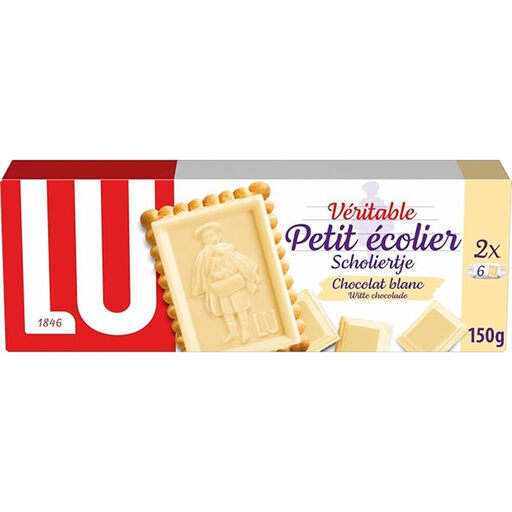 Image unavailable
For a snack of white chocolate biscuits rather than a bar. The listed ingredients include wheat, milk, lactose and soya; check the portion size and nutritional information on the pack.
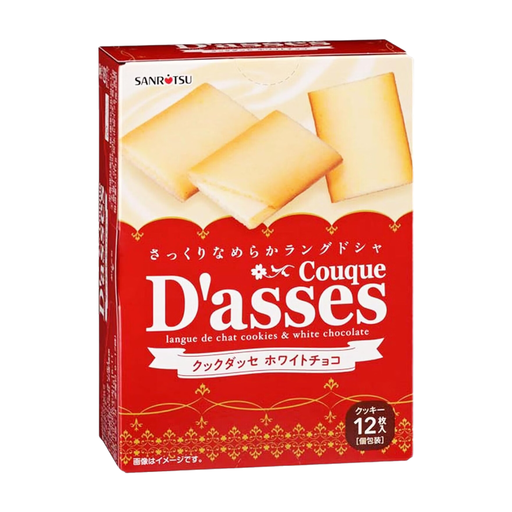 Image unavailable
These biscuits are suited to sharing, rather than to anyone looking for a white chocolate bar. The product comes in a box of 12; the declared allergens include wheat, egg, milk and soya.
 Image unavailable
A bar to consider for making a white chocolate snack, rather than taking an individual treat with you. The listed recipe contains sugar, milk and soya; check the ‘may contain’ warnings and sugar content on the product you buy.
No. EU rules on nutrition claims treat these phrases differently. When choosing white chocolate, check the exact wording on the packaging, the ‘of which sugars’ line and the ingredients.
The levy described by the Ministry of the Economy applies to non-alcoholic drinks, not solid white chocolate bars. To compare bars, look at their ingredients and nutritional information instead.
No. The Ministry of Health describes Nutri-Score as a recommended labelling system; if it’s not shown, you should still read the nutritional information. If it appears on a product, use it as a point of comparison, without assuming on its own that the product meets your needs.
Read the declared allergens for the specific product, along with any ‘may contain’ warnings. The products mentioned here show that milk may be accompanied by soya, wheat or nuts, depending on the recipe; don’t assume that the allergen list for a biscuit also applies to a bar.