
Livraison le jour même ou le lendemain

Qualité garantie

Débloquez vos offres de bienvenue: Livraison GRATUITE | Jusqu'à -80 % | 30 jours d'essai gratuits à JoyPlus
Téléchargez l'application
Whether you are a student, teacher, parent, professional or creative hobbyist, choosing a whiteboard marker involves more than simply checking the colour of the cap. A tip that collapses, ink that is difficult to erase or a product presented as versatile despite being designed for another surface can quickly turn a promising purchase into a disappointment.
This 2026 selection brings together solutions for a range of uses: writing on a whiteboard, organising ideas at the office, preparing a presentation, drawing or working on creative projects. The aim is to separate genuinely useful features from marketing claims that stretch the truth a little too far.
A dry-erase pen is designed for non-porous surfaces such as whiteboards, glass or certain writing films. By contrast, an acrylic or permanent marker generally adheres to wood, glass, metal or plastic.
When used on a porous surface, a whiteboard marker may leave a lasting mark. Conversely, an acrylic marker applied to a whiteboard may not erase properly. Before placing your order, always check the compatible surfaces specified by the manufacturer.
A highly colourful set is not automatically the most practical choice. For meetings and lessons, four clearly visible shades may be more than enough. For revision notes or visual organisation, pastel or fluorescent colours may sometimes be more suitable.
Some sets also combine several product categories. A transparent-ink highlighter is suitable for paper, but it does not necessarily replace an erasable whiteboard pen.
Ink dries faster when the cap is left off or when pens are stored near a heat source. A broad tip may also leave more residue if the board is not cleaned regularly.
A whiteboard eraser is therefore a useful addition to your purchase. Clean the surface dry, using a soft cloth or felt surface. Older marks and traces left by a permanent marker may nevertheless require special treatment.
For a magnetic whiteboard, glass or erasable film, look for ink explicitly described as dry-erase. For creative projects, water-based acrylic ink often provides an opaque, matt finish, but it generally becomes permanent once dry.
Do not choose an acrylic marker solely because of its advertised versatility. Check the compatible surfaces, drying time and the manufacturer's instructions. Odour-free ink can make working in a classroom or office more pleasant, but it will not necessarily be suitable for every surface.
A 4 mm round tip produces a consistent line, making it practical for headings, diagrams and lettering that needs to be legible from a distance. A chisel tip generally allows you to vary line width, which is useful for underlining, framing or writing with greater precision.
Dual-tip pens, such as some colouring models, are intended primarily for detailed drawing, calligraphy or blending. They are not a substitute for a whiteboard marker.
A slim barrel slips more easily into a pencil case or student bag. A clip can also help prevent the pen from getting lost at the bottom of a folder. To extend its lifespan, replace each cap after use and store the markers in a dry place.
If the board is used every day, also consider a washable or replaceable eraser. Regularly remove dust from the felt surface and allow it to dry completely after washing.
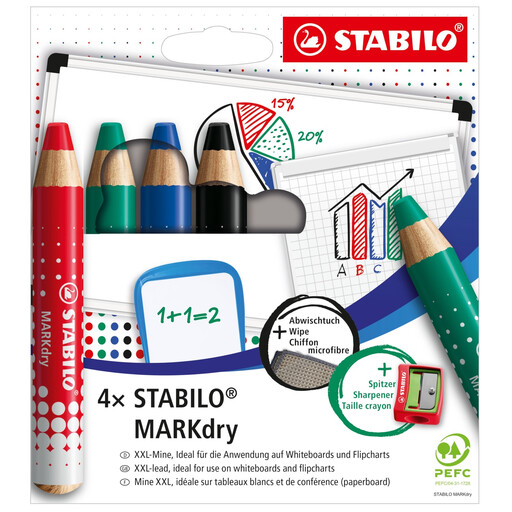
Why it is a good fit: This four-colour set is suitable for pupils, teachers and individuals looking for a straightforward solution for writing on a whiteboard, slate or flipchart.
This is a sharpenable marker pencil rather than a conventional liquid-ink pen. It therefore does not dry out in quite the same way when left unused.
A formula advertised as solvent-free and odour-free, erasable with a dry or damp cloth, with a sharpener and cloth included.
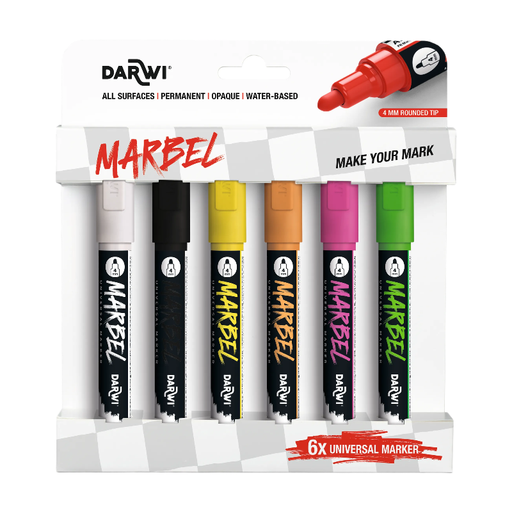
Why it is a good fit: This option is aimed at creatives who decorate a range of surfaces and want a fluorescent palette for craft or artistic projects.
Its water-based acrylic ink is described as permanent and opaque. Do not buy it expecting a dry-erase pen.
4 mm round tip, six colours including four fluorescent shades, a matt finish and opaque coverage, according to the product details.
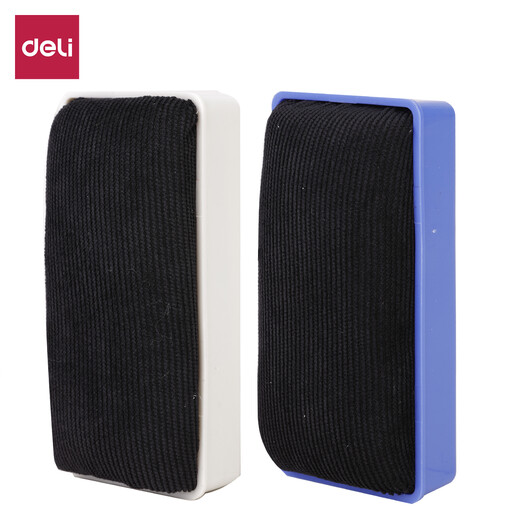
Why it is a good fit: Its compact format is well suited to meeting rooms, shared offices, classrooms and planning boards used regularly.
It is a useful reminder that a whiteboard also needs a proper maintenance accessory. It is designed for dry-erase ink, not permanent markers.
Felt wiping surface, ABS handle and dimensions of 110 × 56 × 40 mm. The felt can be cleaned by hand.
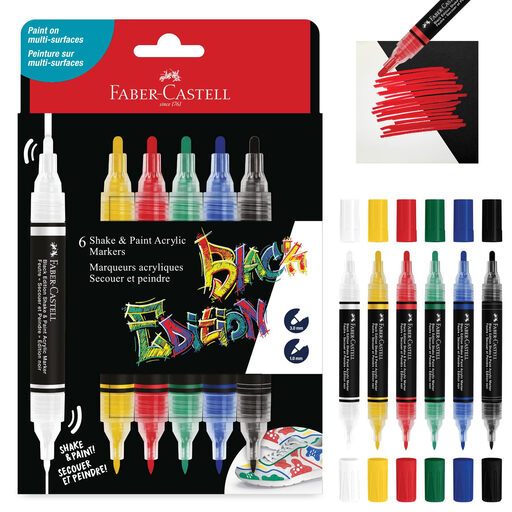
Why it is a good fit: This set is aimed at adults creating on paper, wood, glass, metal, plastic or textiles, depending on the surfaces specified.
The product details clearly distinguish acrylic ink from erasable ink. Shake the marker, prime the tip and replace the cap after use.
Two round tips measuring 3 mm and 1 mm, six colours, and opaque, water-resistant ink, according to the product description.
For everyday use, pair your pens with a suitable writing surface. A magnetic whiteboard is ideal for notes, schedules and documents that need to be attached with magnets. A self-adhesive film can also turn a smooth surface into a temporary writing area.
The Post-it Easy Erase Whiteboard Roll EE3x2, measuring 91.4 × 60.9 cm, can be applied to clean, flat surfaces. Its product details state that it is repositionable and compatible with dry-erase markers. Nevertheless, check compatibility with your surface before applying it.
Students may also want to consider STABILO Swing Cool or BOSS ORIGINAL Pastel highlighters for lessons and revision notes. These products use water-based ink and are not erasable whiteboard pens. The first set contains 18 pieces with 1 and 4 mm chisel tips, while the second contains 15, with line widths of 2 and 5 mm. This distinction is worth keeping in mind to avoid using them incorrectly.
We have brought together an up-to-date selection of products suited to different writing, erasing and organisation needs at home, at school and in the office.
Choose a model explicitly described as dry-erase. Also check its compatibility with glass boards and writing films. A permanent acrylic marker is not suitable for the same purpose.
Replace the cap after every use and store the marker in a dry place with a stable temperature. When recommended by the manufacturer, storing it horizontally can help keep the ink flowing evenly to the tip.
There is no universal lifespan. Replace it when the felt surface no longer removes ink properly, leaves marks or becomes excessively worn. Hand-washing it with mild soap and allowing it to dry completely can nevertheless extend its useful life.