
Livraison le jour même ou le lendemain

Qualité garantie

Débloquez vos offres de bienvenue: Livraison GRATUITE | Jusqu'à -80 % | 30 jours d'essai gratuits à JoyPlus
Téléchargez l'application
A dry-erase whiteboard can simplify a meeting, organise the family timetable or support a revision session. However, choosing the right model is essential. A surface that is difficult to clean, dimensions that are too small or adhesive that will not hold on the intended wall are all unpleasant surprises that could have been avoided before buying. Whether you are looking for a classic office whiteboard or a repositionable film, there are a few key checks to make.
A perfectly smooth surface is not necessarily designed for everyday use. Marks may remain after repeated use, particularly if the marker is unsuitable or the ink has been left to dry. For professional or school use, look for an explicit statement confirming compatibility with dry-erase markers, along with a list of recommended accessories.
Also check the care instructions: dry eraser, soft cloth or specific cleaning product. Excessively abrasive cleaning can damage the surface and make it harder to erase over time.
A 60 x 45 cm whiteboard is sufficient for a few notes, but may prove too narrow for a weekly timetable or group brainstorming. Conversely, a large whiteboard roll requires enough clear wall space and reasonably careful installation.
Measure the available space, taking furniture, light switches and the height at which you will write into account. For an individual desk, a compact format may be perfectly adequate. In a meeting room, a more generous surface significantly improves readability from a distance.
An adhesive whiteboard or dry-erase film should generally be applied to a clean, flat and dry surface. A textured, dusty or freshly painted wall may compromise adhesion. So, while easy installation may be promised, it is still essential to prepare the surface properly.
Also check whether the product is described as repositionable and removable. This is particularly useful in rented accommodation, a temporary home-working space or a flexible classroom.
Choose a surface explicitly described as compatible with dry-erase markers. Writing quality depends on the finish, but also on maintenance and how long the ink remains on the surface.
Some films even claim specific compatibility with permanent markers. In the case of Post-it Easy Erase, the product description states that the film is designed to allow permanent markers to be erased. Nevertheless, it is best to follow the manufacturer's recommendations and test the product on a small area before using it intensively.
The dimensions should suit the intended use:
Also consider the weight, fixing system and whether the board has a frame. A rigid wall-mounted model is less easy to move than a repositionable film.
For a wall-mounted dry-erase whiteboard, check the type of fixing and the nature of the wall. For adhesive film, clean and dry the surface thoroughly before installation, then smooth the film down gradually to minimise creases and bubbles.
Where required by applicable regulations, information about the manufacturer, importer or responsible person in the European Union must be accessible. This does not, by itself, determine writing quality, but it clearly identifies the product and allows you to contact customer services if there is a problem.
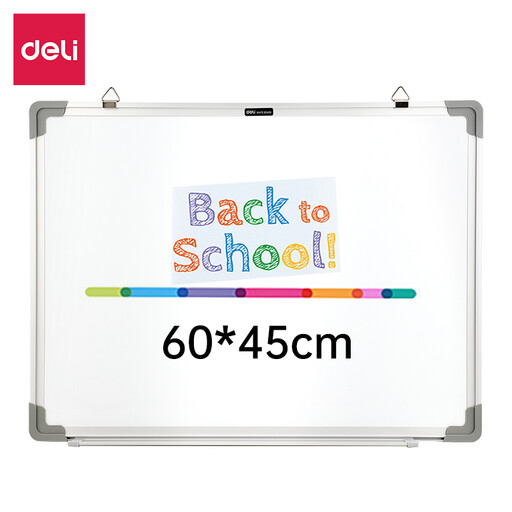
Why this model suits this profile: its size is ideal for to-do lists, reminders and personal planning in an office or bedroom.
The dimensions are given in inches, making it possible to assess the surface accurately before buying rather than relying on a simple photo.
Single-piece dry-erase whiteboard with a surface of approximately 61 x 45.7 cm.
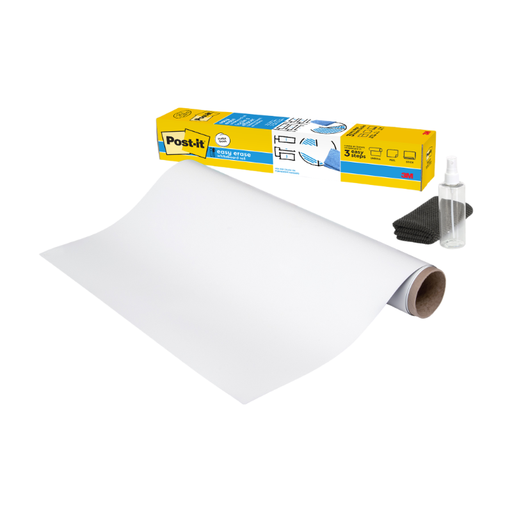
Why this model suits this profile: this film is suitable for home working, shared rooms and anyone who wants to transform an existing surface without installing a rigid board.
The product details state that the film is self-adhesive, removable and repositionable on clean, flat surfaces. However, check that it is compatible with your surface.
91.4 x 60.9 cm roll designed for walls, desks, tables and other flat surfaces.
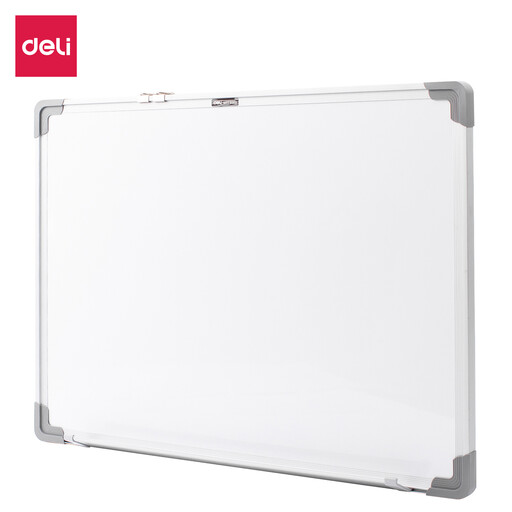
Why this model suits this profile: its standard 45 x 60 cm format is suitable for team timetables, lessons, family organisation or brainstorming sessions.
The metric measurement is stated directly, making it easier to prepare the space and avoid conversion errors.
450 x 600 mm format, silver finish and a design intended for office planning.
We have put together an up-to-date selection of products that meet these criteria for writing, organising and planning every day.
For a rigid model, install the board at a comfortable height for both adults and children who will use it. Secure fixing is essential if the board is used several times a day.
For an adhesive whiteboard, proceed step by step:
Erase notes regularly and avoid markers that are not designed for the surface, unless the manufacturer's product details explicitly confirm their compatibility. A soft, dry cloth is generally enough to minimise residue.
A self-adhesive dry-erase film may be suitable for a clean, smooth and flat surface. For a rigid whiteboard, use only a fixing system suitable for its weight and the type of wall. In rented accommodation, check the removal conditions before getting started.
It depends on how often it is used, the type of marker, maintenance and exposure to light or heat. There is no universal lifespan that applies to every model. Using the recommended accessories and cleaning the surface regularly will nevertheless help preserve its readability.
A magnetic whiteboard allows you to attach sheets, lists or reminders using magnets. This is useful for a family timetable or tracking a team project. If you only need to write notes, a classic model may be sufficient and will require fewer accessories. So compare the surface, format, fixing system and intended use rather than focusing on just one feature.