
Livraison le jour même ou le lendemain

Qualité garantie

Débloquez vos offres de bienvenue: Livraison GRATUITE | Jusqu'à -80 % | 30 jours d'essai gratuits à JoyPlus
Téléchargez l'application
A white wall shelf? It seems simple enough. It's a timeless classic that's easy to integrate into any interior. However, this apparent simplicity hides pitfalls that can quickly turn a promising purchase into a major disappointment. Sagging shelves, chipping finishes, inadequate hardware—unpleasant surprises are all too common. This guide is here to help you avoid those traps and make the right choice.
The market is flooded with options, but not all are created equal. Here are the three main issues to be aware of to ensure you don't regret your purchase.
To be confident in the quality and suitability of your future shelf, scrutinize these three key points.
The choice of material is critical for its durability. A white wall shelf can be made of solid wood, but it is more often constructed from engineered wood panels. The main types are:
The safety of your installation depends entirely on the mounting hardware. Always check the maximum supported weight specified by the manufacturer. Invisible fixings look great for a designer wall shelf, but their mechanism must be flawlessly robust.
Key point: Screws and anchors are rarely included because they must be matched to your wall type. Plan on purchasing appropriate anchors (like Molly bolts for drywall, for example) to ensure a safe and long-lasting installation.
The perfect shelf is, above all, one that meets your needs.
Here are a few models that meet specific needs, selected based on our criteria for quality and functionality.
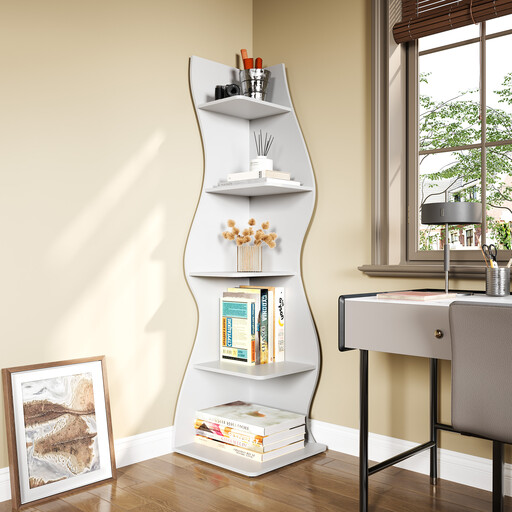
Why we love it: Perfect for transforming a dead corner into a stylish, vertical storage space. Its five tiers offer impressive storage capacity, ideal for books, plants, or decorative items in a living room or office.
This model is functional above all else. Its 5-tier structure maximizes storage and avoids the 'style over substance' trap. A practical solution for small spaces.
It utilizes a frequently overlooked space (the corner) with significant vertical storage capacity. Its design makes it a true decorative element in its own right.
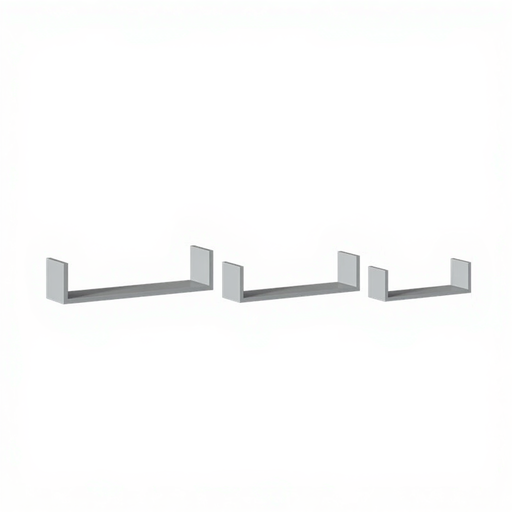
Why we love it: Ideal for those who want to create a custom wall display. This set of three different-sized shelves offers great freedom to arrange a wall with frames, mementos, or small plants, adding a dynamic touch.
The material is clearly identified as MDF, a mark of quality compared to simple particle board. This avoids the trap of a subpar material hidden beneath a nice finish.
Its flexibility. The three sizes allow you to create a unique and scalable wall arrangement, perfect for a small decorative shelf or a more ambitious composition.
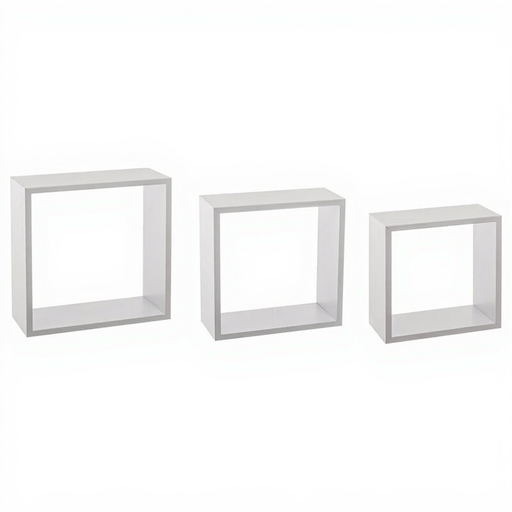
Why we love it: The cube shelf format adds a graphic and very contemporary touch. This set is perfect for creating structured living room wall storage or a mini-library, beautifully framing the items it holds.
With a depth of 12 cm, these cubes are genuinely functional and can hold most paperbacks and decorative objects, thus avoiding the impractical design trap. The different sizes allow for creative arrangements.
A geometric, designer wall shelf style that structures the space. The cubic shape offers excellent stability, both visually and physically, for the items on display.
We have put together a complete, up-to-date selection of products that meet our selection criteria and safety standards.
It varies greatly depending on the material, size, and mounting system. A small decorative shelf might support between 2 and 5 kg (4-11 lbs), while sturdy, well-mounted models made of MDF or solid wood can hold 10 to 15 kg (22-33 lbs) or more. Always refer to the manufacturer's specifications and ensure your wall can handle such a load.
This is a crucial question for safety. For a drywall wall, it is essential to use specific anchors, such as expansion anchors (like Molly bolts). These expand behind the board to distribute the load and provide a rock-solid anchor point. Never use standard brick or concrete anchors in drywall: they will not hold.
Yellowing is often caused by direct sunlight exposure and the use of harsh cleaning products. To maintain its whiteness, simply clean it with a soft, slightly damp cloth. Avoid solvent-based cleaners or abrasive products. If possible, place it away from direct UV rays.