Fans of a pronounced cocoa flavour
If your recipient prefers dark chocolate, a bar labelled as 70% cocoa is a good starting point. Lindt France and Carrefour offer products at this cocoa percentage, though their recipes are worth comparing.


If your recipient enjoys a pronounced cocoa flavour, start with a dark chocolate bar labelled as 70% cocoa. If they prefer a milky or vanilla flavour, choose white chocolate rather than swapping it for dark. If the chocolate is for making a dessert, check its stated use, then compare the recipe, sugar content and allergens of each product.
If your recipient prefers dark chocolate, a bar labelled as 70% cocoa is a good starting point. Lindt France and Carrefour offer products at this cocoa percentage, though their recipes are worth comparing.
If you’re giving a selection of flavours, pair a white chocolate option with a dark one rather than assuming everyone will like both. The white and dark EXCELLENCE bars described by Lindt France illustrate these two different recipes.
A bar intended for baking serves a different purpose from one chosen for eating as it is. Check the ingredients and allergen information too: the products described by Lindt France and Carrefour don’t all have the same recipe.
The flavour you’re looking for will help you choose between white and dark chocolate. Then compare the recipe and intended use to find the right bar.
| What matters | What to check | Who it’s for |
|---|---|---|
| Cocoa flavour | Product name, stated cocoa content and ingredients. | If I’m looking for a pronounced cocoa flavour in a bar to give as a present, I start by looking at dark chocolate. Around 40% of consumers are said to prioritise this intensity. |
| Variety of flavours | Whether white and dark options are available, along with the formats and stated uses. | If several recipients don’t like the same kind of chocolate, I prefer to include two different recipes. This variety is said to be a priority for around 30% of consumers. |
| Ingredients | Ingredients, sugar per 100 g, allergens and “may contain” warnings. | If someone needs to watch what they eat or avoid certain allergens, I check the label on the bar before adding it to the assortment. Around 30% of consumers are said to put this check first. |
The EXCELLENCE recipes described by Lindt France are different: the white bar contains cocoa butter and milk ingredients, among other things, while the 70% dark bar contains cocoa mass.
Choose according to your recipient’s taste and how they’ll use it. If you’re putting together an assortment, label each bar clearly.
According to Santé publique France and the DGCCRF, displaying Nutri-Score is voluntary. Its presence doesn’t replace checking the nutrition information, ingredients and allergens.
If it appears on the packaging, use it as extra information and compare the nutritional values per 100 g of the products you’re considering.
Lindt France lists allergens or possible traces for the white and dark chocolate bars reviewed. So “dark” doesn’t necessarily mean “dairy-free”.
If someone has an allergy, check the ingredients and “may contain” warnings on the packaging of the product you actually buy.
The levy described by the French Ministry of the Economy applies to sugary drinks, not chocolate bars.
To compare two chocolates, check the sugar content and ingredients list for each product instead.
The white and dark EXCELLENCE bars described by Lindt France let you compare two recipes for an assortment.
The white and dark products described by Carrefour and Auchan are intended for baking, which is different from eating chocolate as it is.
The 200 g organic 70% dark chocolate bar described by Carrefour is worth considering for sharing or cooking.
These dark chocolate bars suit different needs for your Christmas shopping: eating as they are, a smaller portion, a recipe with added ingredients or baking. If you’re putting together an assortment of white and dark chocolate, choose a white chocolate bar separately to match the flavours and ingredients you’re looking for.
 Image unavailable
Worth considering if your recipient is looking for a dark chocolate bar with a higher cocoa content than the 70% starting point. Make sure it suits their taste, and check the allergen and trace warnings on the packaging if they have an allergy.
 Image unavailable
An option to consider if your recipient would like a dark chocolate bar labelled as 70% cocoa. The stated recipe contains maltitol; excessive consumption may have a laxative effect. Read the label before adding it to an assortment.
 Image unavailable
A way to add variety to an assortment rather than choosing only plain dark chocolate bars. If the cocoa content matters, check the label: the stated 70% applies to the chocolate part, not necessarily the whole bar. If you have an allergy, check for trace warnings too.
 Image unavailable
The 35 g size is a good choice if you want a small individual bar rather than a larger one to share. If you have an allergy, check the packaging for trace warnings for nuts, milk and soya.
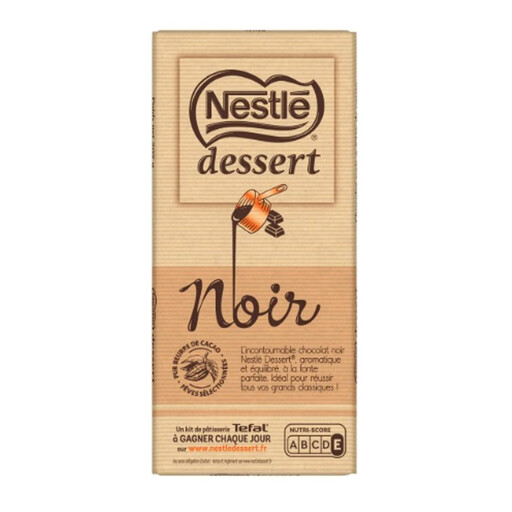 Image unavailable
Worth considering for making a Christmas dessert rather than choosing a bar for eating as it is with a specific cocoa content. If your recipe or recipient requires at least 70% cocoa, check the percentage on the product. Also check for milk and nut warnings.
No. The levy described by the French Ministry of the Economy applies to sugary drinks, not chocolate bars. To compare bars, check the sugar content in their nutritional information.
No. Santé publique France and the DGCCRF state that Nutri-Score is voluntary. Whether or not it appears on the packaging, check the ingredients, allergens and nutritional information for the pre-packed product.
Check the ingredients, highlighted allergens and “may contain” warnings on every pack you buy. The white and dark products described by Lindt France contain allergenic ingredients or carry trace warnings, so the colour of the chocolate isn’t enough to tell you.
Follow the storage instructions on each pack. Joybuy’s product listings for the Lindt Excellence 70% mini bar and Nestlé Dessert dark chocolate state that they should be kept away from heat; the latter also mentions moisture.