
Livraison le jour même ou le lendemain

Qualité garantie

Débloquez vos offres de bienvenue: Livraison GRATUITE | Jusqu'à -80 % | 30 jours d'essai gratuits à JoyPlus
Téléchargez l'application
White sports socks might seem simple to pick. Yet a poorly chosen pair can slip down inside your shoe, trap sweat, or wear out prematurely at the heel. Whether you’re into sport, basketball, daily commutes or office wear, certain factors matter far more than colour or the promises on the packaging.
Cotton socks feel pleasant against the skin and absorb moisture effectively. However, a thick pair made from 100% cotton can take a long time to dry after a session. For regular sporting activity, look instead at the knit construction, the possible inclusion of synthetic fibres, and the fabric’s ability to stay comfortable during exercise.
The term breathable socks doesn’t always refer to a precise standard. It’s better to examine the composition, the thickness of the sole, and the knit structure. A more open weave can help air circulate, while a terry sole offers extra comfort — though it may make your foot too hot in a snug shoe.
A sock that’s too big will create folds that can irritate your toes. One that’s too small will compress your foot and wear out faster. The ribbed cuff should stay in place without being too tight. For European sizes, rely on the seller’s size guide rather than a vague indication like “one size fits all”.
For weight training, brisk walking or gym workouts, cushioned socks can reduce friction thanks to a terry or looped sole. However, they take up more room inside your shoe. For the office or smart shoes, a fine knit will generally be more comfortable and easier to wear.
Basketball socks are often thicker and come up to the calf. This cut works well with high-top shoes and repetitive movements, but it’s not essential for everyday use.
An elastic band across the instep or arch can improve support. Also check that the heel is well-shaped and the toe seam is discreet.
The phrase antibacterial socks should be taken with a pinch of salt. It could refer to a textile treatment, a specific fibre, or a performance measured under very particular conditions. The product sheet for the Li-Ning model shown below, for example, states efficacy rates against certain bacteria and yeasts. These figures come from the product presentation and are in no way a medical guarantee.
To limit odours, nothing beats regular washing, thorough drying, and rotating between several pairs. So don’t choose a model based solely on an antibacterial promise.
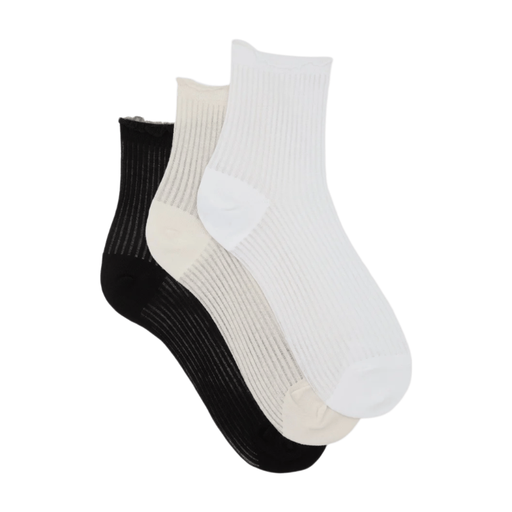
Why this choice suits this profile: This versatile white pair is ideal for anyone looking for a solution for everyday life, leisure and some moderate sporting activities. The stated one-size-fits-all covers European sizes 36 to 43.
With 75% combed cotton, 22% polyester and 3% elastane, the stated composition avoids relying solely on thick cotton. The ribbed cuff and stretchy knit are designed to keep the sock in place.
Soft combed cotton, polyester reinforcement in high-friction areas and a leg height of approximately 16 to 18 cm according to the product sheet.
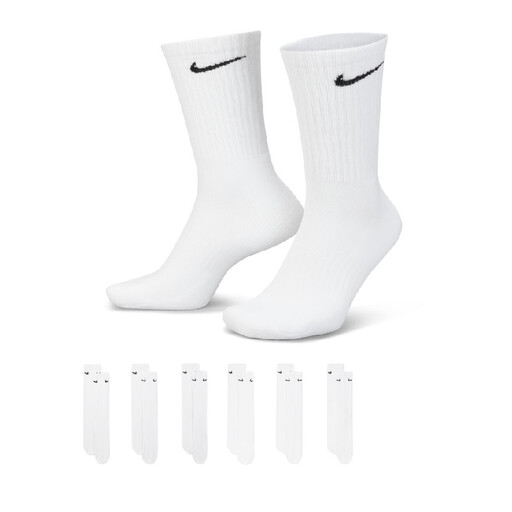
Why this choice suits this profile: This six-pack is aimed at those who want to refresh their training kit with thicker socks and a mid-calf cut.
The product sheet mentions a thick terry sole and a ribbed band across the instep. These features help reduce friction and slipping during exercise.
Pack of 6 pairs, cushioned sole and European sizes S: 34-38, M: 38-42, L: 42-46 and XL: 46-50.
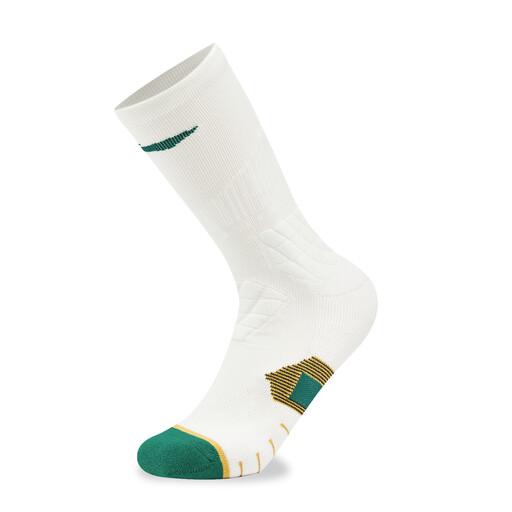
Why this choice suits this profile: This crew-length pair is designed for basketball players and users looking for a covering, stretchy sports sock that can keep up with repeated movements.
The crew height and elasticated turnover reduce the risk of the sock slipping down during play. The product sheet also states an antibacterial treatment with precise rates for several micro-organisms: these indications are linked to the manufacturer’s presentation conditions.
Stretchy knit, jacquard pattern, unisex cut and sizes covering European sizes 35 to 44 according to the size chart provided.
We’ve put together a comprehensive, real-time updated selection of products that meet these demanding criteria and European safety regulations.
To preserve the elasticity and whiteness of your socks, follow the instructions on each model’s label. A machine wash at a moderate temperature, without bleach, is suitable for the products shown. Avoid excessive drying and always let your socks dry completely before storing them.
The lifespan depends on how often you wear them, the type of shoe, and your washing habits. A pair worn several times a week in sports shoes will experience more friction than a pair reserved for the office. A thinning heel, a hardened sole or a loose elastic: these signs generally mean it’s time to replace them.
Yes, as long as you choose a mid-calf or over-the-calf cut, effective support and a sole thick enough for your shoe. Models that are too thin may lack comfort during repeated movements.
Cotton offers a soft, natural feel. For regular sessions, a blend that includes polyester and elastane can dry more quickly and stay in place better. However, check the thickness to avoid the sock compressing your foot inside the shoe.
For frequent sporting activity, a pack of white socks containing several pairs makes rotation and washing easier. Allow at least one clean pair per session, plus a few extra pairs if you do several activities or also wear these socks every day.