For a break with a set portion
If you pop a single item into your bag or desk drawer, check its weight and the number of pieces in the pack. A small piece and a whole bar don’t necessarily count as the same portion.


For a break at work, start by choosing an amount you’ll actually eat: a mini wafer lets you have just one small piece, while a bar or pack of several biscuits means checking what counts as a portion. Then compare the sugars and energy per 100 g and per portion, without confusing plain white chocolate with a coated wafer or a white chocolate biscuit. Check the ingredients and allergens on the pack you buy.
If you pop a single item into your bag or desk drawer, check its weight and the number of pieces in the pack. A small piece and a whole bar don’t necessarily count as the same portion.
A wafer, a caramel biscuit or a hazelnut recipe won’t satisfy the same craving as a square of plain white chocolate. Their ingredients and allergens should also be checked separately.
If sugars, energy or particular ingredients influence your choice, compare the nutritional information on the same basis and check the ingredient list on the pack you’re buying.
Start with the amount you’ll actually eat, then compare recipes and check the ingredients that matter to you.
| What to check | Look for | Who is it for? |
|---|---|---|
| Portion to take with you | Weight of each piece, number of pieces per portion and packaging. | For a break on my own, I want to know how much I’ll open and eat, without having to start a whole bar. Around 45% of consumers put portion control at the heart of their choice. |
| Sugars and energy | Nutritional values per 100 g, then for the portion you’re considering. | If I’m choosing between a mini piece and a bar, I want to compare the recipes without their size skewing the figures. Around 33% of consumers prioritise nutritional comparisons. |
| Recipe and allergens | Ingredient list and allergens shown on the pack you buy. | If I need to avoid an ingredient or want white chocolate rather than a coated biscuit, the ingredients matter more than the format. This is the main consideration for around 22% of consumers. |
Snack products may combine a wafer, biscuit, caramel or hazelnut with a white coating. Their taste and ingredients differ from those of a white chocolate bar.
Check the product description and ingredient list before choosing between a coated wafer, a biscuit and a bar of chocolate to break into pieces.
A mini piece and a whole bar don’t weigh the same. Their per-portion figures tell you about the amount eaten, but aren’t enough to compare the recipes.
Compare the figures per 100 g first, then check those for the amount you plan to eat.
According to the DGCCRF and Santé publique France, displaying Nutri-Score is voluntary in France. Its absence alone doesn’t tell you what a product is made of.
Check the nutritional information and ingredients. If Nutri-Score appears on the pack, compare it only with products in the same category.
A wafer or hazelnut recipe may contain different ingredients from those you’d expect in plain white chocolate. Allergen and ‘may contain’ warnings vary by product.
Check the allergens on the pack you buy, even if you already know the product name.
These product examples help distinguish between different types of snack; a brand doesn’t guarantee that another of its products has the same portion size or recipe.
LION White and KitKat Mini White are two examples of white-coated wafer formats listed by Auchan.
Twix White combines biscuit, caramel and white chocolate in the pack of 5 two-bar packets described by Auchan.
Kinder Bueno White is a hazelnut wafer with white chocolate, sold in the pack of 6 two-bar packets described by Auchan.
EXCELLENCE Blanc Extra Velouté is a 100 g white chocolate bar, designed to be broken into pieces rather than taken along as an individual bar.
These products include a coated wafer, white chocolate biscuits and coated biscuit sticks. If you want to take a single portion with you, check the number of pieces and how they’re packaged: these formats aren’t interchangeable with a plain white chocolate bar.
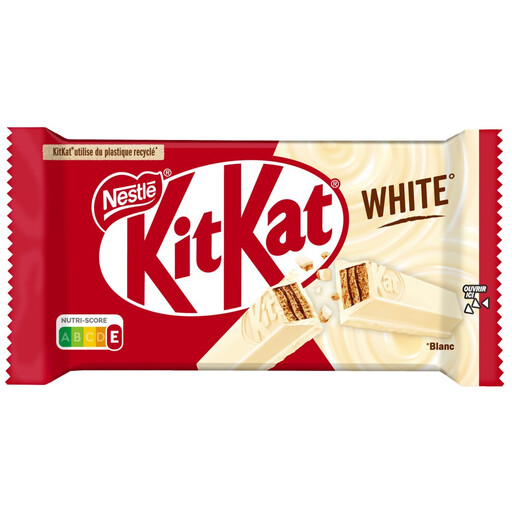 Image unavailable
A wafer coated in white chocolate, worth considering if you want a bar for your break rather than plain white chocolate. The stated size is 41.5 g; check the pack for the portion you’ll eat and information about wheat and milk.
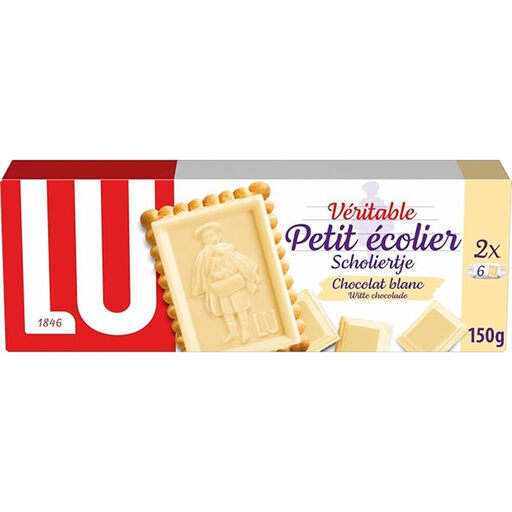 Image unavailable
White chocolate biscuits for a break where you choose how many pieces to have, rather than a white chocolate bar. The pack states 150 g in total; check the weight of each biscuit, how they’re packaged and the ingredients, particularly if you need to avoid wheat, milk or soya.
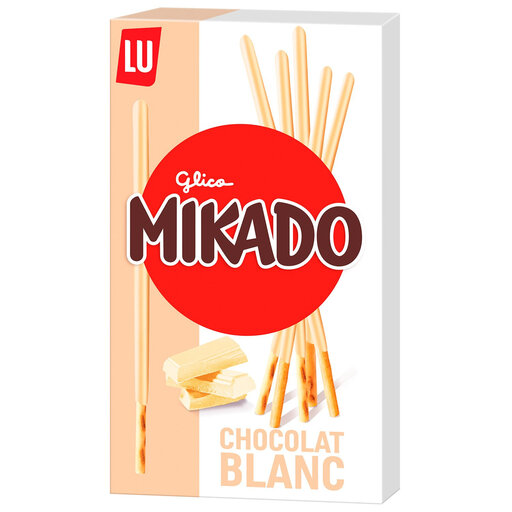 Image unavailable
Biscuit sticks coated in white chocolate, ideal if you’d rather have several small pieces than a bar. The pack states 70 g in total; check how many sticks make up your portion and read the allergen information on the packaging.
No, not to a solid chocolate bar: the contribution described by the Ministry of the Economy applies to sugary drinks. When choosing a bar, look instead at its ingredients and nutritional information.
No. The DGCCRF and Santé publique France say that displaying it is voluntary in France. When it appears, it can help you compare products in the same category; its absence isn’t enough to draw a conclusion about a product’s nutritional value.
First, check the sugars per 100 g to compare the recipes on a like-for-like basis. Then look at the figure for the portion you plan to eat: a small piece and a whole bar aren’t the same amount.
Follow the storage instructions on the packaging. For the LION White and KitKat Mini White products listed by Auchan, the product information specifies keeping them in a cool, dry place away from light.