Cyclists planning a snack outside their main fuelling plan
If you want to take a portion for a break or after your ride, treat it separately from the carbohydrates you plan to consume during exercise.


Choose individually portioned treats for lunchboxes, two bars to break up at home or a large bag of bites for sharing. For a bike ride, don’t mistake these snacks for planned fuel: check the carbohydrates per portion, fat content, allergens and exactly what the product is. It may be a biscuit or wafer with a white coating rather than a bar of white chocolate.
If you want to take a portion for a break or after your ride, treat it separately from the carbohydrates you plan to consume during exercise.
Individually portioned treats are easier to divide up. However, check the weight of each portion and the allergens in the product you choose.
Two bars or a large bag can serve several people, but you’ll need to decide on the portions before handing them out.
First, decide whether the product is for eating during a ride, packing in a lunchbox or sharing. This will determine the format and nutritional information you need to check.
| Criterion | What to check | Consumers concerned |
|---|---|---|
| Eating during a bike ride | Carbohydrates per portion taken, fat content and how that portion fits into your fuelling plan. | If I eat during a ride, I want to distinguish a treat from planned carbohydrate intake. Around 36% of consumers prioritise this distinction. |
| Lunchbox portions | Number of pieces, weight of each and whether they’re individually wrapped. | When preparing several lunchboxes, I look for portions that are easy to allocate without having to break up a bar. This convenience is the main priority for around 29% of consumers. |
| Sharing | Total weight, whether the pieces are individually portioned and storage instructions. | When a pack is for several people, I prefer to plan the portions before opening it. Sharing comes first for around 21% of consumers. |
| Ingredients | Product description, ingredients, allergens and nutritional information per 100 g and per portion. | If the ingredients determine my choice, I need to know whether I’m buying white chocolate, a chocolate-coated biscuit or a wafer with a white coating. Around 14% of consumers put this check first. |
Sugar content alone doesn’t tell you what role a snack can play during exercise. A 2015 publication indexed on PubMed refers to 30 to 60 g of carbohydrates per hour for exercise lasting 1 to 2.5 hours. This doesn’t mean that a particular white chocolate product is suitable as fuel.
Check the carbohydrates in the portion you’ll actually take and how well you tolerate it during training. Don’t automatically replace your planned fuelling.
Milka Mini Stars are biscuits filled and coated with white chocolate, while KitKat White is a wafer with a white coating. The product description and ingredients matter just as much as the pack format.
Read the product description and ingredients before comparing portions or nutritional information.
According to Santé publique France, producers display Nutri-Score voluntarily. If it’s not shown, you still need to read the nutritional information and ingredients.
If it appears on the packaging, use it to compare products in the same category, then check the portion size and allergens.
The 1 kg LINDOR White bag is designed for sharing, but its total weight doesn’t tell you how much to give each person.
Prepare the portions you need and check the storage and delivery information, particularly in warm weather.
According to Carrefour France, Mini Stars White comes in a box of biscuits filled and coated with white chocolate, with 4 bags totalling 150 g.
KitKat White is a wafer with a white coating. Carrefour France lists a 252,7 g bag, while Joybuy offers a 41,5 g bar.
Carrefour Classic’ is a white chocolate product sold as two 100 g bars, according to Carrefour France.
Lindt offers LINDOR White in a 1 kg bag, designed for gifting or sharing.
These products are bars and biscuits with a white coating or white chocolate, suitable for dividing up for a break, a lunchbox or sharing. Check the packaging of each product if you need individually wrapped portions.
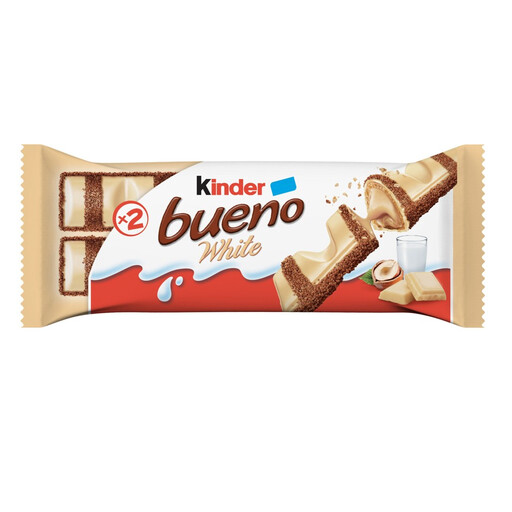 Image unavailable
The bipack could be handy for splitting a snack between two breaks or two people. It’s a wafer with a white coating, not a white chocolate bar. Check the allergens and the portion you plan to take with you.
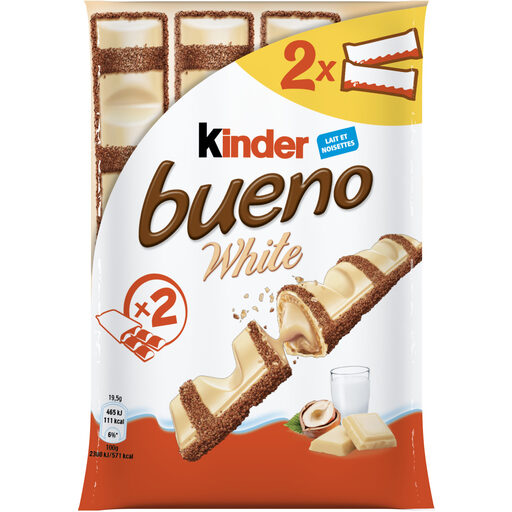 Image unavailable
This format of bars with a white coating could work for preparing several portions. Check the number of bars on the packaging, as the information available for this product doesn’t match. Also check the salt content on the label.
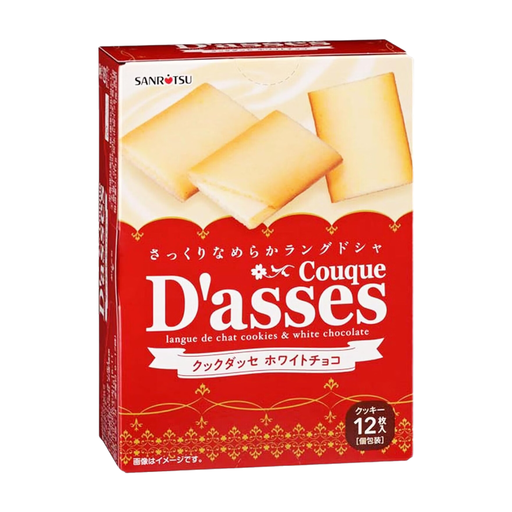 Image unavailable
These white chocolate biscuits can be divided up for sharing or lunchboxes. Before choosing them to take with you, check whether the pieces are individually wrapped and how much each portion weighs.
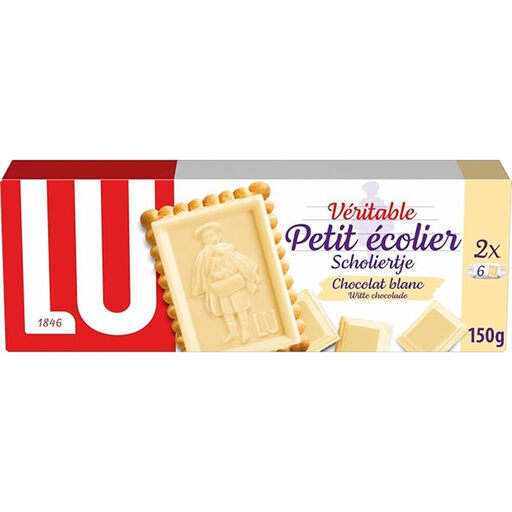 Image unavailable
The 150 g pack can be used to prepare biscuit portions for lunchboxes. Before planning how to divide them up, check the number of biscuits, their individual weight and whether they’re individually wrapped.
Don’t automatically treat it as your main fuel. A 2015 publication indexed on PubMed refers to 30 to 60 g of carbohydrates per hour for exercise lasting 1 to 2.5 hours. If you take this snack with you, include the carbohydrates in your portion in your overall plan and check how well you tolerate it during training.
No. According to Santé publique France, producers display it voluntarily. When it’s shown, it can help you compare products in the same category. You should also read the ingredients, allergens and nutritional information.
No. Article 1613 ter of the French General Tax Code, published by Légifrance, defines a contribution that applies to drinks and liquid preparations for drinks, not to solid white chocolate bars or bites.
Read the product description and ingredients rather than relying on the word “white” alone. Then check the allergens for the product you’re considering: a biscuit or wafer won’t have the same ingredients as a bar of chocolate on its own.