Parents preparing a small treat
You’d like to add white chocolate to your child’s lunchbox now and again, without making it the whole snack. The format matters most if it lets you take out a few pieces and put the rest away.


For a school lunchbox, choose white chocolate that lets you prepare a small portion and check the allergens, rather than putting a whole gift box in your child’s bag. A gift box may be suitable for giving, but its presentation doesn’t tell you whether the contents are individually wrapped. Compare the sugar content per 100 g too, and consider how much you’ll actually give your child. For children aged 4–17, Manger Bouger recommends limiting sugary and fatty foods as part of their everyday diet. It suggests a few squares of chocolate with bread, accompanied by a piece of fruit or a dairy product.
You’d like to add white chocolate to your child’s lunchbox now and again, without making it the whole snack. The format matters most if it lets you take out a few pieces and put the rest away.
The exact recipe matters more than the brand or appearance of the chocolate. Check the ingredients and any ‘may contain’ warnings on the product you’re buying before deciding whether it’s suitable for your child’s needs.
A gift box may be a lovely present, but it might not be practical for school. If some of its contents are going into a lunchbox, check how the chocolates are wrapped and portioned.
For a lunchbox, start with the portion you plan to prepare, then check the recipe and packaging of the specific product.
| What to consider | What to check | Who is it for? |
|---|---|---|
| Portion size and sugars | Compare the sugar content per 100 g, then check how much sugar is in the squares or pieces you plan to pack. The number of servings shown on the packet won’t necessarily match the portion you choose for the lunchbox. | If I’m preparing the snack, I want to limit the amount of chocolate without mistaking the whole bar for one portion. Around 33% of consumers put this need first. |
| Allergens | Read the highlighted ingredients and any ‘may contain’ warnings on the product and batch you’re buying. | If a child needs to avoid an allergen, the exact recipe determines whether the product is suitable. This is the top priority for around 42% of consumers. |
| Transport and presentation | Before choosing a gift box, bar or single item, check whether it contains individually wrapped portions, how many there are and how the product should be stored. | If I’m giving a gift box and then packing a small portion for school, I need to know how to separate and transport its contents. Around 25% of consumers prioritise this question of format. |
In France, the DGCCRF distinguishes between nutrition labelling, which is compulsory for most prepacked foods, and the Nutri-Score, which is voluntary. So, the absence of this logo doesn’t tell you whether a chocolate meets requirements or what it contains.
To compare two products, read their nutritional information, particularly the sugar and fat content per 100 g, as well as their ingredient lists.
Article 1613 ter of the General Tax Code, published by Légifrance, applies to drinks and liquid preparations for making drinks, not solid white chocolate bars or gift boxes. This tax doesn’t tell you how much sugar chocolate contains.
Compare the ‘sugars’ value directly on the packaging and take into account how much you’ll put in the lunchbox.
Auchan’s listings for the Lindor White Cornet and Nestlé Dessert bar say they don’t contain individual wrappers. So, a product intended as a gift or for baking isn’t necessarily ready to take to school in a small portion.
Check the packaging and storage instructions for the product you choose. If you take out a portion, put it in a clean, sealed container.
Ingredients and ‘may contain’ warnings can vary between white chocolate products. A gift box’s presentation or the colour of the chocolate can’t rule out an allergen.
Read the packaging for the product and batch you’re buying, particularly if you’re switching to a different variety or format.
These examples illustrate different uses. The listing for each specific product is what matters for its ingredients, nutritional information and packaging.
Milka Oreo combines white chocolate with biscuit pieces. It’s worth considering if the recipe matters more to you than a gift-box presentation.
Lindor White chocolates in a cornet are better suited to giving or sharing than as a ready-portioned school snack.
Nestlé Dessert White cooking chocolate is best suited to recipes made at home, rather than as a gift box ready to pop in a bag.
Carrefour Bio’s bar is one white chocolate option to compare by checking the label. Don’t assume that the organic label alone tells you the portion size or whether it’s suitable for someone with an allergy.
The retailer stocks a range of white chocolate bars from different brands, with different recipes.
The retailer offers different types of chocolate, including white chocolate. Choose based on the specific product rather than the retailer alone.
These two white chocolate and biscuit products are worth considering if you’d like to prepare a treat using a compact format. Before packing the lunchbox, you’ll still need to check the portion size, packaging and allergens.
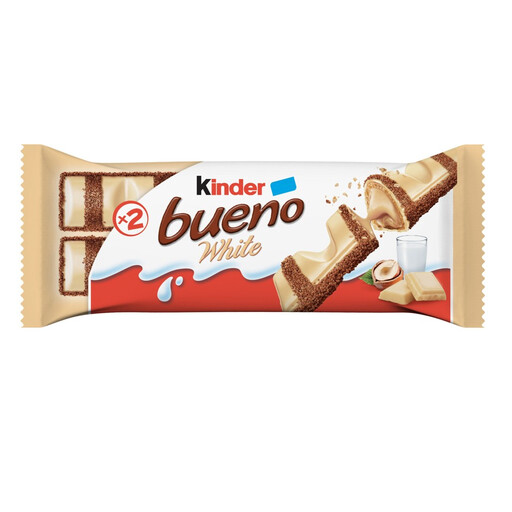 Image unavailable
This twin pack may suit you if you’d rather take out part of the product than put the whole pack in the lunchbox. Check the packaging to see whether the two bars are wrapped separately and how much sugar is in the portion you choose. If your child has dietary restrictions, read the ingredients and any ‘may contain’ warnings on the batch you’re buying.
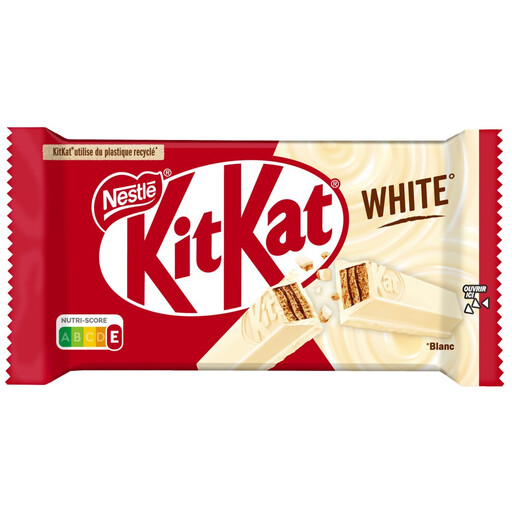 Image unavailable
This single bar is worth considering if you want to decide for yourself how much to take. Its net weight is 41.5 g; check the individual packaging and the nutritional information for the portion you plan to pack. Also check the allergen list on the packet you buy.
No. Article 1613 ter of the General Tax Code, published by Légifrance, applies to drinks and liquid preparations for making drinks, not a box of solid white chocolates. To compare its sugar content, check the nutrition information instead.
No. In France, the DGCCRF explains that the Nutri-Score is voluntary, while nutrition labelling is compulsory for most prepacked foods. Whether or not the logo is shown, compare the nutritional information and ingredients of the products you’re considering.
Check the allergens listed in the ingredients and any ‘may contain’ warnings for the product you’re buying. Depending on the recipe, these may include milk, soya, wheat, peanuts or tree nuts. The brand name is no substitute for reading the packet.
First, follow the manufacturer’s storage instructions. If the product doesn’t have an individual wrapper, take out the portion you want and put it in a clean, sealed container. Bear in mind that your child’s bag may be exposed to heat.
For children aged 4–17, Manger Bouger recommends limiting sugary and fatty foods as part of their everyday diet and offering a varied snack. Its example pairs a few squares of chocolate with bread and a piece of fruit or a dairy product, rather than making chocolate the only part of the snack.