People organising the serving
You’re making crêpes for a group and would rather offer individual pieces than break up a chocolate bar when it’s time to serve.


To serve white chocolate with crêpes, choose bite-sized pieces if you want to offer one piece at a time. A breakable bar makes sharing in a different way easy, while a mini biscuit is only suitable if you’re looking for something with a biscuit base. In every case, check the serving weight, the sugars per 100 g and the allergens listed for the product you choose.
You’re making crêpes for a group and would rather offer individual pieces than break up a chocolate bar when it’s time to serve.
Depending on the recipe, it may contain milk, soya, wheat or nuts. A smaller format doesn’t remove the need to check the label on the product you choose.
A white chocolate bite isn’t the same as a coated wafer or a biscuit topped with chocolate, served alongside crêpes.
First decide whether you want white chocolate to serve as it is or a biscuit-based product, then compare the size of the pieces and the information on the label.
| What to consider | What to check | Who is it for? |
|---|---|---|
| Portion size and serving | The number of pieces, their weight if stated, and the “of which sugars” figure per 100 g. | If I’m sharing crêpes and toppings among guests, I want to know how much one piece represents. Around 33% of consumers prioritise controlling the serving size of each portion. |
| Allergens and ingredients | The ingredients list and allergen information, including “may contain” warnings, on the pack you choose. | If I need to account for an allergen or avoid an ingredient, the product name alone isn’t enough to help me choose. Checking the ingredients is the main priority for around 45% of consumers. |
| Type of product | The product description: white chocolate bite, coated wafer or chocolate-topped biscuit. | If I want white chocolate with my crêpes rather than a biscuit, I need to tell these recipes apart. Around 22% of consumers make this distinction their priority. |
A small piece doesn’t tell you how much sugar it contains. The serving format and the nutritional information are two separate things.
Compare the “of which sugars” figure per 100 g, then check the weight of the piece or bar you’re planning to serve.
KitKat White is a wafer with a white coating, while Milka Mini Stars White is a biscuit with a filling and a white chocolate topping. Neither is simply a white chocolate bite.
If you want white chocolate to serve with crêpes, check the product description and ingredients before choosing a biscuit-based format.
France’s Ministry of the Economy states that displaying Nutri-Score is voluntary in France. Nutrition declarations are generally required for prepacked foods and let you check the values per 100 g, among other information.
Use Nutri-Score if it’s displayed, but don’t rely on the logo alone instead of checking the nutritional information and ingredients.
The LINDOR range includes white chocolate balls to serve individually.
KitKat White is for when you fancy a wafer with a white coating, rather than white chocolate on its own.
Mini Stars White is a biscuit option in small individual bags.
The retailer offers several types of product associated with white chocolate, so it’s worth checking which one you’re buying.
A chocolate bar can be a useful comparison if you don’t need individual pieces.
These products include white chocolate pieces, biscuits and wafers you could serve with crêpes. Choose according to the type of product you actually want to serve.
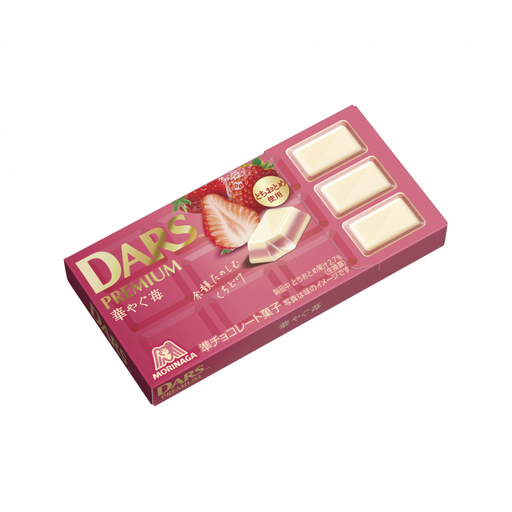 Image unavailable
Worth considering if you’d like to serve small white chocolate and strawberry pieces with your crêpes. If these details matter to you, check the weight of each piece, the sugar content and allergens on the packaging.
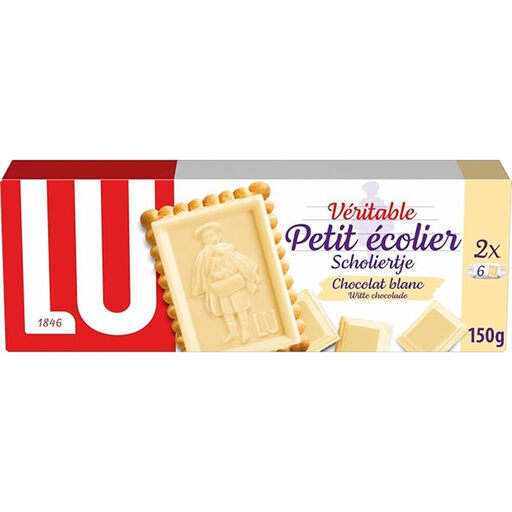 Image unavailable
This is a good option if you’d like to serve a white chocolate biscuit rather than a chocolate bite on its own. If any of your guests have allergies, check the label on the exact pack you’re buying.
 Image unavailable
Consider this if you’d like to serve small pieces combining white chocolate and strawberry with a wafer cone, and that sounds like the right choice for you. It isn’t white chocolate on its own, so check the weight of the pieces and allergen information on the pack.
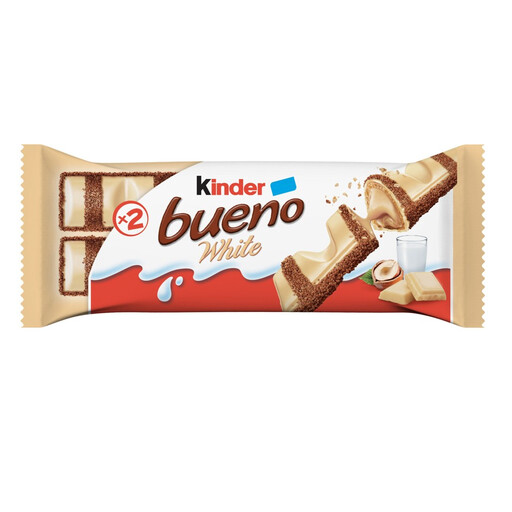 Image unavailable
The two-bar pack may suit you if you’d rather share out wafers than white chocolate bites. The recipe also includes hazelnuts, so check the allergen information on the packaging before serving.
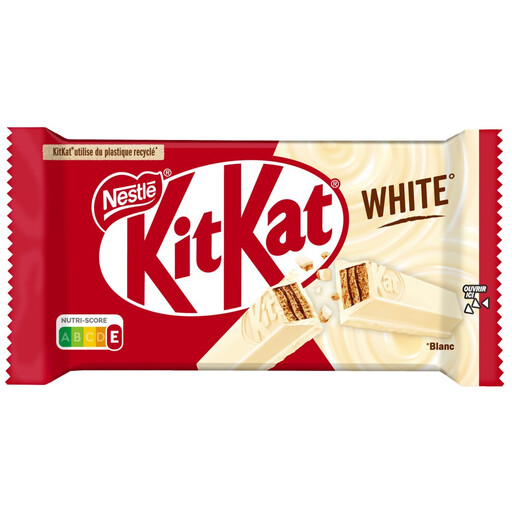 Image unavailable
This bar can be served as it is if a wafer with a white coating is what you’re after, rather than a white chocolate bite. The Joybuy France listing states 47.3 g of sugars per 100 g and lists wheat and milk as allergens. Check the format if you’d like to share it in smaller portions.
No. France’s Ministry of the Economy describes this tax as applying to sugary drinks, not solid white chocolate. To compare chocolates, check the “of which sugars” figure in their nutrition declarations instead.
No. According to France’s Ministry of the Economy, displaying it is voluntary in France. A nutrition declaration is generally required for prepacked foods and includes values per 100 g, among other details. It’s useful whether or not Nutri-Score appears on the pack.
First compare the “of which sugars” figure per 100 g: the DGCCRF says this shared basis makes it easier to compare prepacked foods. Then check the weight of each piece, where stated, to gauge how much you’re planning to serve.
No. The recipes mentioned here differ: Lindt lists milk and soya for white LINDOR, which may also contain nuts; the Joybuy France listing for KitKat White mentions wheat and milk; and Carrefour describes Milka Mini Stars White as containing wheat, milk and soya, with a possibility of egg. Always check the information on the pack you’re going to serve.