Who are these options for?
The right choice depends mainly on what you want from your break: a white chocolate recipe without a dominant filling, a different texture or a real contrast with dark chocolate.
Fans of creamy sweetness
If you want a plain white chocolate bar for a simple treat, check the ingredients list and sugars per 100 g. The product details for Lindt EXCELLENCE Blanc Extra Velouté and GALAK describe recipes that include cocoa butter and dairy ingredients.
Fans of different textures
If crunch matters more, a recipe with biscuits or nuts offers something different from a plain bar. Auchan’s white chocolate and hazelnut bar is one example; check the allergens for the specific product you choose.
Anyone looking for a cocoa-rich contrast
If “dark white chocolate” means you’re in the mood for dark chocolate, look for a recipe that explicitly mentions both types of chocolate, or buy them separately. Lindt, for example, offers a bar combining dark and white chocolate. White chocolate on its own shouldn’t be treated as though it were dark chocolate.
What should you look for in an afternoon treat?
First decide whether you want plain sweetness, a texture with inclusions or actual dark chocolate. Then compare the ingredients of the specific product you’re considering.
| Priority |
What to check |
Who is it for? |
| Plain sweetness |
The product name and ingredients list; sugars per 100 g. |
For a treat without biscuits or nuts taking centre stage, I’d choose the flavour of a plain white chocolate bar. Around 42% of consumers put this simple sweetness at the top of their list. |
| Crunch and inclusions |
The type of inclusions and allergens, including any warnings about traces. |
If I want something crunchy with my afternoon treat, I’d look for recipes with biscuits or nuts. This texture would be the priority for around 33% of consumers. |
| White and dark chocolate contrast |
Whether dark chocolate is explicitly mentioned in the product name or ingredients; the composition of the mixed recipe. |
When white chocolate is too sweet on its own, I look for a genuine dark chocolate element. Around 25% of consumers prioritise this cocoa-rich contrast. |
Brands to compare
These examples show different recipes and uses. Always compare the information for the specific bar or product rather than generalising to an entire brand.
Lindt
Lindt’s French range includes an EXCELLENCE white chocolate bar, LINDOR recipes and a bar combining dark and white chocolate.
- The Lindt EXCELLENCE Blanc Extra Velouté product details list the ingredients and 57 g of sugars per 100 g, making it useful to compare this recipe with another bar.
- A filled white chocolate recipe isn’t the same choice as a plain bar. For a dark chocolate flavour, check that dark chocolate is actually included in the recipe you choose.
GALAK (Nestlé)
Auchan’s product details describe GALAK as a 100 g white chocolate bar made with cocoa butter, skimmed milk and vanilla.
- Its plain white chocolate format suits anyone looking for sweetness without prominent inclusions.
- Auchan’s ingredients list mentions glucose syrup and possible traces of nuts. Check the packaging if these details matter to you.
Nestlé Dessert
Auchan’s product details describe Nestlé Dessert Blanc as a 170 g white cooking chocolate bar, intended in particular for adding to recipes.
- This format is worth considering if you’re making your afternoon treat at home rather than eating squares straight from the bar.
- Auchan’s product details list 55.4 g of sugars per 100 g and warnings about allergens or possible traces. Check the packaging of the bar you buy.
Auchan
Auchan offers, among other products, a 180 g white chocolate bar with whole roasted hazelnuts and a white dessert chocolate bar.
- According to its product details, the hazelnut bar contains 25% hazelnuts, making it an option to consider if crunch is your priority.
- This recipe contains nuts and carries warnings about possible traces. Its format may not be the most suitable for an individual portion.
Tablette d’Or (Marque Repère / E.Leclerc)
E.Leclerc describes Tablette d’Or as a 180 g white cooking chocolate bar.
- Its product details give nutritional information per 100 g, including 55 g of sugars, as well as a Nutri-Score E, which you can consider as part of the labelling information.
- A bar designed for baking may not suit the same purpose as one to take with you for a snack. Also check the ingredients and allergens for the specific product.
Joybuy products for this kind of treat
These products pair white chocolate with biscuits or nuts, or come in a bar format. First decide what kind of treat you want: a biscuit or bar isn’t directly comparable with a plain white chocolate bar.
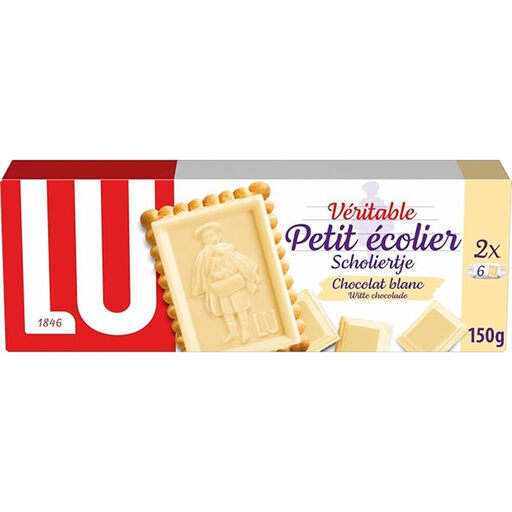 Image unavailable
PETIT ECOLIER Choco Blanc 150 g
Consider these biscuits if you’re after a biscuit texture with white chocolate, rather than a bar to enjoy on its own. The pack is listed as 150 g; check the ingredients and allergens if you need to avoid wheat, milk or soya.
View on Joybuy
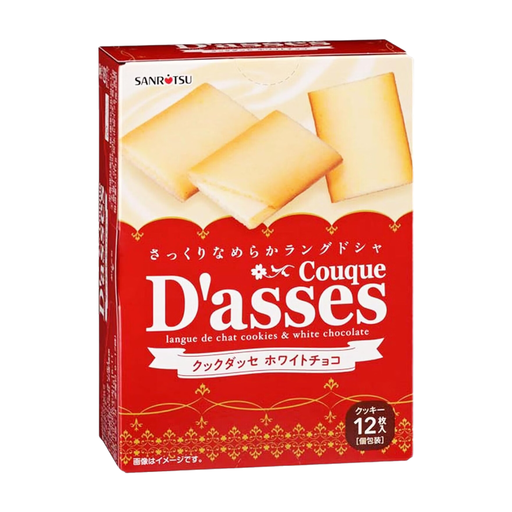 Image unavailable
SANRITSU Couque Dasses White Chocolate
These biscuits are a good choice if you’re looking for a light texture with a white chocolate flavour, rather than a plain chocolate bar. If the exact composition of the chocolate element matters, check its description and ingredients on the packaging. Remember to check the allergens too.
View on Joybuy
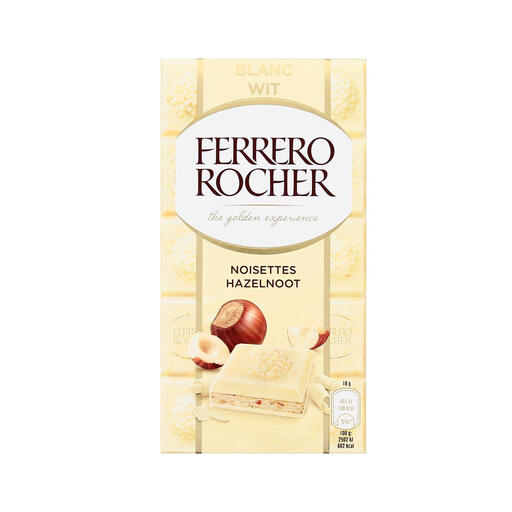 Image unavailable
Ferrero Rocher White Block 90 g
This 90 g bar is better suited to anyone looking for white chocolate with hazelnuts than those after a plain recipe. Check the ingredients list, allergens and sugars per 100 g before comparing it with another bar.
View on Joybuy
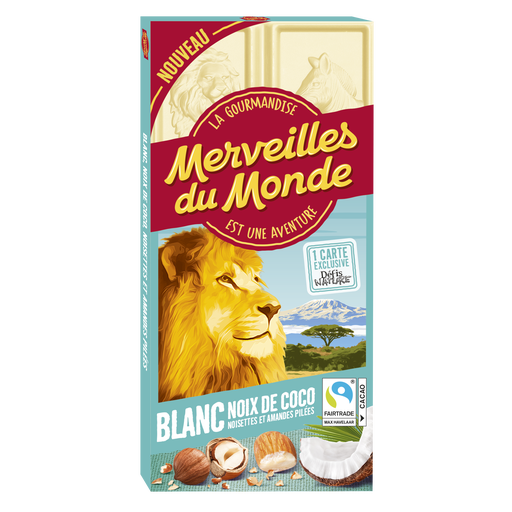 Image unavailable
MERVEILLES DU MONDE white chocolate with almonds, hazelnuts and coconut 100 g
This 100 g bar lets you choose a variety of flavours and inclusions instead of plain white chocolate. Almonds and hazelnuts are listed in its name, so check the allergen information if you need to avoid nuts.
View on Joybuy
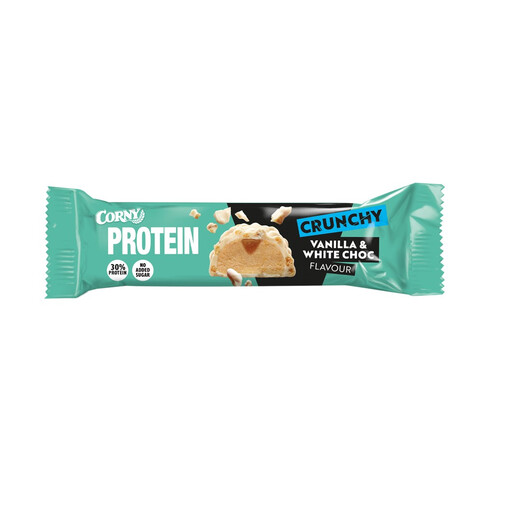 Image unavailable
Corny Protein vanilla and white chocolate 45 g
This 45 g bar is a single-serve treat with vanilla and white chocolate flavour, not a white or white-and-dark chocolate bar. It’s a different product category with a different recipe from chocolate bars, so compare the ingredients, nutritional information and allergens before choosing this format.
View on Joybuy
Frequently asked questions
Is the Nutri-Score compulsory on white chocolate?
No. In France, the DGCCRF describes the Nutri-Score as a voluntary label, separate from the nutrition declaration required for prepacked foods. When comparing bars, check the nutritional information per 100 g even if no Nutri-Score is shown.
Can you choose “dark” white chocolate as you would dark chocolate?
Not based on the white chocolate label alone. The French definition published by Légifrance is based in particular on cocoa butter and dairy ingredients. If you’re looking for a dark chocolate flavour, check that it’s explicitly included in a white and dark chocolate recipe, or choose dark chocolate separately.
What should I check if I need to avoid certain allergens?
Read the ingredients, highlighted allergens and trace warnings on the packaging of the specific product. A recipe with biscuits or nuts won’t necessarily have the same allergens as a plain white chocolate bar, so the name alone isn’t enough to decide.
Does the French levy on sugary drinks apply to a white chocolate bar?
No, not to a solid bar as such. Article 1613 ter of the French General Tax Code, published by Légifrance, applies to drinks and liquid preparations for drinks that meet the conditions set out in that legislation, not to white chocolate bars.
How should I store a white chocolate bar for an afternoon treat?
Follow the storage instructions on the packaging of the bar you buy. For example, Auchan’s product details for GALAK recommend keeping it in a cool, dry place away from light, at between 15 and 18 °C.


