If you want to open chocolate gradually or keep bars for different occasions, choose a multipack of separate bars. For pieces you can serve straight away, bite-sized chocolates are more convenient. A 100 g bar still needs breaking into portions, though, and whichever format you choose, always check the ingredients and allergens for the specific product you’re serving.
Who are these formats for?
People serving coffee with a sweet treat
If you’re putting chocolate out on the table, distinguish between bars that need breaking and bites that are already separate. Carrefour France lists, among other options, packs of two or four 100 g bars, while Lindt France also offers bite-sized formats.
People preparing packed lunches
Several individually wrapped bars let you open one at a time. Before popping chocolate into a lunch box, check how the product you’ve chosen is divided up and which allergens are listed on the packaging.
People who pay close attention to ingredients
Compare the ingredients list, allergens and nutritional information for the exact product. According to Santé publique France, displaying the Nutri-Score is voluntary for producers, so its absence is no substitute for reading the label.
What should you look for?
First, decide whether you’d like to keep some bars sealed for later or serve pieces without having to break them up. Then check the ingredients and choose an amount that suits your gathering.
| What matters |
What to check |
Who is it for? |
| Serving over time |
Count the separate bars and check their individual weight. A multipack of bars is not the same as a pack of individually portioned chocolates. |
If I’m serving coffee and treats on several occasions or preparing packed lunches, I want to keep some of the chocolate sealed. Around 40% of consumers say this is their top priority. |
| Ingredients and allergens |
Read the ingredients list and allergen information, including any warnings about possible traces, for the exact product. |
When guests have different dietary requirements, I need to know what each recipe contains before serving it. This is the main concern for around 30% of consumers. |
| Quantity |
Compare the total weight and the number of usable pieces with what you plan to serve. |
For a small gathering, I’d rather choose an amount I can serve without opening more than I need. Around 30% of consumers put matching the pack size to the number of guests ahead of other criteria. |
Common mix-ups to avoid
-
Assuming several bars means portions are ready to serve
The multipacks of 100 g bars listed by Carrefour France let you open one at a time, but each bar still needs breaking into squares before you can serve it.
For something you can serve straight away, compare bite-sized chocolates. If you’re buying for several occasions, count the bars you can leave sealed instead.
-
Assuming all white chocolate contains the same allergens
The ingredients in the Carrefour France products reviewed vary. Depending on the recipe, some list dairy ingredients, soya, wheat or nuts.
Check the ingredients and allergen information on the specific pack you’re going to serve, especially if the bar contains added ingredients.
-
Confusing the Nutri-Score with nutritional information
According to Santé publique France, producers choose whether to display the Nutri-Score. Nutritional declarations are covered by separate labelling rules, set out by EUR-Lex for the foods concerned.
If there’s no Nutri-Score on the pack, compare the products using their nutritional information and ingredients instead.
Brands to consider for these formats
Carrefour
Carrefour France lists Carrefour Classic’ in a pack of 2 × 100 g bars and SIMPL in a pack of 4 × 100 g bars.
- The number of bars lets you choose how many to open each time you serve them.
- Allergen information varies by product, so check the pack you choose.
GALAK
Carrefour France lists a GALAK white chocolate bar in a pack of 2 × 100 g.
- Two separate bars let you open one at a time.
- The ingredients list reviewed mentions milk and possible traces of nuts.
Milka
The Milka Oreo product listed by Carrefour France combines white chocolate and inclusions in a pack of 2 × 100 g.
- The pack contains two separate bars.
- The recipe reviewed contains wheat, milk, soya and hazelnut, among other ingredients, so don’t choose it based on the format alone.
Lindt
Lindt France lists LINDOR Blanc in bags and cones, while Carrefour France also lists a 200 g box of white chocolate bites.
- Individual bites mean you won’t need to break up a bar when it’s time to serve.
- The bites reviewed contain milk, lactose and soya. Check the ingredients for the format you choose.
Joybuy products to enjoy with coffee
These biscuits and white chocolate bars offer individual treats to serve or take with you. They’re not a substitute for a multipack of white chocolate bars if you want to keep several bars sealed.
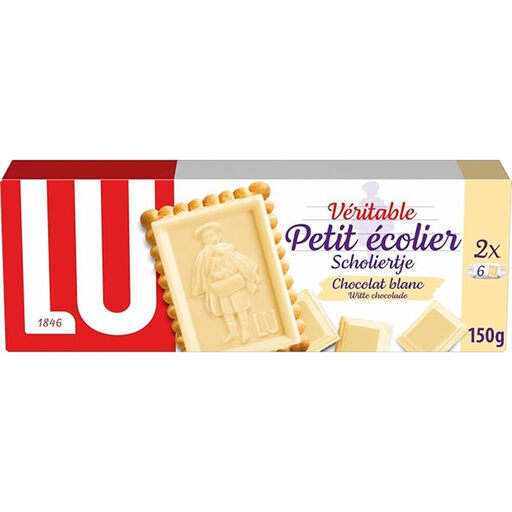 Image unavailable
PETIT ECOLIER White Chocolate 150 g
Worth considering if you’d like to serve white chocolate biscuits with coffee instead of breaking up a bar. The pack weighs 150 g. If you plan to divide them between packed lunches, check how many biscuits there are and how they’re packed.
View on Joybuy
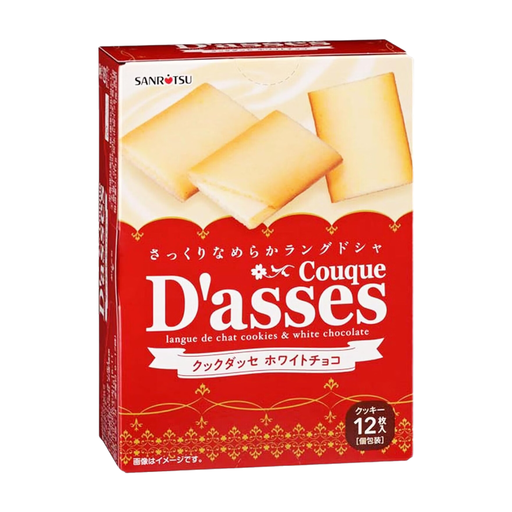 Image unavailable
SANRITSU Couque Dasses White Chocolate
A white chocolate biscuit option for serving individual treats with coffee, rather than opening bars one after another. If you want to take them separately, check the packaging to see how the biscuits are wrapped.
View on Joybuy
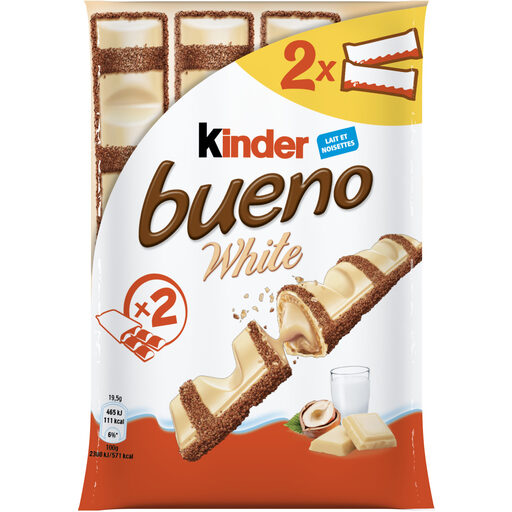 Image unavailable
Kinder Bueno White 2 x 2 bars, 78 g
This format may suit you if you’d rather share white chocolate wafer bars than serve squares of chocolate. The title states 2 x 2 bars, weighing 78 g in total. Check how they’re grouped in the pack and read the allergen information before serving.
View on Joybuy
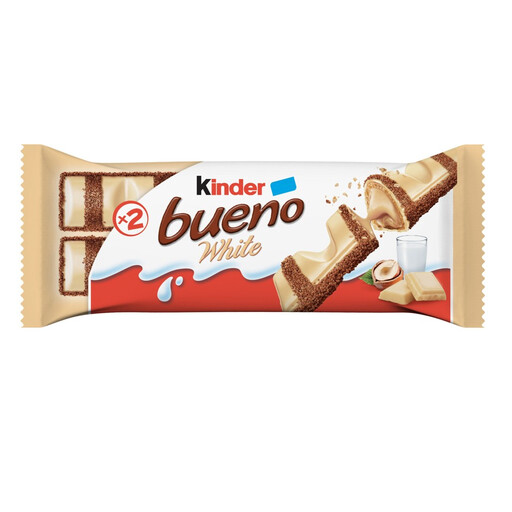 Image unavailable
Kinder Bueno White Bipack 39 g
This small pack of white chocolate wafer bars is better suited to serving a few people than a larger gathering. The bipack weighs 39 g. If you’re serving several people, check that it contains enough bars for your needs.
View on Joybuy
Frequently asked questions
Is solid white chocolate subject to France’s sugar tax?
No. The contribution described by the French Ministry of the Economy applies to sugary drinks, not solid white chocolate bars. Sugar content is still useful nutritional information to compare across the products you’re considering.
Does a white chocolate bar have to display the Nutri-Score?
No. Santé publique France explains that displaying it is voluntary for producers. As EUR-Lex explains, separate labelling requirements apply to nutritional declarations for the foods concerned. Check the nutritional information even when there’s no Nutri-Score on the pack.
Which allergens should you check before serving white chocolate?
Read the ingredients and any warnings about traces on each pack. Depending on the recipe, the products listed by Carrefour France contain dairy ingredients and may also contain soya, wheat or nuts. Don’t assume what’s in a bar based on its colour or brand.
What does the term ‘white chocolate’ mean in France?
According to the French Ministry of the Economy, white chocolate is made from cocoa butter, milk and sugars, and must contain at least 20% cocoa butter and 14% milk. A biscuit or bar containing white chocolate is not, however, a white chocolate bar.


