Parents who want to manage portion sizes
You’re looking for an occasional treat that’s easy to portion, whether it’s a bar or a few squares from a sharing bar. Manger Bouger advises offering children sugary foods in limited quantities.


If you want to give each child their own portion, choose a bar that’s confirmed to be individually wrapped. For a treat to share, you can portion a white chocolate bar before serving. Either way, check the product name, sugars per serving and allergens on the exact packaging.
You’re looking for an occasional treat that’s easy to portion, whether it’s a bar or a few squares from a sharing bar. Manger Bouger advises offering children sugary foods in limited quantities.
If an ingredient needs to be avoided, check the ingredient list and precautionary statements on the exact pack rather than relying on its colour or brand name. The DGCCRF reminds shoppers that allergens must be highlighted in the ingredients list on prepacked foods.
An individually wrapped bar meets a different need from a sharing bar that has to be broken up. Before planning to hand them out, check the number of items, how they’re packaged and whether they’re in stock when you buy.
When choosing between a bar and individually wrapped bars, start with how you’ll serve the treat, then read the label on the product you choose.
Worth considering: if you can decide how much to serve or share the bar at home.
Bear in mind: even when sold as a multipack, a sharing bar isn’t necessarily divided into individually wrapped portions.
Worth considering: if each child needs their own item.
Check: a bar with a wafer or white coating isn’t necessarily a plain white chocolate bar.
| What to consider | What to check | Who is it for? |
|---|---|---|
| Portion size and sugars | Compare the sugars per 100 g, then check the amount you’ll actually serve and the per-portion values, if shown on the label. | For a snack, I want to decide how much to give before serving it, rather than relying on the pack size alone. Around 40% of consumers put portion size and sugars first. |
| Ingredients and allergens | Read the product name, ingredients list, highlighted allergens and any ‘may contain’ statements on the exact product. | If an ingredient is a concern for a child, the precise recipe matters more to me than the bar’s white appearance. Ingredients and allergens are the top priority for around 30% of consumers. |
| Ready-to-hand-out portions | Check the number of items, whether each one is individually wrapped and whether it’s in stock before buying. | When I need to give several children a treat, I look for portions that are already separate, so I don’t have to break up a sharing bar on the spot. This packaging is the main need for around 30% of consumers. |
Article 1613 ter of the French General Tax Code, published by Légifrance, concerns non-alcoholic drinks. It isn’t a relevant way to compare solid white chocolate bars.
Instead, look at the amount you’ll serve and the sugars listed on the label.
According to Santé publique France, displaying Nutri-Score is voluntary. Its absence isn’t enough to judge a bar’s ingredients.
If the logo is there, read it alongside the nutritional information and ingredients. If not, use that information directly to compare products.
A bar may combine wafer, filling and a white coating. The name ‘white chocolate’, on the other hand, refers to a composition defined by French regulations published by Légifrance.
If you’re specifically looking for white chocolate rather than a confectionery bar with a white coating, check the product name and ingredients list.
A detailed product page doesn’t mean the item will be available when you’re getting ready to serve a snack to several children.
Check availability, as well as the number and packaging of the items, just before you buy.
These examples are mainly of sharing bars that you can portion. Their inclusion here doesn’t mean they’re sold on Joybuy.
Auchan’s GALAK product listing describes a pack of two 100 g white chocolate bars.
EXCELLENCE Extra Creamy White is a 100 g white chocolate bar featured by Lindt France.
Carrefour’s Milka Oreo listing is for two 100 g white chocolate bars, to share or portion.
These products are white-coated bars, which are different from a white chocolate sharing bar that you can portion. Check the packaging of each item and the ingredients of the product you choose.
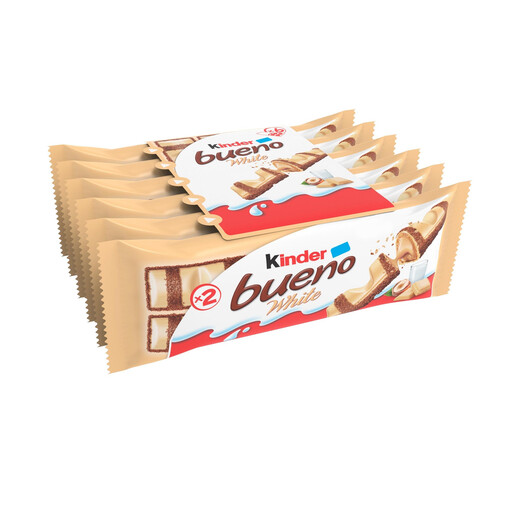 Image unavailable
Worth considering if you’re planning to hand out several bars. This is a wafer confectionery with a filling, not a plain white chocolate bar. Check the pack to see how the items are wrapped, and look for information about milk, soya, wheat and hazelnuts.
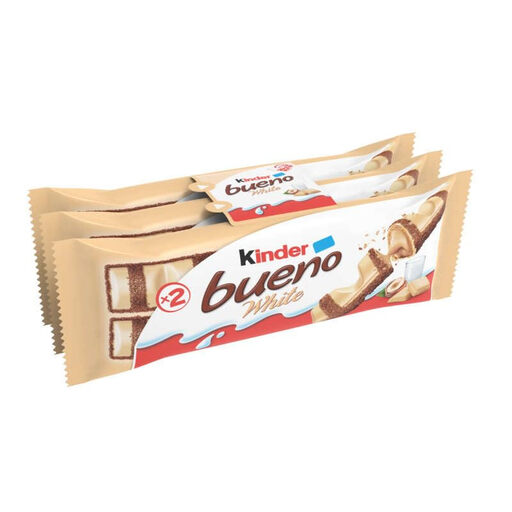 Image unavailable
This variant is worth comparing with other bar packs before handing them out. Its wafer and filling make it different from a plain white chocolate bar. Check the exact pack for the number of items, how they’re wrapped and information about milk, soya, wheat and hazelnuts.
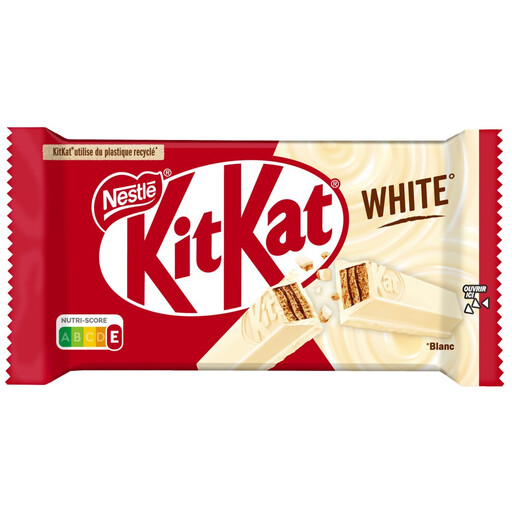 Image unavailable
A single bar may suit a one-person serving, but check before buying that it has its own wrapper. This product is described as a wafer with a white coating, not a plain white chocolate bar. Also check the information about wheat and milk.
No. Article 1613 ter of the French General Tax Code, published by Légifrance, applies to non-alcoholic drinks, not solid bars. To compare bars, look at the amount you’ll serve and the sugars listed on the packaging.
No. Santé publique France describes Nutri-Score as a voluntary label. If it isn’t shown, check the nutritional values and ingredients list to compare prepacked products.
Start by checking the product name and ingredients list on the exact product. The French decree on cocoa and chocolate products, published by Légifrance, sets minimum levels for ‘white chocolate’, including 20% cocoa butter and 14% total dry milk solids. The words ‘white coating’ alone don’t establish that a bar is a white chocolate bar.
Check the allergens highlighted on the pack you buy, as well as any statements about possible traces. Depending on the recipe, product listings published by Carrefour, Auchan and Lindt France mention milk, soya, wheat and hazelnuts, or the possible presence of other nuts. Don’t assume you know what’s in a product just from its colour.
Follow the storage instructions on the packaging. Auchan’s GALAK bar listing says to keep it in a cool, dry place.