Anyone who plans their break before revising
You’d rather decide how many bites or squares to take out than leave a large packet open beside you.


Bites are a good choice if you want to prepare your break one piece at a time; a bar works well if you can break off a portion before you start revising. Either way, compare the sugars and saturated fat per 100 g, then check the allergens for the exact product. A mini format doesn’t tell you anything about the recipe.
You’d rather decide how many bites or squares to take out than leave a large packet open beside you.
You want to check the sugars and saturated fat per 100 g, without assuming that a bite contains less sugar just because it’s small.
You need to check the ingredients list and any may-contain warnings for the product you choose. The portion format doesn’t replace this check.
For a break while revising, start by choosing a portion you can prepare, then compare the recipes and check the allergens.
| What matters | What to check | Who is it for? |
|---|---|---|
| Portion before your break | Look at the format and decide how many bites or squares to take out before you start. | If I don’t want to leave the packet open during a long study session, I prepare my portion in advance. Around 42% of consumers would prioritise this. |
| Sugars and saturated fat | Compare the nutritional information for the exact products per 100 g, then take account of the amount you plan to eat. | When comparing two recipes, I want to be able to check their values on the same basis rather than rely on the word ‘mini’. This would be the top priority for around 33% of consumers. |
| Ingredients and allergens | Read the ingredients list and allergen information for the product you’ve chosen. | If an ingredient or a stated trace matters to my choice, I check the exact product before buying it. Around 25% of consumers would put this check first. |
The size of a piece doesn’t tell you what’s in the recipe. Lindt France lists 45 g of sugars per 100 g for its 1 kg bag of LINDOR Blanc; E.Leclerc lists 67 g per 100 g for its Eco+ 4 × 100 g bar. These figures relate to two different products.
Compare the sugars and saturated fat per 100 g, then prepare the amount you want to have.
Santé publique France explains that displaying the Nutri-Score is voluntary. If it appears on a pack, it doesn’t replace checking the nutritional information or ingredients.
Check the nutrition declaration and allergens, whether or not the Nutri-Score is shown.
Lindt France’s LINDOR Blanc product information lists milk, lactose and soya, and says it may contain hazelnuts and other nuts. Carrefour Classic’ white chocolate contains milk and may contain traces of nuts and cereals containing gluten.
Check the label on the product you buy; don’t assume the information for another recipe or format applies.
Lindt’s French product information describes LINDOR Blanc as a small white chocolate ball, available in a 1 kg bag, among other formats.
The Carrefour Classic’ 2 × 100 g white chocolate bar is an option you can break into pieces, rather than a bag of bites.
Eco+ white chocolate 4 × 100 g comes in bars you can break into pieces, rather than mini bites.
If you’d like to prepare a break with a biscuit or bar containing white chocolate, these formats offer an alternative to plain white chocolate bites or a bar you can break into pieces. Check the ingredients if you’re specifically looking for either of those two options.
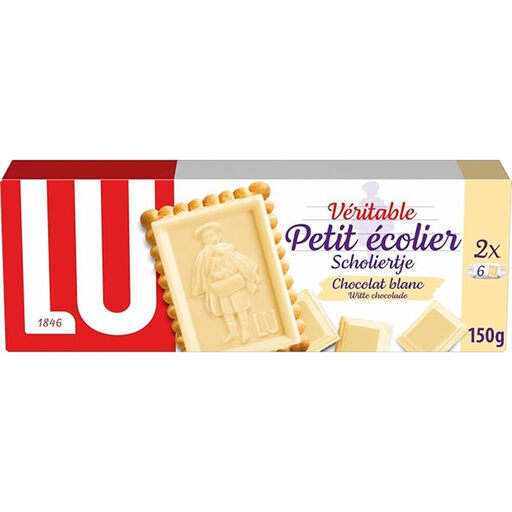 Image unavailable
For a break with white chocolate biscuits rather than plain chocolate bites. The pack contains 150 g; decide how you’d like to portion out the biscuits before you start.
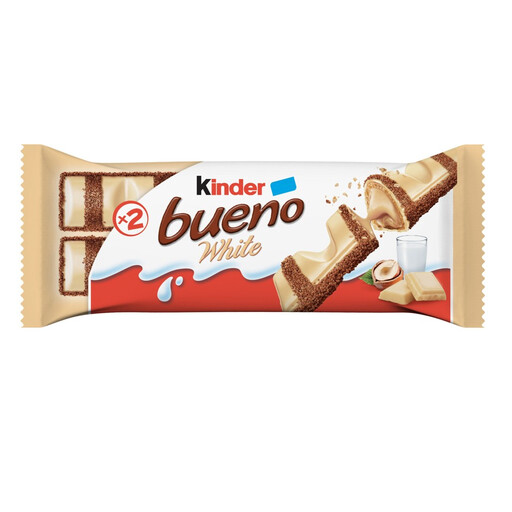 Image unavailable
For a break you can split between the bars in a bipack, rather than white chocolate bites. The pack weighs 39 g; check the packaging if you’d like to take the bars separately.
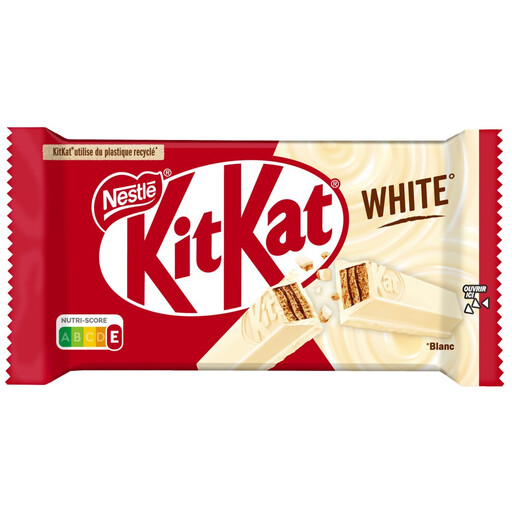 Image unavailable
For a break with a chocolate-coated wafer bar, rather than a mini white chocolate bite. This bar weighs 41,5 g; if you’d like several smaller portions, decide how much to have in advance.
No. Santé publique France explains that producers display the Nutri-Score voluntarily. However, the nutrition declaration on the prepacked foods covered by the rules is required under EU law.
Compare the nutritional values per 100 g, particularly the sugars and saturated fat, then read the ingredients and allergen information. The amount you plan to eat also matters when choosing a format.
Lindt France’s product information for the 1 kg bag of LINDOR Blanc lists milk, lactose and soya lecithin. It also states that the product may contain hazelnuts and other nuts. Check the packaging of the product you buy if any of these ingredients are a concern for you.
The levy described by the French Ministry of the Economy applies to sugary drinks, not solid white chocolate. When choosing white chocolate, check the nutritional information and ingredients for the product you’re considering instead.