Someone organising the finish-line get-together
You’re planning a treat to put out on a table or hand out to supporters. The pack size, type of chocolate and ease of serving matter more here than whether it’s suitable to eat during the race.


If you’re supporting a runner or setting up a finish-line table, choose your white chocolate based on how you plan to serve it: individually wrapped bites ready to hand out, or a bar to break and share. If you’re buying a large selection, check that it contains only white chocolate if that’s important to you. For the runner during the race, keep this treat for sharing separate from the fuelling plan they’ve practised in training, as recommended by IRBMS resources.
You’re planning a treat to put out on a table or hand out to supporters. The pack size, type of chocolate and ease of serving matter more here than whether it’s suitable to eat during the race.
If you’re looking for something to eat during the marathon, treat that as a separate decision from choosing chocolate to share. IRBMS recommends suitable fuelling that has been tried during training, including a sports drink and foods such as bars, gels or fruit jellies.
If you’re comparing two products or serving people with dietary requirements, check the sugars per 100 g, the ingredients list and the allergens for the product you’ve chosen. The French Ministry of the Economy says that displaying the Nutri-Score is optional.
First decide whether you’re buying something for fuelling during the race or for sharing as part of the event. For sharing, the format and the product’s exact contents make all the difference.
| Criterion | What to check | Who is it for? |
|---|---|---|
| Eating during the race | Keep chocolate for the group separate from the foods planned as part of the runner’s fuelling; try out your fuelling strategy in training. | If I need to eat during the marathon, my priority is fuelling I’ve already tried, not chocolate bought for the group. Around 45% of consumers would put this fuelling need first. |
| Format for sharing | Check the net weight and product format: white chocolate bites, a selection of different chocolates or a bar to break into pieces. | When serving supporters at the finish, I want to know whether everyone can take a bite or if we’ll need to share a bar. A sociable treat would be the priority for around 33% of consumers. |
| Label and allergens | Compare the sugars per 100 g and check the ingredients and allergens on the packaging of your chosen product. | When several people will be sharing the product, I want to check its ingredients and allergens first. Around 22% of consumers would put this need first. |
When you’re buying something to share, the packaging alone doesn’t tell you what’s inside. Carrefour sells Lindor white chocolate bites in a 200 g box, as well as a 445 g Lindor selection combining milk, dark and white chocolate. Its 200 g white chocolate bars, sold individually or in packs of 2 × 100 g depending on the product, offer another way to serve chocolate.
The French Directorate-General for Competition Policy, Consumer Affairs and Fraud Control says that a nutrition declaration is mandatory for the pre-packed foods concerned. It lets you compare the sugars per 100 g on a like-for-like basis. The Nutri-Score, which the Ministry of the Economy says is optional, is no substitute for checking either this information or the allergens.
Chocolate chosen for a sociable occasion doesn’t, on its own, make up a fuelling strategy for the race. IRBMS resources emphasise the importance of a suitable fuelling strategy that has been tried in training.
Plan separately what you’ll serve to supporters and what the runner intends to eat during the race.
The Lindor selections shown by Auchan and Carrefour include milk, dark and white chocolates. So a larger pack doesn’t mean every piece is white chocolate.
If every piece needs to be white chocolate, check the product name and the list of varieties for the specific product you’re buying.
According to the French Ministry of the Economy, displaying it is optional in France. If it’s not shown, you should still read the nutrition information and ingredients.
Compare the sugars per 100 g across products, and check the ingredients and allergens on the packaging.
These products show a range of ways to share chocolate: white chocolate bites, a selection of chocolates, a small bag or bars. Check the specific product rather than relying on the brand name alone.
Carrefour lists a 200 g box of Lindor white chocolate bites, as well as other products that are selections containing different types of chocolate.
Carrefour lists a 100 g bag of Milka white praline chocolate. This is worth distinguishing from a larger format intended for several people.
Carrefour Original and Carrefour Classic' are included here for their white chocolate bars, listed by Carrefour in 200 g and 2 × 100 g packs respectively.
These biscuits featuring white chocolate could be served at a finish-line table or as part of a get-together. They’re not a substitute for a large bag of white chocolate on its own or for the runner’s planned fuelling.
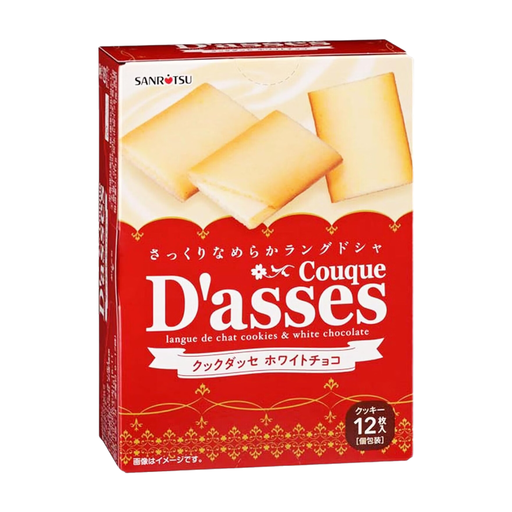 Image unavailable
A tasty option for serving white chocolate biscuits after the race, rather than white chocolate on its own. Check the allergens on the packaging of the pack you buy before serving.
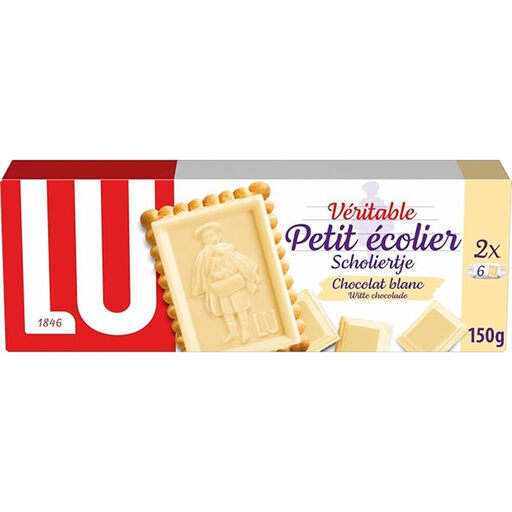 Image unavailable
This 150 g pack of white chocolate biscuits could be just right for a small post-race get-together; it isn’t a large bag of white chocolate on its own. Check the allergens on the packaging of the pack you buy.
No. The French Ministry of the Economy says that displaying it is optional. To compare pre-packed products, check their nutrition information, including the sugars per 100 g, as well as their ingredients and allergens.
Don’t automatically choose it as a substitute for the runner’s planned fuelling. IRBMS resources describe a suitable fuelling strategy that has been tried in training, including a sports drink and foods such as bars, gels or fruit jellies. Chocolate for the group is for a different purpose.
Read the ingredients list and allergens on the exact packaging you’ll be serving: recipes can vary between white chocolate bites and assorted selections. Also follow the storage instructions on the pack.
The levy described by Légifrance applies to drinks and liquid preparations for drinks, not solid white chocolate bars or bites. To compare these chocolates, check their net weight and nutrition information instead.