People comparing sizes
You’re checking the net weight of different bars to find a quantity that suits your shop, without assuming that white and dark chocolate come in the same sizes.


Choose white chocolate if you’re after a mild, milky flavour or a bar for baking. Consider dark chocolate with around 70% cocoa if you prefer a stronger cocoa taste. Either way, compare bar weights and check the sugar content, ingredients and allergens for the specific product you choose.
You’re checking the net weight of different bars to find a quantity that suits your shop, without assuming that white and dark chocolate come in the same sizes.
You enjoy cocoa-rich flavours and are considering a dark chocolate bar with around 70% cocoa rather than a mild white chocolate.
You compare the sugars per 100 g, ingredients and allergens for each product. A Carrefour Bio white chocolate recipe contains milk, while a Lindt dark chocolate mini bar carries a warning about possible traces.
Start with the flavour and intended use, then compare like with like: check the net weight, nutritional information and recipe for each bar.
| Criteria | What to check | Who is it for? |
|---|---|---|
| Size and quantity | The net weight and the quantity that suits your needs. | When I shop regularly, I want to know how much each bar contains before choosing a size. Around 36% of consumers put this first. |
| Cocoa flavour | The product description and stated cocoa percentage; if you’re trying it for the first time, check the size available. | If white chocolate no longer suits my taste, I look for a stronger cocoa flavour without buying a large bar without knowing what to expect. This flavour comes ahead of other criteria for around 29% of consumers. |
| Sugars and labelling | Sugars per 100 g in the nutrition declaration; check the Nutri-Score only if one is shown. | When I’m choosing between two recipes, I want to compare their nutritional information rather than rely on the colour alone. For around 21% of consumers, this is the top priority. |
| Recipe and allergens | The ingredients and allergen information for the exact product. | If certain ingredients don’t suit me, the precise composition matters more than the brand or type of chocolate. Around 14% of consumers put this check first. |
Different sizes don’t contain the same amount of chocolate, even when the packaging looks similar.
Check the net weight and choose a size that suits how much you plan to use.
The Ministry of the Economy describes this levy as applying to sugary drinks, not as a tax specifically on chocolate bars.
When comparing bars, focus on their size and the information on the label.
According to Santé publique France, displaying it is voluntary. It doesn’t replace the nutrition declaration or ingredients list.
If it’s shown, read it alongside the other nutritional information, including sugars per 100 g.
A Carrefour Bio white chocolate bar contains milk; the listing for a Lindt dark chocolate mini bar mentions possible traces of milk, nuts and soya.
If you have an allergy or avoid certain ingredients, check the ingredients and allergen information for the exact bar.
The retailer offers white chocolate bars and dark chocolate options with 70% or 72% cocoa, making it easy to compare recipes within the same range.
The Excellence range includes an Intense 70% Dark option for anyone looking to try a more cocoa-focused recipe.
The Nestlé Dessert white and 70% dark chocolate bars listed by Carrefour let you choose a recipe to suit your baking.
The Milka White Oreo bar listed by Carrefour is a white chocolate option with biscuit pieces, rather than a dark bar with a high cocoa content.
These options include dark chocolate with around 70% cocoa, white chocolate for baking and white chocolate with hazelnuts. First, choose the type of recipe that suits your needs, then check the label for the variety you’ve picked.
 Image unavailable
The 35 g size lets you try a dark chocolate recipe with at least 70% cocoa. The listing mentions possible traces of nuts, milk and soya. Check the packaging if these allergens are a concern for you.
 Image unavailable
This 100 g bar is for anyone wanting to compare another dark chocolate recipe with 70% cocoa. It contains maltitol, so read the ingredients list and the warning on the packaging before choosing it.
 Image unavailable
This 170 g white chocolate bar is designed for baking. It contains milk; also check the packaging for warnings about possible traces of egg, gluten and nuts.
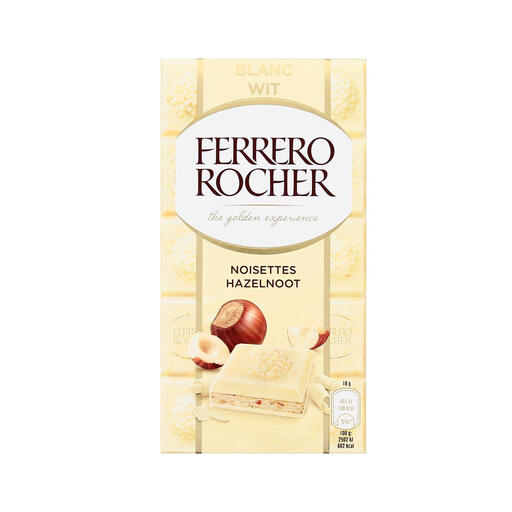 Image unavailable
This 90 g white chocolate block is a good choice if you’re after a hazelnut recipe rather than plain white chocolate. The listing notes that it contains milk, hazelnuts and soya, and may contain traces of other nuts.
 Image unavailable
This 100 g dark chocolate bar combines candied lemon and green pepper with the chocolate. The minimum cocoa content of 70% applies to the chocolate part, not necessarily to the whole bar. The listing mentions possible traces of milk, nuts, soya and gluten.
The levy described by the Ministry of the Economy applies to sugary drinks, not specifically to chocolate bars. When choosing a bar, check its size and nutritional information instead.
No. Santé publique France says that displaying it is voluntary. The nutrition declaration on prepacked foods is a separate requirement, with some exceptions. Check it to compare sugars per 100 g, among other things.
No. The cocoa percentage alone doesn’t tell you how much sugar a bar contains. Lindt France’s listing for its Excellence Intense 70% Dark chocolate states 28 g of sugars per 100 g. Check the figures for each recipe.
Check their net weight before deciding which quantity suits your needs. To compare sugars, look at the values per 100 g rather than portions of different sizes.
Don’t rely on the category alone: the Carrefour Bio white chocolate bar described by the retailer contains whole milk powder. If you have an allergy, check the ingredients and allergen information for the exact product before choosing it.