Start by choosing according to the type and volume of drinks you prepare: pods are ideal for a quick cup, a bean-to-cup machine for regular, customisable espressos, a portafilter machine for a more hands-on approach, and a filter coffee maker for a pot serving several cups. The main trade-offs involve consumables, the space required, noise and cleaning; bean-to-cup machines in particular require a more consistent maintenance routine.
Which households are they suited to?
Households that mainly prepare one cup at a time
If you want a quick coffee before heading out, compare the capsule or pod format accepted, the machine’s footprint and how the packaging is recycled. Que Choisir highlights the cost per cup and ease of use as key considerations when comparing systems.
Daily espresso drinkers happy to maintain their machine
A bean-to-cup machine is a good choice if you want to choose your beans and adjust your coffee while accepting the need to rinse the machine, clean the containers, descale it and, where applicable, maintain the milk system.
Households serving several large coffees
A filter coffee maker is worth considering when several people drink long coffee or when multiple cups are served one after another. Philips presents this type of appliance as suitable for preparing a full pot.
Buying priorities
Start with the number of cups and the type of coffee you prepare, then check the consumables, maintenance routine and the space you actually have available in your kitchen.
| Priority |
What to check |
Your needs |
| Simplicity and speed |
Accepted capsule or pod format; preparation one cup at a time; appliance dimensions. |
I want to prepare an individual coffee without complex dosing or adjustments, with minimal daily handling. |
| Running costs and choice of coffee |
Type of consumable; whether beans or ground coffee are accepted; actual volume served with each preparation. |
For regular consumption, I compare the consumables I am prepared to use and want to be able to choose my coffee. |
| Cleaning and descaling |
Rinsing programme; access to the brew group, depending on the model; milk system maintenance; descaling procedure. |
I prefer to know what needs to be done after each use rather than assume that an automatic machine requires no maintenance. |
| Noise, space and capacity |
Dimensions; height needed to fill the tanks; capacity; type of carafe; noise measurements for the exact model. |
My kitchen is small or quiet, or I want to serve several coffees in succession without making each one individually. |
Mistakes to avoid before buying
-
Choosing a bean-to-cup machine simply because it is automatic
The grounds and drip trays, brewing circuit and, depending on the model, milk system all require regular attention. Ignoring descaling alerts can affect how well the machine operates.
Choose this option if you are prepared to follow the cleaning routine in the manual, and check that the parts requiring maintenance are easy to access.
Allow time for cleaning and for the maintenance products recommended by the manufacturer.
-
Comparing only the price of the machine
Single-serve portions mean recurring purchases, which become more significant when coffee is prepared frequently. The result depends on the coffee you choose, the volume served and your household’s habits.
Estimate how many coffees you prepare each week and compare the consumables compatible with the machine you are considering.
-
Assuming that all capsules are compatible
Compatibility limits the coffee and drink options available with a particular machine. Que Choisir states that most brands accept only one type of capsule.
Before choosing an appliance, check the exact format, the capsules available through your usual retailers and the relevant recycling instructions.
-
Forgetting about the noise and space required by a bean-to-cup machine
An automatic bean-to-cup machine is generally larger and noisier than a capsule machine or filter coffee maker. Noise is produced particularly during grinding, rinsing and preparation.
Measure the available space, including the height needed to fill the bean hopper or water tank, and look for reviews that report noise measurements for the exact model.
Relevant brands at a glance
De’Longhi
In France, the brand offers bean-to-cup espresso machines and manual espresso machines, with or without milk-drink functions depending on the model.
- De’Longhi provides manuals and a maintenance guide covering cleaning, the infuser and descaling in particular.
- These manufacturer recommendations do not allow you to draw conclusions about the reliability or total cost of a specific model.
Philips / Saeco / SENSEO®
The French range covers filter coffee makers, SENSEO® pod machines, capsule systems and Saeco automatic espresso machines.
- This variety makes it possible to compare several preparation methods within the same group of brands.
- Check the features, accessories and descaling routines on the product page and in the manual for the model you choose.
Melitta
Melitta offers filter coffee makers and bean-to-cup espresso machines, with spare parts available for these appliance ranges.
- For certain components, such as carafes, trays, brewing chambers and filter holders, the brand lists original spare parts.
- Check availability for the exact model: the availability of a part does not guarantee that every fault can be repaired.
Joybuy products
These Joybuy options include bean-to-cup espresso machines, a capsule machine and a manual espresso machine for your at-home coffee routine.
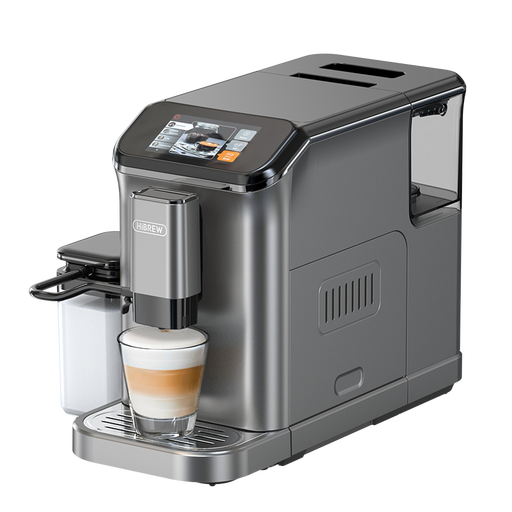 Image unavailable
HiBREW H16, automatic espresso machine with grinder
Worth considering for regular espressos and milk drinks, with coffee and milk preparation advertised as simultaneous.
Six advertised drinks, touchscreen, conical grinder with 15 grind settings, dual boiler and 1.5 L water tank.
Check the manual for cleaning, descaling and milk-system maintenance, as well as the noise level if you live in a quiet home.
View on Joybuy
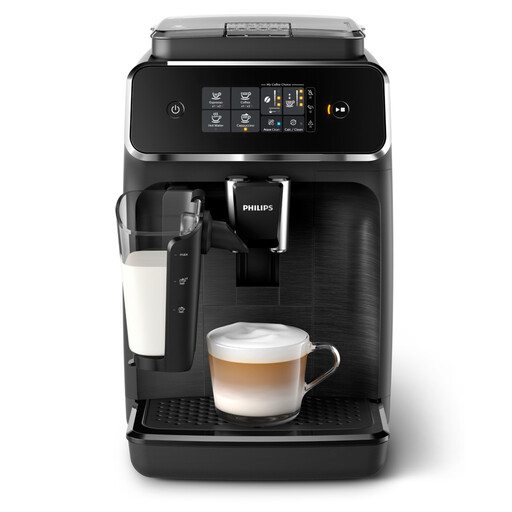 Image unavailable
Philips EP2230/10 Series 2200 LatteGo
This machine is suitable for a household that alternates between espresso, coffee and cappuccino while following a regular maintenance routine.
Grinder with 12 settings, four advertised drinks, 1.8 L water tank, 275 g bean hopper, two-cup function and removable brew group.
The AquaClean filter is advertised as compatible but is not included. Also check the LatteGo system’s cleaning routine and the model’s noise level if this is important to you.
View on Joybuy
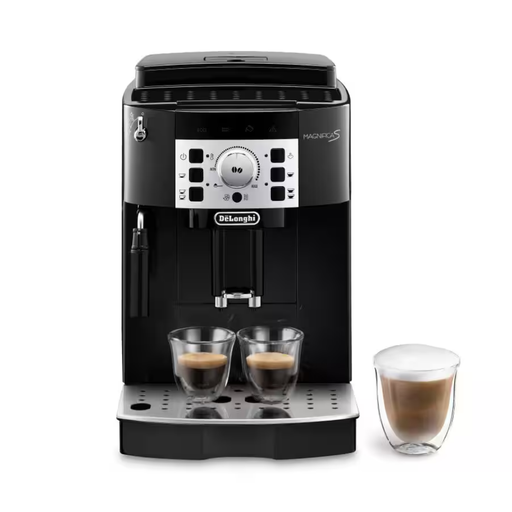 Image unavailable
De’Longhi Magnifica S ECAM22.140.B
Worth considering for frequent espressos using beans or pre-ground coffee, particularly when you need to serve two cups.
Integrated grinder, 1.8 L water tank, thermoblock, two-cup function, water filter and steam wand advertised.
The steam wand needs cleaning after preparing milk drinks. Check the dimensions, noise level and parts available for this model.
View on Joybuy
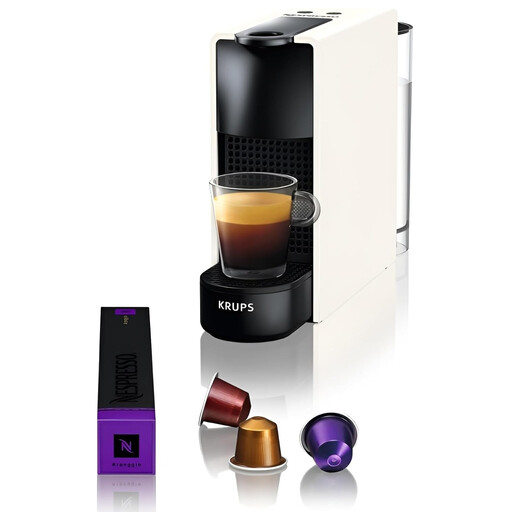 Image unavailable
KRUPS Nespresso Essenza Mini, 0.6 L
This option is designed for a quick cup in a small kitchen, with no manual dosing for an espresso or lungo.
Advertised dimensions of 8.4 × 33 × 20.4 cm, 25-second heat-up time, two programmable volumes, 0.6 L water tank and automatic shut-off.
Check whether it accepts Nespresso Original or compatible capsules and which drinks are available. It does not explicitly prepare integrated milk drinks or a full pot.
View on Joybuy
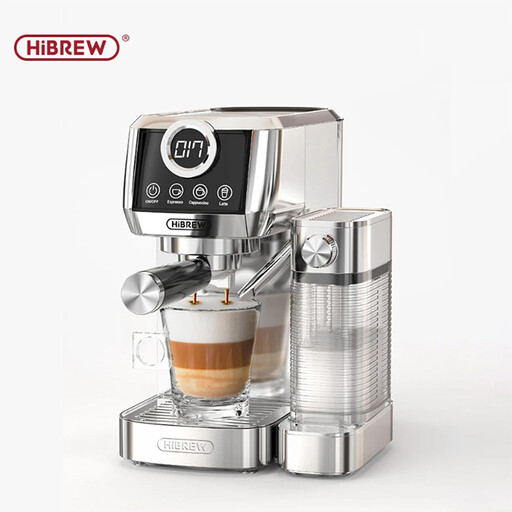 Image unavailable
HiBREW H13A, semi-automatic espresso machine
It is designed for people who want to prepare espresso, cappuccino or latte using ground coffee and a portafilter.
Dual boiler, three temperature settings, six modes, 51 mm portafilter, milk system and removable 1.3 L water tank advertised.
This machine requires ground coffee and does not have an integrated grinder. Consult the manual for maintaining the milk system and removable parts.
View on Joybuy
Frequently asked questions
Can coffee capsules be recycled in France?
Yes. ADEME states that aluminium or plastic capsules should go in the recycling bin, bag or container for paper and packaging. Check your local guidelines for other materials and collection schemes available near you.
Does a machine with a grinder need maintenance despite automatic rinsing?
Yes. Automatic rinsing does not replace cleaning the coffee-grounds and drip trays, maintaining the infuser when it is accessible, or descaling when requested by the machine. After preparing a milk drink, also clean the steam wand or carafe according to the manufacturer’s instructions.
What should you check if noise is a concern at home?
Look for reviews or published measurements for the exact model during rinsing, grinding and dispensing. A bean-to-cup espresso machine adds the noise of grinding, and Que Choisir states that it is generally noisier than a capsule machine or filter coffee maker.
Is a milk carafe or steam wand useful for occasional milk drinks?
Not necessarily. A milk function adds components and cleaning tasks; it is more worthwhile if you regularly drink milk-based beverages. If they are only occasional, compare the system’s cleaning time and footprint with how often you expect to use it.


