Anyone fitting out a small kitchen
Check that the appliance fits in the available space and that its door can open fully. A compact design doesn’t necessarily include a freezer compartment.


Start by measuring the space available, including the clearance needed to open the doors. Then compare the capacities for fresh and frozen food separately. A table-top fridge takes up less space, a fridge freezer combines both functions, and a multi-door model offers more storage if your kitchen can accommodate it. Finally, compare energy labels, noise levels and information about parts for the specific model, as recommended by Que Choisir Ensemble when assessing what to look for.
Check that the appliance fits in the available space and that its door can open fully. A compact design doesn’t necessarily include a freezer compartment.
How the capacity is split between the two compartments matters more than the total capacity alone. Check how many litres are actually available for fresh and frozen food.
A larger capacity can make it easier to organise your food, but you also need to consider the appliance’s dimensions and the space to move around your kitchen.
Choose this if: you have limited height available and modest storage needs.
Bear in mind: models in this size range may not have a freezer. Check the specifications for the exact model.
Choose this if: you prioritise fresh food storage and have another way to store frozen food, if needed.
Bear in mind: whether it has a freezer compartment depends on the model.
Choose this if: you want to store fresh and frozen food in the same appliance.
Bear in mind: compare the capacity of each compartment, the dimensions, annual energy consumption and the noise level for the specific model.
Choose this if: your household needs plenty of storage space and your kitchen can accommodate a large appliance.
Bear in mind: check the depth, the route to the installation space and the door clearance before you choose.
| Criteria | What to check before buying | Who it matters most to |
|---|---|---|
| Dimensions and door clearance | Compare the appliance’s dimensions with the available space, access route and clearance needed to open the doors, as set out in the instructions. | If space is tight, I want to make sure the appliance can be installed and its doors can open properly. Around 28% of consumers put fitting it into their kitchen first. |
| Freezer capacity | Check whether there’s a freezer compartment and how many litres it holds, separately from the fridge capacity. | If I often store frozen food, I want to know how much space is actually available rather than relying on the number of doors. Around 22% of consumers prioritise frozen food storage. |
| Fresh food capacity | Compare the capacity in litres for fresh food and the internal layout with your household size and shopping habits. Que Choisir Ensemble suggests 100 to 150 litres for one person, then 50 litres for each additional person as a guide; it isn’t a mandatory minimum. | If I do a big shop or shop less often, I want to be able to store fresh food without running out of room. Around 22% of consumers prioritise this capacity. |
| Energy use and parts | Compare the energy rating and kWh/year for the exact model. If you might need a repair, check the manufacturer’s information about the relevant parts and how to order them. | If I want to keep an eye on energy use and have the option of getting the appliance repaired, I check this information before choosing. Around 17% of consumers prioritise running costs and repair options. |
| Noise | Compare the stated noise level in dB(A) and the noise class on the label. Que Choisir Ensemble describes models rated below 40 dB(A) as particularly quiet; this guide doesn’t guarantee how quiet it will seem in your room. | In an open-plan kitchen or studio flat, I want to check the stated noise level before placing the appliance near a living or sleeping area. Around 11% of consumers prioritise low noise. |
Its depth, the route into the kitchen and the door clearance can also affect whether it can be installed. Que Choisir Ensemble points out that an appliance’s weight and dimensions are important when choosing.
Measure the space and delivery route, then check the installation instructions for the model you’re considering.
Configurations vary by model. For example, the Beko TSE1504FN is listed without a freezer.
Check whether the exact model has a freezer compartment and how much space it offers, rather than relying on its name or total capacity.
The label shows annual energy consumption in kWh, but how and where you use the appliance can affect its actual consumption.
Compare the kWh/year of models with similar storage capacities, as well as their energy ratings.
Availability periods apply to certain parts and don’t mean that every repair is covered or free.
Check the manufacturer’s information about the relevant parts and how to order them. Make sure you distinguish between the statutory guarantee and any commercial warranty.
The TSE1504FN is a useful example of a table-top fridge for a kitchen with limited height available.
The KSV33VLEP is a single-door model to consider if fresh food storage is your priority.
The GBV3100EPY is a useful example of a fridge freezer that combines both functions.
The RF48A401EM9/EF is a multi-door model worth considering if you need plenty of storage space.
The RB5K330GSFC is a useful example of a 330-litre freestanding fridge freezer.
This selection includes integrated single-door fridges, fridge freezers and multi-door models, so you can compare installation and storage requirements.
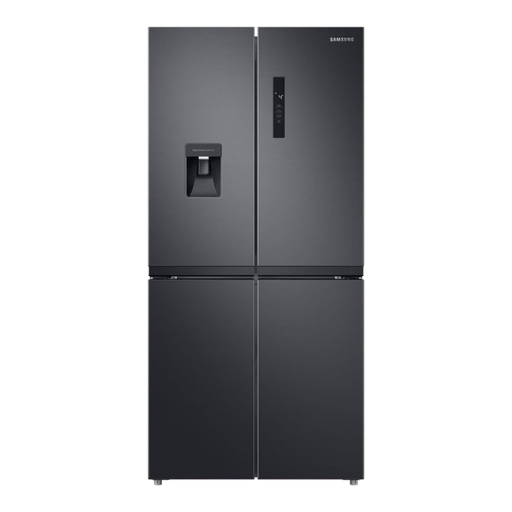 Image unavailable
If you need plenty of space for fresh and frozen food, compare the capacity of each compartment and check that you have room for the appliance.
The product details list 329 L for the fridge and 159 L for the freezer, along with 298 kWh/year and 41 dB. Stated dimensions: 83,3 × 179,3 × 74 cm; check the route and intended location.
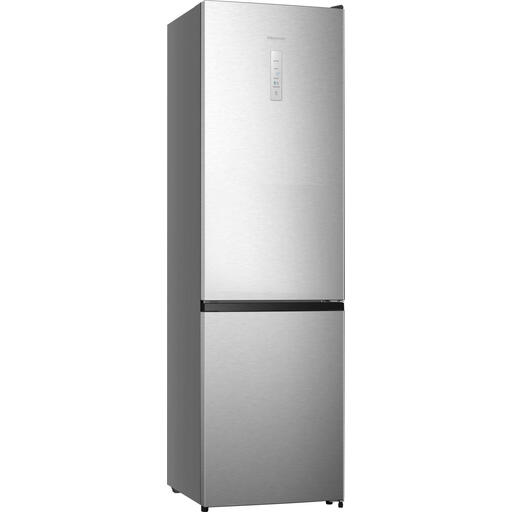 Image unavailable
To store fresh and frozen food in one appliance, check that each compartment’s capacity suits your shopping habits and the space available.
The product details list 238 L for the fridge and 98 L for the freezer, 135 kWh/year and 35 dB(A). They also mention Total No Frost, a reversible door and 90° door opening.
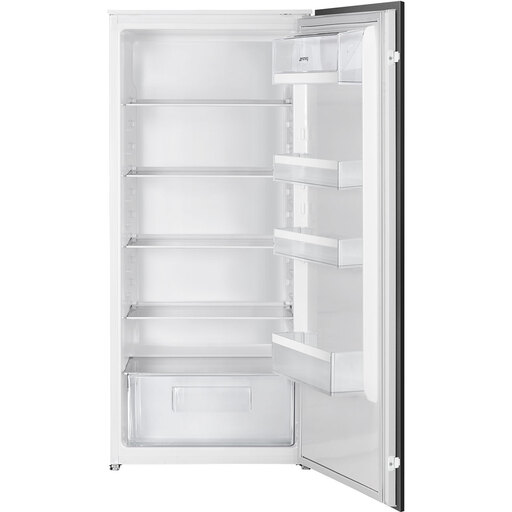 Image unavailable
If you want to prioritise fresh food storage in an integrated appliance, check that its dimensions fit your kitchen cabinet.
Stated dimensions: 54,8 × 121,8 × 54,9 cm; stated energy consumption of 101 kWh/year and noise level of 34 dB. The product details describe this model as designed for fresh food.
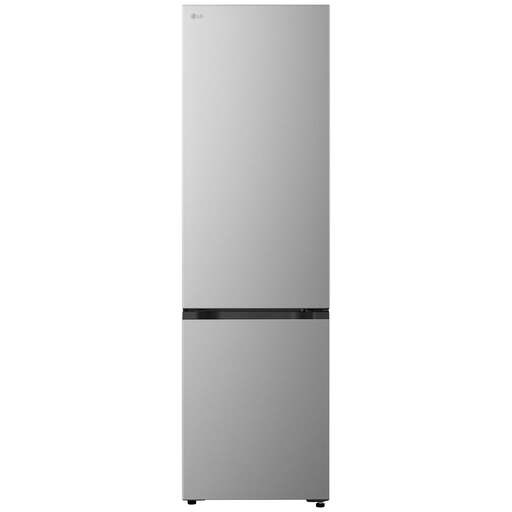 Image unavailable
For a freestanding fridge freezer, check the available space against the dimensions and clearances specified for installation.
The product details state 169 kWh/year and 34 dB, with dimensions of 597 × 1 860 × 674 mm. They call for at least 5 cm of clearance at the back, above and on the sides.
 Image unavailable
If width is a key consideration in your kitchen, this fridge freezer lets you compare a 54 cm design with separate fresh and frozen food compartments.
The product details list 153 L for the fridge, 74 L for the freezer and a noise level of 39 dB. They mention Low Frost technology and a reversible door; Low Frost doesn’t mean frost-free.
Que Choisir Ensemble suggests 100 to 150 litres for one person, then 50 litres for each additional person as a guide. It isn’t a hard-and-fast rule: also consider how often you shop, and compare fridge and freezer capacities separately.
Not necessarily, if you often store frozen food. Check whether the exact model has a freezer compartment and how much space it offers. Que Choisir Ensemble notes that a small freezer may not meet the needs of someone who stores a lot of frozen food.
For relevant appliances sold in the European Union, compare the A to G rating, kWh/year, compartment capacities and stated noise level. The European Commission says the label’s QR code provides access to model information in EPREL. The kWh/year figure is based on standardised testing, so it doesn’t guarantee what your energy bill will be.
The DGCCRF states that, under ecodesign rules, certain parts for the household refrigeration appliances covered must be available for seven years, and door seals for ten years, after the last unit of the model is placed on the market. These periods don’t mean that every part is covered or that repairs are free. Check with the manufacturer which parts are covered and how to order them.