
Livraison le jour même ou le lendemain

Qualité garantie

Débloquez vos offres de bienvenue: Livraison GRATUITE | Jusqu'à -80 % | 30 jours d'essai gratuits à JoyPlus
Téléchargez l'application
Are you looking for whey protein for weight training, fitness, running or simply to increase your daily protein intake? Between whey isolate, whey concentrate, protein blends, individual sachets and larger formats, choosing the right product can quickly become a headache.
Marketing claims should also be taken with a pinch of salt. A higher price does not necessarily guarantee a formula suited to your needs, while a large tub can become a nuisance if you do not like the flavour. Here are the criteria to consider before buying your whey powder.
A powder with a high protein content is not automatically the best choice for your diet. Also check the actual serving size, number of servings, carbohydrates, sugars, fats and ingredients list.
For example, several products in the Optimum Nutrition Gold Standard range state that they provide around 24 g of protein per serving, but the serving weight can vary from 30 to 32 g depending on the product and flavour.
Whey isolate and hydrolysed whey are often presented as fast-absorbing proteins. Their composition is important, of course, but when you take them and how well you tolerate them digestively matter just as much. Whey concentrate will suit many users, while a formula with a higher isolate content may appeal to people monitoring their carbohydrate or fat intake.
The label remains the best source of information: marketing claims cannot replace verifiable nutritional data.
Larger formats often reduce the price per serving, but they also commit you for longer. An overly sweet flavour or powder that is difficult to mix could end up at the back of a cupboard. For your first order, a small tub or a few whey sachets let you check whether the product really suits your habits.
Once opened, store the powder in a cool, dry place away from light. Close the container carefully and follow the date shown on the packaging.
Start by comparing the amount of protein per serving rather than just the weight of the pack. In this selection, servings generally provide between 21 and 24 g of protein. This information helps you estimate the number of servings available and compare the price with the amount you will actually consume.
The powder can be used as a post-workout protein, between meals or in a smoothie. However, it is not a substitute for a varied diet.
Remember to check the allergen list too. The products featured here contain milk and, in most cases, soya lecithin. Some may also state that they contain traces of gluten, eggs, peanuts or nuts.
A low-sugar protein may be useful if you want to limit the additional intake in your drinks. However, check the values for the serving you will actually consume: the flavour and recipe can affect the figures.
As a guide, the products in this selection often provide between 100 and 120 kcal per serving, with varying sugar content. When prepared with milk, whey will naturally provide more calories and carbohydrates than when mixed with water.
For daily use, compare the number of servings. A 2 kg bag may provide more than 60 servings, while a 300 to 450 g tub is mainly useful for trying a flavour. Individual sachets are convenient at the office, in a gym bag or when travelling, but their price per serving may be higher than that of a larger format.
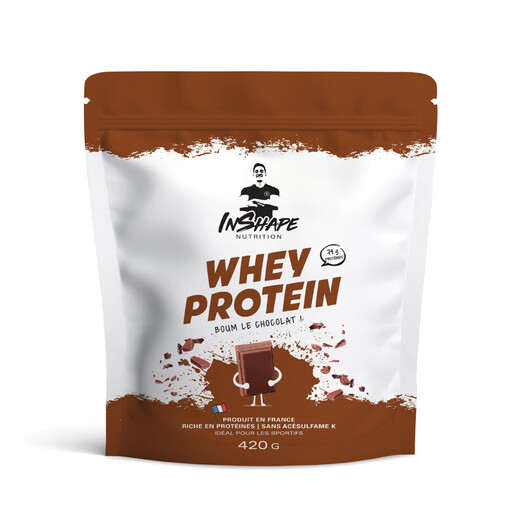
Why this choice suits this profile: At 420 g, this format lets you try a chocolate whey without immediately investing in a large bag. Each 30 g serving provides 22.2 g of protein.
The smaller format reduces the risk of being left with a powder whose flavour or texture you do not enjoy.
22.2 g of protein per serving, 1.4 g of fat and a chocolate flavour.
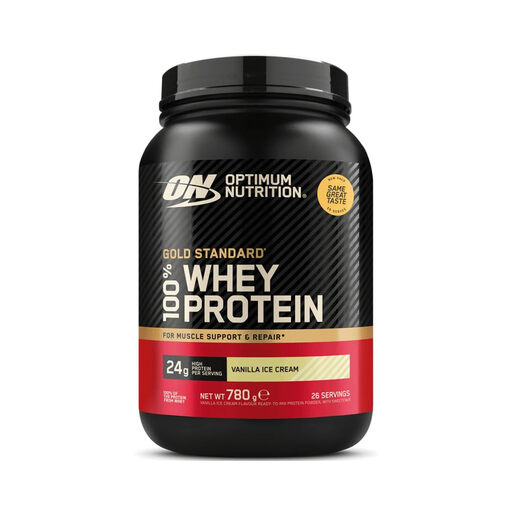
Why this choice suits this profile: This formula combines isolate, concentrate and hydrolysate. It provides 23.7 g of protein per 30 g serving and comes in a vanilla flavour.
The detailed composition identifies the different types of protein, rather than relying solely on promotional wording.
23.7 g of protein per serving and preparation with 180 to 240 ml of liquid.
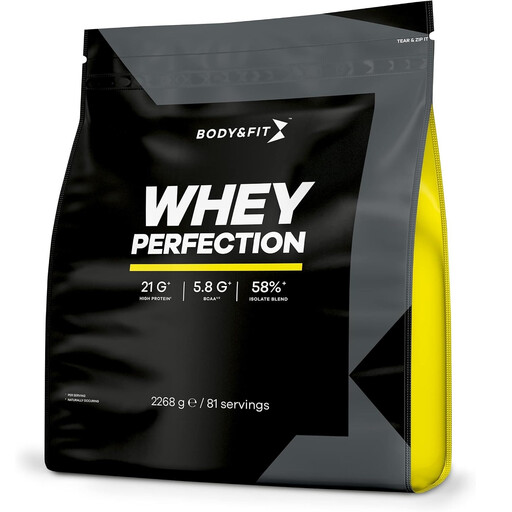
Why this choice suits this profile: With around 81 servings, this format is suitable for regular consumption after training or between meals.
The number of servings is clearly stated, making it possible to estimate the cost of use before ordering.
22 g of protein per 28 g serving, 100 kcal and a blend of isolate, concentrate and hydrolysate.
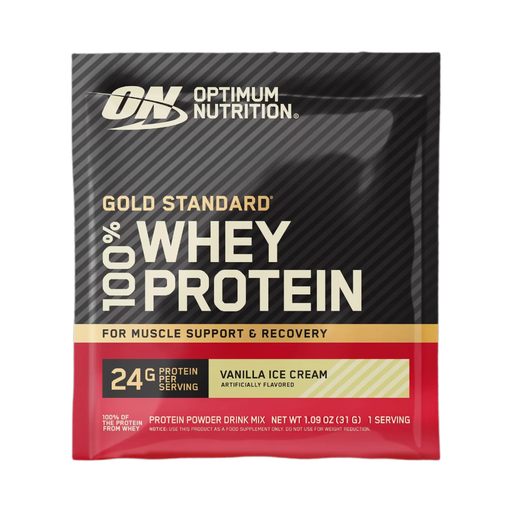
Why this choice suits this profile: The 24 individual sachets fit easily into a gym bag, office drawer or suitcase.
The individual portions mean you do not have to carry a large tub and help prevent measuring errors when taking it away from home.
24 g of protein per sachet, with preparation possible in a simple glass using a spoon.
We have brought together a complete, real-time updated selection of products that meet these strict criteria and European safety requirements.
You can consume it after a workout, between meals or at any other time to supplement your daily protein intake. The best time depends mainly on your diet, activity levels and goals.
Follow the date and instructions shown on the packaging. Close the tub after each use and store it in a dry place at a moderate temperature, away from moisture. If the smell, appearance or taste changes, it is best not to consume the product.
Milk-based products are not suitable for people allergic to milk proteins. Also check for soya and any possible traces of other allergens. If you are receiving medical treatment, pregnant, breastfeeding or have a health condition, ask a healthcare professional for advice before using a protein supplement.