
Livraison le jour même ou le lendemain

Qualité garantie

Débloquez vos offres de bienvenue: Livraison GRATUITE | Jusqu'à -80 % | 30 jours d'essai gratuits à JoyPlus
Téléchargez l'application
Whey protein has become increasingly popular among weight-training enthusiasts, runners and active people looking to supplement their daily intake. However, not all products are equal or designed to meet the same needs. A poorly chosen powder can be difficult to digest, too sweet, inconvenient to prepare or simply more than you really need.
Before buying whey, it is therefore worth checking the label, format and ingredients list rather than relying solely on marketing claims.
A 30 g sachet or scoop does not necessarily contain 30 g of protein. The proportion varies depending on the recipe, flavourings and texturing agents. The products featured below generally provide between 22 and 24 g of protein per serving, but always check the nutrition table.
To compare two products, look at the protein content per 100 g, then check how many servings are actually included in the pack.
Claims such as “rapid absorption”, “premium formula” or “advanced blend” are no substitute for carefully reading the ingredients list. Whey isolate often contains a higher proportion of protein, while whey concentrate can be perfectly suitable for everyday use at a lower cost.
The presence of sucralose, acesulfame-K, soya lecithin or thickeners is not necessarily a drawback. It simply needs to match your dietary preferences and tolerance.
A tub weighing more than 2 kg can reduce the price per serving, but the saving disappears if you quickly tire of the taste. For a first purchase, a 420–780 g format or individual sachets allow you to test the flavour, texture and ease of mixing before moving on to a large whey pack for bulking.
Derived from milk, whey provides a range of amino acids. Depending on the formula, you may find:
A whey product combining isolate, concentrate and hydrolysate is not automatically better than a simpler formula. The choice mainly depends on your budget, habits and the nutritional information shown on the packaging.
For a post-workout shake or an afternoon snack, check in particular:
For example, several Optimum Nutrition products state 24 g of protein per serving, with around 1 to 1.6 g of carbohydrates and 1.2 to 1.5 g of fat, depending on the format and flavour. InShape Nutrition products provide 22.2 to 23.1 g of protein per 30 g of powder.
A shaker remains the most convenient option, but some individual portions also mix very well in a glass with a simple spoon. Here are the main formats to consider:
The selected products generally recommend mixing one serving with 180 to 240 ml of water or milk. You can adjust the amount of liquid depending on the texture you prefer.
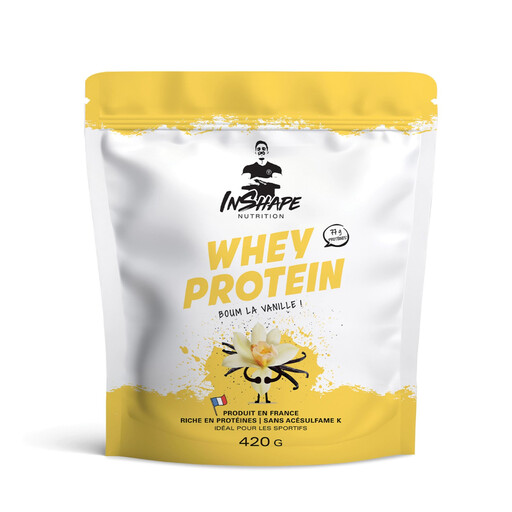
Why this product suits this profile : At 420 g, this format lets you try a protein powder without ending up with a large stock. One 30 g serving provides 23.1 g of protein and mixes with water or milk.
The smaller pack reduces the risk of buying a large quantity of a flavour you ultimately do not enjoy.
23.1 g of protein per serving, 1.3 g of fat and manufacturing declared by a responsible operator established in France.
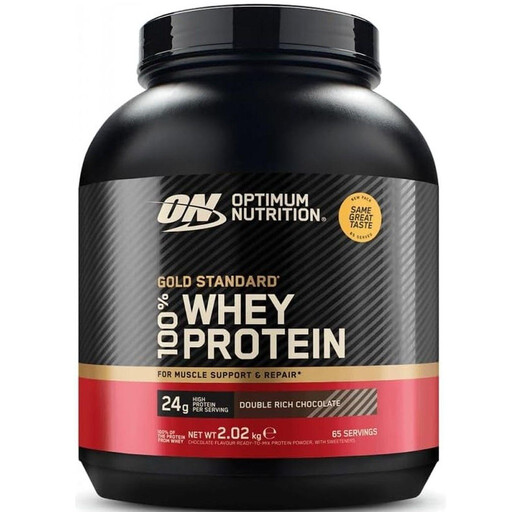
Why this product suits this profile : With 2.02 kg and 65 servings, this large format is suitable for frequent use, particularly if you regularly do weight training.
The table details the protein, carbohydrate, sugar, fat and salt content per serving, allowing for an objective comparison.
24 g of protein, 1.6 g of carbohydrates and 1.4 g of fat per 30 g serving. The formula combines isolate, concentrate and hydrolysate.
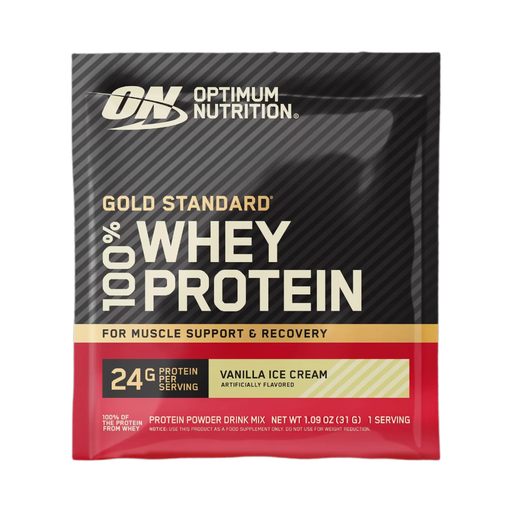
Why this product suits this profile : Individual sachets are ideal for athletes who alternate between the gym, running, business travel and outdoor training.
Each serving is pre-measured: you avoid carrying a large tub and pouring an approximate amount into your shaker.
24 x 31 g sachets, 24 g of protein per serving and can be mixed in a glass with a spoon. Contains milk and soya.
We have brought together a complete, real-time selection of products that meet these strict criteria, as well as European regulatory safety requirements.
A serving can be mixed with water or milk, or added to a smoothie. The best time to consume it mainly depends on your routine and overall dietary intake. Post-workout protein can be convenient after a session when you cannot have a proper meal straight away, but it is not a substitute for a varied diet.
If you are looking to increase your daily intake, you can also have whey between meals. Follow the dose indicated on the label and take into account the protein already provided by your diet.
Milk-based products are not suitable for people with a milk protein allergy. Also check for the possible presence of soya, eggs, gluten or nuts, depending on the product. If you are pregnant or breastfeeding, taking medication or have a health condition, seek advice from a healthcare professional before use.
The best-before date is shown on the packaging. Once opened, close the tub securely and store it in a cool, dry place away from light. If the powder develops a noticeable change in smell, appearance or texture, it is best not to consume it.
No. Some individual portions state that a glass and spoon are sufficient. However, a shaker makes mixing easier at the gym or when travelling. Pour in the liquid first, then add the powder to help prevent lumps.
Whey isolate is a filtered protein, but it still comes from milk. It is therefore not suitable for people with a dairy protein allergy. Compare the ingredients, allergens and nutritional values rather than focusing solely on the word “isolate”.