
Livraison le jour même ou le lendemain

Qualité garantie

Débloquez vos offres de bienvenue: Livraison GRATUITE | Jusqu'à -80 % | 30 jours d'essai gratuits à JoyPlus
Téléchargez l'application
Navigating the supplement aisle is often a daunting task. Faced with dozens of tubs with flashy labels, finding the right whey protein can be a real uphill battle. As a product specialist at Joybuy, my mission is to clear the path for you. The goal? To give you the keys to making an informed choice that fits your needs and budget, without falling for marketing ploys.
The market is flooded with products that don't always deliver on their promises. Before we get to our top picks, let's review the three most common pitfalls that could cost you time... and money.
To avoid falling into the trap, you just need to know where to look. Here are the three things to check every time before you buy.
Not all whey is created equal. The name depends on the filtration process, which directly impacts its purity, absorption speed, and lactose content.
Once you've chosen the type of whey, turn the tub over and analyse the nutritional panel. Don't just look at the per-serving values: the only reliable comparison is based on 100g.
A 2kg tub for €50 seems like a better deal than a 900g tub for €30, right? Not so fast. To find the true cost, you need to calculate the price per serving. Simply divide the price of the tub by the number of servings listed on the label. This will give you a foolproof basis for comparison between brands and sizes.
To put theory into practice, here are a few products that tick all the boxes, each tailored to a specific need.
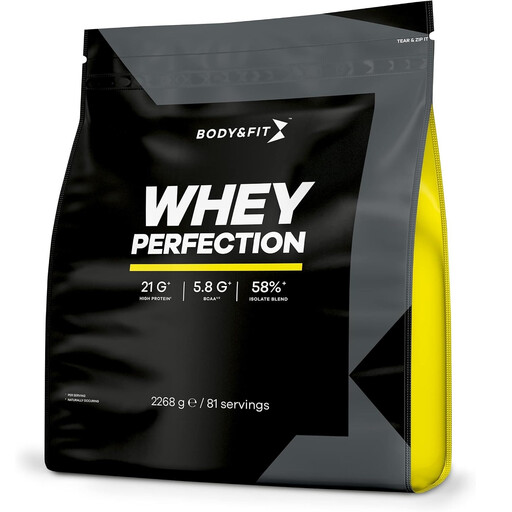
Why we recommend it: Ideal for those seeking the best value for money without sacrificing performance. Its large size is very economical, perfect for daily use as part of a weight training program.
Its composition is crystal clear: a blend of concentrate and isolate, with a very low sugar content (1.5g per serving). Its cost per serving is ultra-competitive, making it a smart choice over entry-level products packed with additives.
It provides 22g of protein per serving and 5g of naturally occurring BCAAs, an excellent score for a product in this price range.
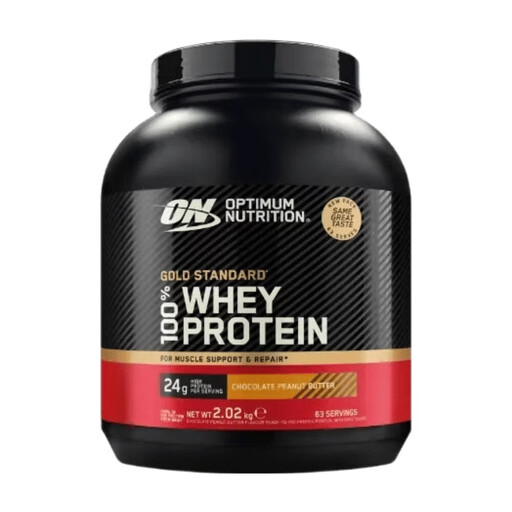
Why we recommend it: For athletes who make no compromises on quality and purity. The Whey Gold Standard is the market benchmark, with a formula designed for maximum effectiveness and accelerated muscle recovery.
The primary ingredient is whey isolate, which guarantees maximum protein concentration (24g per serving) and a negligible amount of lactose, sugar (1g), and fat. It's the antithesis of marketing-driven formulas loaded with superfluous ingredients.
A blend of three types of whey (isolate, concentrate, hydrolysate) for both rapid and sustained absorption. It contains 5.5g of naturally occurring BCAAs per serving.
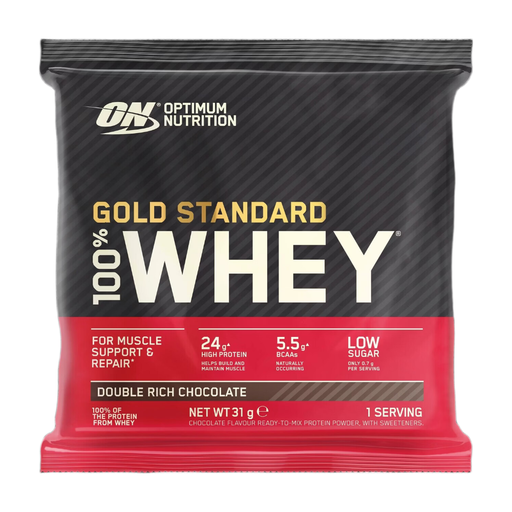
Why we recommend it: For those who want an on-the-go solution without compromising on quality. Perfect for slipping a serving into your bag, whether for the office, a trip, or to take right after your gym session.
This sachet format saves you from lugging around a large tub and guarantees a perfect dose every time. You get the same Whey Gold Standard quality as the tub version, but in an ultra-convenient single-serving format.
The pre-dosed sachet format is easy to carry and mix. Each sachet delivers 24g of high-quality protein for an optimal snack or recovery, wherever you are.
We have curated a complete and up-to-date selection of products that meet our strict selection criteria and current regulations.
The main difference lies in the level of filtration. Whey isolate is purer, with over 90% protein and virtually no lactose or fat. Classic whey (concentrate) is slightly less filtered (70-80% protein) and thus retains a bit more of its original nutrients. Isolate is therefore the logical choice for people who are lactose intolerant or on a strict cutting phase.
The concept of the "anabolic window" is debated, but the general recommendation is to drink your protein shake within 30 to 60 minutes post-workout. This is when your muscles are most receptive to nutrients to kick-start repair and growth. Taking it in the morning upon waking or as a snack is also an excellent strategy to spread your protein intake throughout the day.
Yes, absolutely. Mixing your protein powder with milk (dairy or plant-based) will make your shake creamier and add extra protein and calories, which is beneficial for a mass gain goal. The absorption will simply be slowed down slightly by the fat in the milk. This isn't an issue, except right after a workout, when water is preferred for maximum and rapid absorption.