If fibre is important when choosing crêpes for an afternoon snack, look for wholemeal or wheatmeal flour in the ingredients list, then compare the fibre content per 100 g. The wheat crêpes listed by Carrefour and E.Leclerc do not mention wholemeal flour in their ingredients. Making crêpes at home lets you choose the flour from the outset, but takes time to prepare and cook.
Who are these criteria for?
Households who favour wholegrains
You want to know which flour is used in the crêpes served with coffee. Manger Bouger recommends choosing wholegrain or semi-wholegrain starchy foods when they’re made from cereals. Check the label of the product you choose to find out what’s in the recipe.
Shoppers looking for ready-to-serve crêpes
You want an afternoon snack that doesn’t need cooking. The product listings for Carrefour and E.Leclerc wheat crêpes show why it’s important to read the ingredients rather than assume that ‘wheat’ means ‘wholemeal’.
Households mindful of ingredients and allergens
If someone needs to avoid an ingredient, check each recipe before serving. The wheat crêpes listed by Carrefour and E.Leclerc declare wheat, milk and eggs, among other ingredients.
What should you check for an afternoon snack?
| Criterion |
What to check |
Who it’s for |
| Flour and fibre |
Look for ‘wholemeal flour’ or ‘semi-wholemeal flour’ in the ingredients and compare the fibre content per 100 g. |
I want to know which flour has been used and compare the fibre content shown on the pack; around 36% of consumers make this a priority. |
| Flavour |
Read the ingredients list, paying particular attention to sugar, and choose a pack size that suits the number of crêpes you’re serving. |
With coffee, I prefer a ready-to-serve crêpe with a recipe that suits my tastes; flavour and convenience come first for around 29% of consumers. |
| Ingredients and allergens |
Check the allergens listed and any ‘may contain’ warnings on the specific pack. |
If I’m sharing an afternoon snack with someone who needs to avoid an ingredient, I need to check the recipe before serving; around 21% of consumers put this check first. |
| Availability and convenience |
Check that the product is available at your chosen shop and whether it’s ready to serve. |
If I’m planning an afternoon snack without making the batter, I want to be able to find my chosen crêpes easily; this convenience is the main consideration for around 14% of consumers. |
Which common misconceptions should you avoid?
-
Assuming ‘wheat’ means ‘wholemeal flour’
Wheat refers to the grain, not how refined the flour is. The ingredients listed for Carrefour and E.Leclerc wheat crêpes do not mention wholemeal flour.
If you’re looking for a wholemeal recipe, check for ‘wholemeal flour’ or ‘semi-wholemeal flour’ on the specific product, then check its nutrition information for fibre.
-
Guessing the fibre content from buckwheat or colour
A buckwheat galette is a different recipe from a sweet wheat crêpe. The name or appearance won’t tell you the product’s fibre content.
Compare the fibre content per 100 g and check the ingredients of the galette you’re considering for your afternoon snack.
-
Assuming all crêpes contain the same allergens
The wheat crêpe recipes listed by Carrefour and E.Leclerc declare wheat, milk and eggs; another product may have a different recipe.
Read the ingredients, listed allergens and any ‘may contain’ warnings on each pack you buy.
Retailers and brands to look at
Carrefour
Carrefour lists wheat crêpes and buckwheat galettes online.
- The listing for Reflets de France wheat crêpes specifies milk, wheat flour, eggs and sugar, among other ingredients.
- Wholemeal flour isn’t mentioned in this list, so check the recipe and fibre content of the product you’re interested in.
E.Leclerc
The Nos Régions ont du Talent range includes Breton wheat crêpes.
- The listing for this product specifies whole milk, wheat flour, sugar and eggs, among other ingredients.
- Wholemeal flour isn’t mentioned; also check availability with your local store.
Auchan
Auchan’s online food range includes a crêpes category.
- This category can be a good starting point when looking for a recipe to suit your afternoon snack.
- Check the listing or packaging for each product before assuming it contains wholemeal flour.
ALDI
ALDI lists a DAYLICIOUS product of sweet crêpes made with fresh milk.
- The product comes in a pack of 10 crêpes, weighing 600 g.
- To see if it meets your fibre priorities, check the ingredients and nutrition information on the packaging.
Flour for making crêpes at home
This Joybuy selection features T150 wholemeal wheat flour for making crêpes at home, rather than ready-to-serve crêpes.
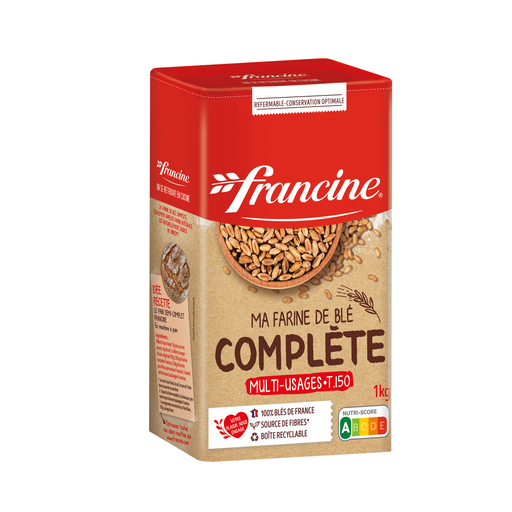 Image unavailable
FRANCINE T150 wholemeal wheat flour, 1 kg
Make crêpes at home and choose wholemeal flour from the outset. The pack contains 1 kg of T150 wheat flour. Choose a recipe and check the quantities before you start. If you’re comparing fibre content, check the pack’s nutrition information: the flour alone won’t tell you how much fibre the crêpes will contain once prepared.
View on Joybuy
Frequently asked questions
Are wheat crêpes always wholemeal?
No. Wheat refers to the grain, and the ingredients listed for Carrefour and E.Leclerc wheat crêpes don’t mention wholemeal flour. Look for ‘wholemeal flour’ or ‘semi-wholemeal flour’ on the product you’re planning to buy.
What does ‘high in fibre’ mean on a crêpe pack?
Under the European regulation on nutrition claims, a product must contain at least 6 g of fibre per 100 g or 3 g per 100 kcal to use this claim. Check the product’s nutrition declaration rather than relying on its colour or the name of the grain.
Which ingredients should you check in ready-to-serve wheat crêpes?
Start with the flour and allergens: the wheat crêpe recipes listed by Carrefour and E.Leclerc declare wheat, milk and eggs. Also read any ‘may contain’ warnings on the specific pack, as another recipe may differ.
Do you have to make crêpes yourself to choose wholemeal flour?
Not necessarily: ready-to-serve crêpes are also suitable if their ingredients list specifies the flour you’re looking for. Making the batter yourself lets you choose the flour, but takes time to prepare and cook. Either way, compare the fibre content per 100 g separately when this information is available.


