
Livraison le jour même ou le lendemain

Qualité garantie

Débloquez vos offres de bienvenue: Livraison GRATUITE | Jusqu'à -80 % | 30 jours d'essai gratuits à JoyPlus
Téléchargez l'application
Choosing wet food for cats and dogs is not simply a matter of comparing the price of a tin or the percentage highlighted on the packaging. From cat food and dog food to French terrines and tinned meat intended for human consumption, the differences in composition and use are far from insignificant.
Certain mistakes are common among French consumers:
Here are the criteria to check before filling your basket.
For feeding both adult cats and adult dogs, look for an explicit statement such as ‘complete food’ or ‘complete food for pets’. This indicates that the product is formulated to make up your pet’s daily allowance, provided you follow the manufacturer’s recommendations.
By contrast, some terrines, pâtés and tinned meats intended for humans are not designed to meet a cat’s or dog’s nutritional needs. A pork pâté intended for human consumption may contain more salt, fat or additives than is suitable for an animal’s regular diet.
The percentage of meat should always be considered alongside the complete ingredients list. A recipe may combine meat, offal, stock and minerals, which do not all serve the same purpose in the formula.
Recipes such as single-protein cat food can sometimes make the composition easier to understand. Some pork products, for example, list 70% pork, including meat, heart, lungs and liver. This is not a medical guarantee for an allergic animal, but it does reduce the number of animal protein sources in the recipe.
Claims such as grain-free, gluten-free, with no added sugar or no vegetable by-products refer to specific characteristics. However, they are no substitute for veterinary advice if your pet has persistent problems or a diagnosed allergy.
A 125 g pouch can be convenient for trying a recipe or dividing meals into portions. Tins of 200 to 400 g, or multipacks, are better suited to households that serve wet food regularly.
For the recipes featured here, the portion for an adult cat weighing 3 to 5 kg is generally between 200 and 400 g per day, depending on the product. For an adult dog, the amount mainly depends on weight, age and activity level.
Once opened, storage becomes a key consideration:
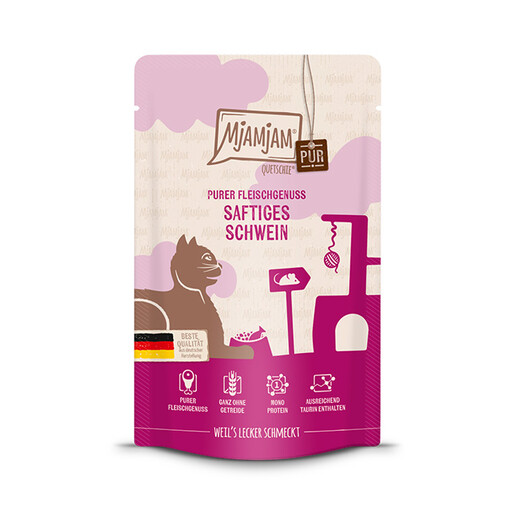
Why this choice suits this shopper: This small format lets you try cat food without being left with a large quantity to store in the fridge. The recipe is intended for adult cats and contains 70% pork, including heart, lungs and liver.
The 125 g format reduces the risk of buying a large quantity before you know whether your cat likes the texture and taste.
Complete food for adult cats, with a pork recipe, grain-free and with added taurine according to the product information.
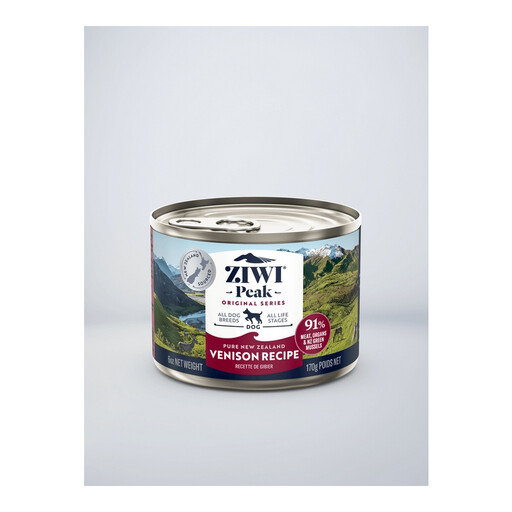
Why this choice suits this shopper: This dog food focuses on a game-based recipe, with a clearly highlighted source of animal protein and an individual 170 g format.
The product page details the ingredients and analytical constituents. This gives you a clear idea of the recipe, rather than leaving you to rely solely on the promise of food that is rich in meat.
The stated composition includes 92% venison meat, offal and bone, as well as 3% New Zealand green-lipped mussel.
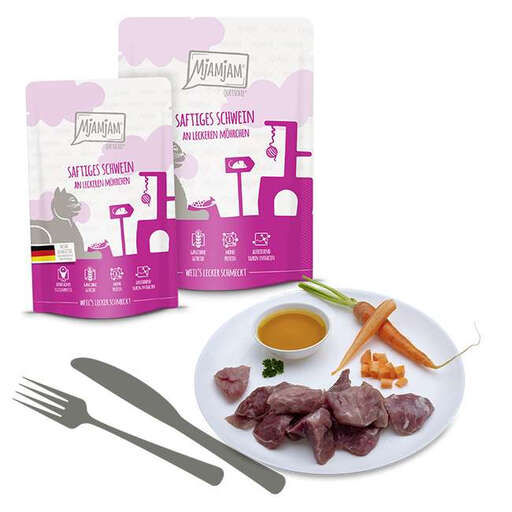
Why this choice suits this shopper: The 400 g format is suitable for households that regularly serve wet food to an adult dog and want to minimise the number of times a tin needs to be opened.
The product page confirms that this is complete food for adult dogs and provides detailed feeding and storage recommendations.
Pork and squash recipe, grain-free according to the product information, with a stated protein content of 11% and fat content of 6.5%.
We have brought together a complete, real-time updated selection of products that meet these strict criteria and European safety requirements.
A French terrine, pork pâté or tinned beef can be perfect for an aperitif, in a sandwich or for preparing a quick meal. However, these products should not automatically be considered an alternative to cat food or dog food.
Before buying, always check:
Among products intended for humans, Hénaff pork pâté 154 g states that it contains 91% pork, while Lucien Georgelin three-poultry terrine 200 g lists 62% poultry meat and 9% liver. This information allows you to compare products, but their formulation is designed for a different purpose from that of complete pet food.
Yes, provided both products are suitable for the animal’s species and the total portion remains consistent with its needs. You should add together the contributions from the kibble and wet food, rather than serving the full recommended portion for each product. A gradual transition over several days can also help reduce digestive problems.
It depends entirely on the instructions on the label. Several products for cats recommend refrigeration for a maximum of 24 hours. Some dog foods and terrines can be kept for up to two days, or even three for certain products intended for humans. In all cases, the container should remain closed and should not be left at room temperature for long periods.
A single-protein recipe is based on one declared main animal protein source, making it easier to monitor the ingredients. However, this alone is not enough to confirm or treat an allergy. If your pet experiences repeated reactions, ask your vet for advice and check the full composition carefully, including additives and any traces listed on the packaging.