
Livraison le jour même ou le lendemain

Qualité garantie

Débloquez vos offres de bienvenue: Livraison GRATUITE | Jusqu'à -80 % | 30 jours d'essai gratuits à JoyPlus
Téléchargez l'application
Choosing wet food for adult cats is about more than comparing flavours and promotions. From pouches and tins to mousses and recipes in gravy, the ingredients, texture and format can all make a real difference to your day-to-day routine.
Some pitfalls are particularly common. A tin decorated with a generous piece of salmon may contain only 4%, while a highly varied selection may not suit a cat that is sensitive to dietary changes. A very watery soup can help with hydration, but it does not replace complete wet food for cats when it is sold as a complementary food.
Descriptions such as “with chicken”, “with salmon” or “with beef” should always be checked against the ingredients list. In the recipes concerned, some products contain just 4% of the highlighted ingredient. In other words, the advertised flavour does not mean that this food forms the main basis of the recipe.
So, when comparing salmon wet food for cats with chicken wet food for cats, it is better to check the full composition and nutritional analysis rather than relying on the picture on the packaging.
Wet cat food can be complete or complementary. Sheba tuna and chicken fillet soup, for example, is presented as a way to support hydration and as a complementary treat. It should not replace the day's complete meals.
The legal wording “complete food for adult cats” is an essential reference point. It means that the product can form part of a cat's daily diet when served in accordance with the manufacturer's recommendations.
Large multipacks are convenient and can reduce the price per portion. However, they are not always suitable for a cat that eats small amounts or wants different recipes. Conversely, 50 g pouches reduce leftovers, but several units may be needed each day.
Once opened, products should generally be stored in the fridge and used within the period stated on the packaging, often 24 to 48 hours. Wet food left at room temperature for too long also loses much of its practical appeal.
For an adult cat, look for clear wording such as “complete food for adult cats”. A neutered cat may need closer monitoring of portion sizes, as its activity levels and requirements can change. Food for neutered cats therefore does not remove the need to follow the recommended portion or monitor changes in body condition.
Manufacturers generally state quantities according to the animal's weight. These recommendations should be adjusted according to its activity, build and any dry food it may also eat.
In this selection, wet food for adult cats generally contains 78 to 83% moisture. Protein, fat, ash and fibre levels make it possible to compare recipes within the same range.
However, do not compare the percentages in wet food directly with those in dry food: the high water content significantly changes the displayed values. For a fairer comparison, you can consider the dry matter basis. If your cat has specific dietary needs, ask your vet for advice.
Texture plays an important role in whether your cat accepts the product and how easily it eats it:
Also remember to check for cereals, added sugars, thickeners and flavourings. Grain-free wet food for cats may suit a particular preference about ingredients, but this claim alone is not enough to assess the product's overall quality.
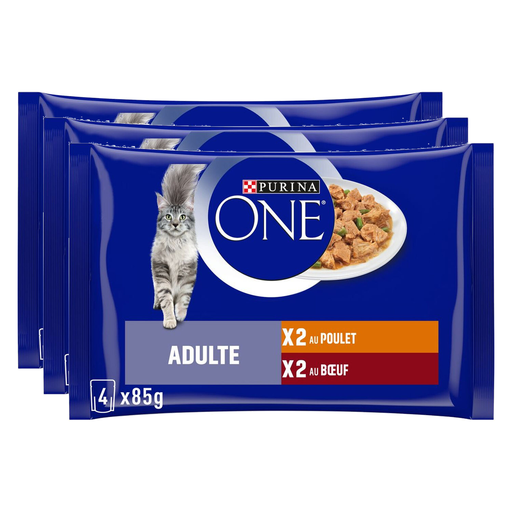
Why this choice suits this profile: This multipack of 12 x 85 g pouches lets you try two recipes and serve pre-portioned meals, whether your cat eats wet food exclusively or has a mixed diet.
The product details clearly state that this is a complete food for adult cats and give separate portions depending on the feeding method chosen.
Two recipes, 12 x 85 g pouches, 12% protein and 78% moisture according to the information provided.
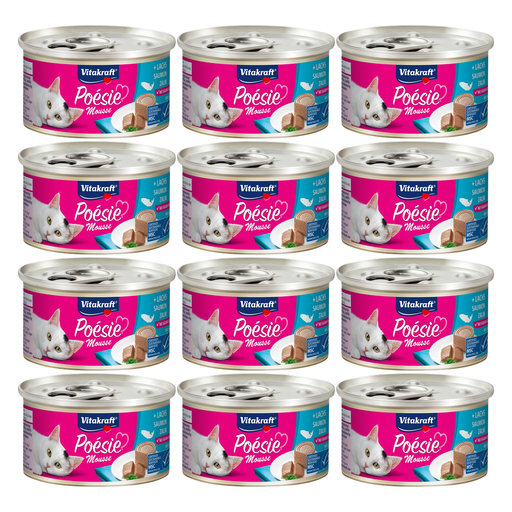
Why this choice suits this profile: This salmon mousse is aimed at households looking for a smooth texture and a recipe that differs slightly from classic options.
The product details specify 6.8% salmon and confirm that it is a complete food, rather than letting the recipe name dictate your choice.
12 x 85 g tins, a light mousse, 11% protein, 7% fat and no added sugar according to the product details.
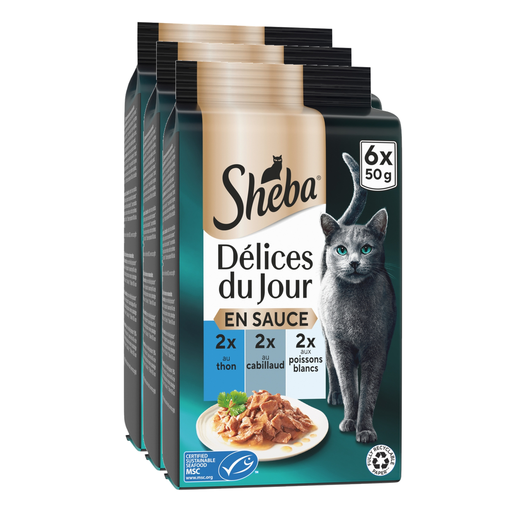
Why this choice suits this profile: The small pouches are suitable for cats that eat in several sittings and for households wanting to minimise leftovers after each meal.
The 50 g format reduces the risk of leaving an opened portion in the fridge for too long and makes it easier to control quantities.
18 pouches, three fish-based recipes, 82% moisture and storage instructions for after opening.
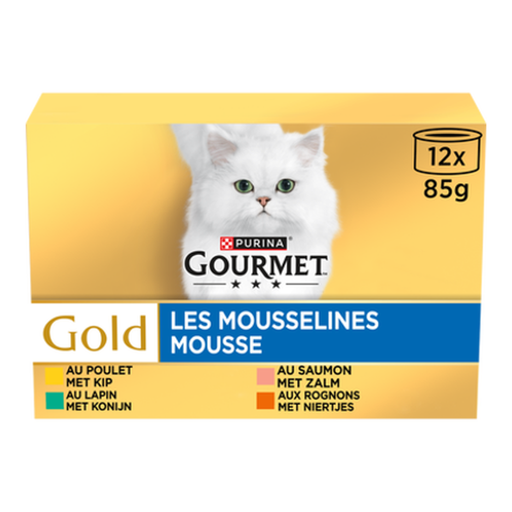
Why this choice suits this profile: This selection brings together several mousses in 85 g tins. A practical way to vary flavours without buying several separate products.
Each variety states a proportion of 4% for the highlighted ingredient, and the product is presented as a complete food for adult cats.
12 tins, several recipes, a mousse texture, 82% moisture and 9% protein according to the range information.
We've put together a complete, real-time updated list of products that meet these strict selection criteria and European safety regulations.
Serve wet food at room temperature to preserve its usual texture and aroma. If you change recipes, make the switch gradually over several days to reduce the risk of refusal. Even when feeding wet food, always leave a bowl of fresh water nearby.
For a neutered or less active cat, do not rely solely on the stated number of pouches: monitor changes in its weight and adjust portions if necessary. In the event of a specific diet, digestive sensitivity or health problem, veterinary advice remains essential.
The amount depends on the cat's weight, activity level and age, as well as whether it also eats dry food. Product details often provide a guideline for a 4 kg cat, but these recommendations should be adjusted according to its body condition.
Mousse is suitable for cats that enjoy smooth, uniform textures. Chunks in gravy or strips may be better for cats that like to chew and consume more gravy. A few days of observation will usually be enough to identify your pet's preferences.
It depends on the price per kilogram, the number of meals served and the amount of leftovers. Tins and large multipacks can be worthwhile for a cat that regularly eats the same recipe. 50 g pouches do more to limit opened portions. Always compare the total weight, price per kilogram and whether the product is complete or complementary.