For a clean-up involving ordinary dust, small pieces of rubble and non-hazardous water, choose a wet and dry vacuum cleaner whose instructions say it can handle the materials you need to collect. A cylinder vacuum is better suited to finishing floors once the debris has been removed. Pick up any pieces that are too large or not approved for the machine by hand. If hazardous dust is a possibility, particularly if asbestos is suspected, don’t use a domestic vacuum cleaner for the job.
Who is this advice for?
For cleaning up a mix of materials
After light DIY jobs, you may need to remove ordinary dust, small pieces of rubble and possibly non-hazardous water. As UFC-Que Choisir points out, tank capacity, accessories and how easy the vacuum is to empty all matter when choosing a wet and dry vacuum cleaner.
For finishing off indoor floors
You’ve already picked up the debris, and there’s only a small amount of ordinary household dust left. A cylinder vacuum may be suitable for the final clean, as long as you choose a floor head that’s right for your flooring and don’t use it for water or rubble.
For cleaning away from a socket or near a power tool
You’re working in an area where a cable would get in the way, or you’d like to connect a vacuum to a compatible tool. With a cordless model, check which battery and charger are included, as well as the quoted run time for your chosen configuration.
What should you check?
For small jobs around the home, first identify the materials involved. The domestic appliances discussed here are only suitable for non-hazardous dust, debris and liquids.
Wet and dry vacuum cleaner
Consider this: for a larger clean-up or a mix of ordinary dust, small pieces of rubble and non-hazardous water, where these materials are approved in the instructions.
Bear in mind: a tank sized for the job may take up more space. Also check the hose diameter and the instructions for wet vacuuming.
Cylinder vacuum cleaner
Consider this: for finishing indoor floors when only a small amount of ordinary household dust remains.
Bear in mind: keep rubble and water out of this clean-up, unless the instructions for the specific model explicitly say otherwise.
Broom and manual collection
Do this first: pick up pieces that are too large, heavy or not approved in the instructions before vacuuming any permitted residue.
Bear in mind: this takes time and is no substitute for taking the right precautions when dealing with hazardous dust.
| What to consider |
What to check |
Who this matters to |
| Type of dust |
Identify the material before choosing an appliance. For ordinary dust, check the filtration and care instructions for the exact model. If hazardous material is a possibility, don’t use a domestic vacuum cleaner for the job. |
If I don’t know what the dust contains, I want to avoid choosing an appliance that’s unsuitable for a hazardous material; around 40% of consumers would make this their top priority. |
| Water and small pieces of rubble |
Check that wet materials can be vacuumed, along with the tank capacity and accessory diameter. First remove any debris that’s too large or excluded in the instructions. |
When a clean-up involves non-hazardous water and ordinary debris, I’m looking for a tank and accessories suited to the materials I need to remove; this would be the main requirement for around 30% of consumers. |
| Reach and storage |
Compare the cable and hose lengths with the area you need to clean. For a cordless model, check which battery is included and the quoted run time with that battery. |
In an area far from a socket or cluttered with tools, I want to reach the dirt and put the appliance away easily afterwards; around 30% of consumers would prioritise this. |
Mistakes to avoid
-
Assuming all DIY dust is ordinary household dust
According to the French Ministry of Labour, home renovation work can expose people to asbestos. A domestic vacuum cleaner is not suitable for dealing with potentially hazardous dust.
If you’re unsure what a material contains and there could be a hazard, stop cleaning and get advice on the appropriate preventive measures.
-
Choosing based only on power or tank size
A hose that’s unsuitable for the debris, limited reach or an awkward emptying process can make cleaning more difficult, even with a large tank.
Start with the materials you need to remove, then check the accessory diameter, reach, emptying process and how much storage space the appliance needs.
-
Assuming a wet and dry vacuum can handle ash
Being suitable for water doesn’t mean an appliance can handle ash. Kärcher says its domestic wet and dry vacuum cleaners must not be used to vacuum ash without suitable equipment.
Check the instructions for your model. For the relevant Kärcher appliances, the brand recommends using a pre-separator or a dedicated ash vacuum cleaner.
-
Forgetting the battery for a cordless model
The quoted cleaning time depends on the model and battery configuration, and needs to cover the area you plan to clean.
Check the quoted run time with your chosen battery, and whether the battery and charger are included with the version on sale.
Brands to consider for these jobs
Bosch Home & Garden
The DIY range includes the AdvancedVac 20, which Bosch presents as suitable for vacuuming wet and dry materials.
- Bosch says this model has a drain valve, a blower function and a tapered adapter for connecting compatible tools.
- Check the connection is compatible with your tool and make sure the materials are permitted. These features don’t mean the vacuum is suitable for hazardous dust.
Nilfisk
Nilfisk offers wet and dry vacuum cleaners in a range of capacities, as well as a separate range described as suitable for Class L dust.
- Nilfisk lists a 22 L tank and a filter-cleaning indicator among the features of its Multi II 22.
- Classification and filtration vary between models. Check the details for the specific product, rather than assuming they apply to the whole range.
Kärcher
The wet and dry range, designed for use around the home and in workshops, includes several WD models with different features.
- Depending on the model, Kärcher lists different types of filter, a blower function or a socket for connecting a power tool.
- Kärcher says its domestic wet and dry vacuum cleaners aren’t suitable for ash without a pre-separator or a dedicated appliance.
Ryobi
The brand offers cordless workshop vacuums on its 18V ONE+ platform, as well as corded tank models.
- Ryobi describes the R18WDV-0 as having an 18 L tank and an adapter for compatible ONE+ tools.
- For the cordless model you’re considering, check which battery and charger are included, along with the quoted run time using your battery.
Rowenta
Rowenta cylinder vacuums are worth considering for finishing indoor floors and cleaning up ordinary household dust once the debris has been removed.
- Rowenta recommends considering the floor head, flooring and intended use when choosing a cylinder vacuum.
- Check the filtration for the specific model. A domestic cylinder vacuum shouldn’t be treated as an appliance designed for water, rubble or hazardous dust.
Joybuy products for different cleaning jobs
The two Vacmaster models below are for wet and dry cleaning of ordinary dirt, within the limits set out in their instructions. The Electrolux cylinder vacuum is better suited to finishing floors after the debris has been picked up, and must not be used to vacuum liquids.
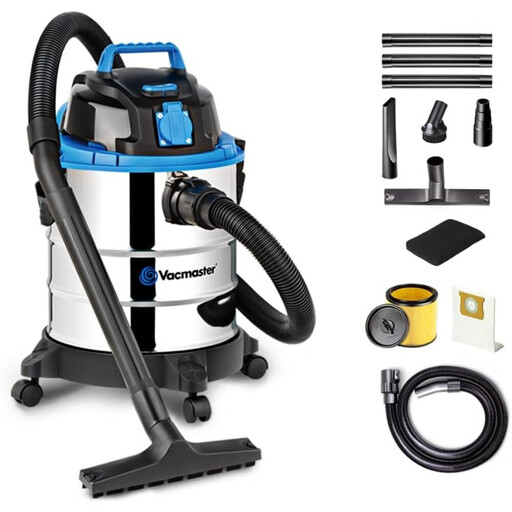 Image unavailable
Vacmaster VQ1220SC, 20 L wet and dry vacuum cleaner
Worth considering for ordinary wet and dry dirt when you’re looking for a 20 L tank.
Before using it for small pieces of rubble or near a power tool, check the instructions for permitted debris, accessory diameter and connection details.
View on Joybuy
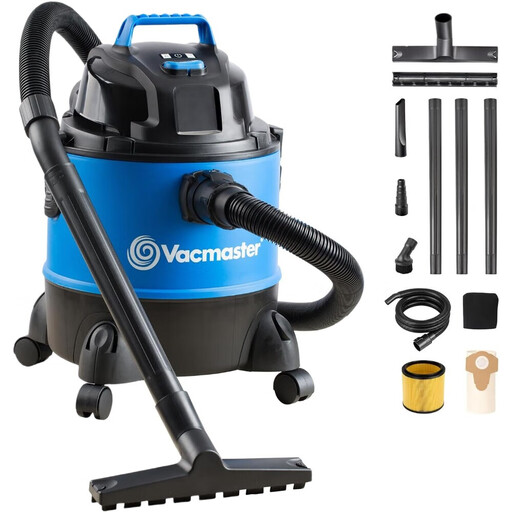 Image unavailable
Vacmaster VQ1220PF 3-in-1, 20 L wet and dry vacuum cleaner
Worth considering for cleaning ordinary wet and dry dirt with a 20 L tank.
The model name mentions a blower function. Check the size of debris it can handle, and which filters and bags are compatible, before planning to use it after DIY jobs.
View on Joybuy
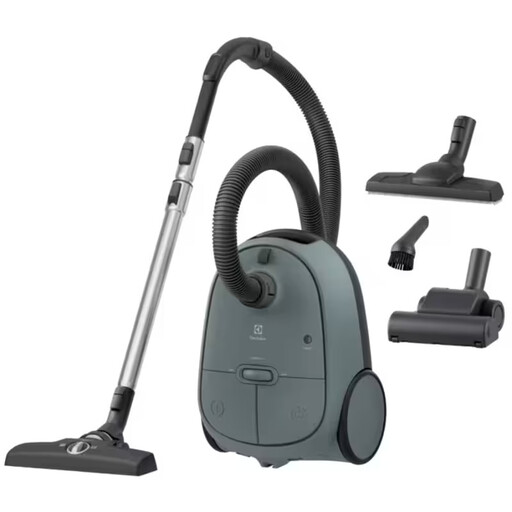 Image unavailable
Electrolux 600 EB61C4OG, bagged cylinder vacuum cleaner
Worth considering for finishing indoor floors once the rubble has been removed and only ordinary household dust remains.
Don’t use this model to vacuum liquids. Check its instructions and which bags are compatible before using it after DIY jobs.
View on Joybuy
Frequently asked questions
Can I use my cylinder vacuum after small DIY jobs?
Yes, for a small amount of ordinary household dust on the floors, after you’ve removed the rubble. Check the floor head and filtration for your model, and don’t assume it can handle water or DIY debris.
What hose should I use to pick up small pieces of rubble?
A wider hose and tubes make it easier to pick up rubble, according to UFC-Que Choisir. However, check the dimensions and materials permitted in the instructions, and pick up any pieces that are too large by hand.
Do I need to change the filter before vacuuming water?
It depends on the model. Follow the instructions to set it up for wet vacuuming. Bosch says the AdvancedVac 20 uses a cartridge filter for wet and dry materials without needing to change it during use. This doesn’t apply to all wet and dry vacuum cleaners.
Can a wet and dry vacuum cleaner handle ash?
Not necessarily. Kärcher says its domestic wet and dry vacuum cleaners aren’t suitable for ash without a pre-separator or a dedicated ash vacuum cleaner. Check the exclusions in your appliance’s instructions.
Can I vacuum dust if I suspect it contains asbestos?
Not with a domestic vacuum cleaner chosen for household cleaning. The French Ministry of Labour notes that home renovation work can expose people to asbestos. Stop cleaning and get advice on the preventive measures appropriate to the situation.


