For ordinary dust, small debris and damp residues permitted by the instructions, choose a wet and dry vacuum with a hose, accessories and tank suited to the cleaning you have in mind. If your work regularly produces fine dust, check that the vacuum, its class, filter and bag are all compatible. Use a household vacuum only for residues expressly permitted by its instructions; if hazardous dust or regulated materials are involved, choosing the right equipment alone is not enough.
Which solution is right for you?
For mixed debris
After drilling, a small DIY project or cleaning a patio, you may need to pick up ordinary dust, small debris and sometimes damp residues. A wet and dry vacuum may be suitable, provided its instructions permit each type of residue and the hose is wide enough for the debris you expect to collect. UFC-Que Choisir highlights the importance of matching the hose diameter to what you’re vacuuming.
For ordinary fine dust
If sanding or cleaning a workshop regularly creates fine dust, check the vacuum’s class and the consumables it uses. Bosch Professional states that the filter and bag must match the same risk class as the machine.
For a quick finishing clean
You could keep using your household vacuum, but only if its instructions allow the residues in question. UFC-Que Choisir specifically warns against vacuuming plaster and sawdust with an ordinary vacuum cleaner.
What should you check before buying?
First, identify the residues you need to collect. Their type determines which kind of machine to consider, even before you think about tank capacity or accessories.
Wet and dry vacuum
Worth considering: for dry and damp debris permitted by the model’s instructions after light DIY work.
Be prepared for: a tank and a machine to store, and don’t assume that wet and dry functionality means it can handle every liquid.
Fine-dust vacuum
Worth considering: if your work regularly produces ordinary fine dust and the intended use is confirmed for the model you choose.
Be prepared for: keeping on top of compatible filters and bags. According to Bosch Professional, these must match the vacuum’s risk class.
Household vacuum
Keep it for: a quick finishing clean involving residues expressly permitted by its instructions.
Limit: UFC-Que Choisir warns that plaster and sawdust can damage an ordinary vacuum cleaner.
| Criteria |
What to check |
Who it’s for |
| Dry and damp residues |
Check the instructions for permitted materials and liquids, then check the filter configuration required for wet use. |
If you need to collect dry and then damp residues, you’ll need a machine approved for both uses. Around 33% of consumers rank this compatibility as their top requirement. |
| Fine dust |
Identify the type of dust, then check the machine’s class and that the filter and bag are compatible. |
If your small DIY jobs mainly produce ordinary fine dust, you’ll want suitable filtration and consumables. This is the priority for around 27% of consumers. |
| Tank and manoeuvrability |
Compare the stated capacity, weight, cable and hose length, and the space you have for storage. |
If you’re cleaning a garage, patio or several rooms, you’ll want a tank and reach suited to the area. Around 20% of consumers prioritise this capacity and manoeuvrability. |
| Debris and awkward corners |
Match the tube and hose diameter to the debris, and check which nozzles are supplied for corners. |
If you mainly collect leaves or small rubble, or need to reach into gaps, debris clearance and access to awkward corners matter most. These needs come first for around 20% of consumers. |
Mistakes to avoid after DIY jobs
-
Assuming “wet and dry” means it can handle every liquid
A feature advertised for a particular model does not mean you can vacuum any liquid or material.
Before buying, check the instructions for permitted substances, how to fit the filter for wet use and how to empty the machine.
-
Choosing a vacuum for fine dust based on wattage alone
The stated power rating doesn’t, by itself, tell you about the machine’s class or how well its filtration is matched. Bosch Professional states that the filter and bag must match the vacuum’s risk class.
Identify the type of dust, then compare the class, compatible filter and bag references, and maintenance instructions.
-
Choosing a narrow hose for small pieces of rubble
According to UFC-Que Choisir, a narrow tube and hose are suitable for fine dust, while wider ducts make it easier to pick up leaves and small pieces of rubble.
Choose the diameter to suit the debris you’ll mainly be collecting, and check whether a crevice nozzle is supplied for awkward corners.
-
Vacuuming plaster with a household machine that isn’t designed for it
UFC-Que Choisir warns that very fine particles, including plaster and sawdust, can get past the motor filter and damage an ordinary vacuum cleaner.
Use a household vacuum only if its instructions expressly permit these residues. Otherwise, look for a solution designed for the type of dust in question.
Brands to consider for different uses
Nilfisk
The Multi range for home users includes wet and dry vacuums designed for use around the home and in the workshop.
- Nilfisk lists the Multi II 22 with a 22 L tank, a crevice nozzle and a 2-in-1 floor brush for the dry and damp debris the model is designed to handle.
- Check the instructions and the specific version on sale before vacuuming any liquid or particular type of dust. Accessories and bags must be compatible with the model you choose.
Bosch Professional
The GAS series is worth considering when fine dust means you need to check the machine’s class and its consumables.
- Bosch Professional describes the GAS 35 L AFC as a Class L wet and dry vacuum with automatic filter cleaning.
- The stated class doesn’t remove the need to identify the dust you’re vacuuming: Bosch Professional says the filter and bag must be in the same risk class as the machine.
Wet and dry vacuums on Joybuy
These two Vacmaster models fit the wet and dry vacuum option for light cleaning around the home. Before choosing, check the residues you expect to collect and the accessories you need against the instructions for the version on sale.
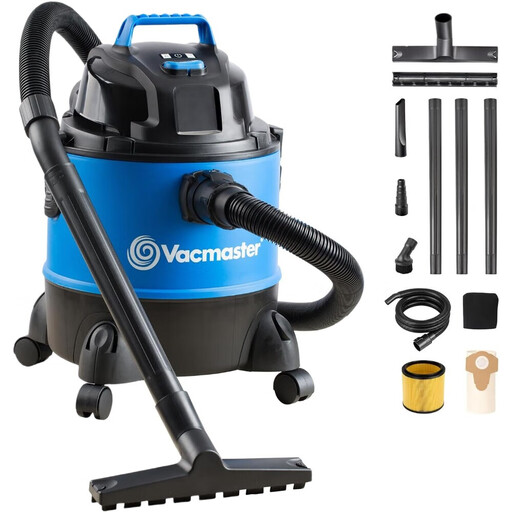 Image unavailable
Vacmaster VQ1220PF 3-in-1, 20 L, wet and dry vacuum
Worth considering for collecting compatible dry and damp residues around the home or in the garage. The product name indicates a 20 L tank, a 1 250 W motor and a blower function. Check the instructions for permitted residues and the setup required for each use. Also check the hose diameter and accessories supplied if you need to collect small pieces of rubble or clean awkward corners.
View on Joybuy
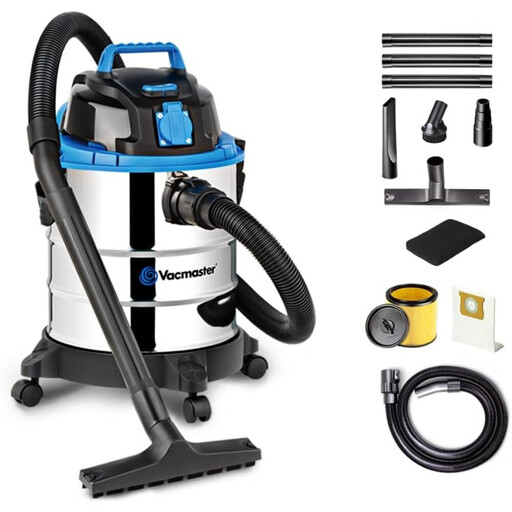 Image unavailable
Vacmaster VQ1220SC 20 L, wet and dry vacuum
Worth considering for household cleaning involving dry and damp residues permitted by the model. The product name indicates a 20 L tank and a 1 250 W motor. The product description excludes harmful dust and requires a filter suitable for wet vacuuming, so check the instructions before use. Also confirm the equipment included with this version, the hose diameter and the accessories supplied.
View on Joybuy
Frequently asked questions
Can I vacuum up water with any vacuum cleaner after DIY work?
No. Choose a model whose instructions permit the liquid in question and explain the required setup. For example, Nilfisk describes the Multi II 22 as suitable for dry and damp debris, but that doesn’t mean it can handle every liquid or that the same applies to other models.
What hose diameter should I choose for DIY debris?
Match it to the debris you’ll mainly be collecting: UFC-Que Choisir says a narrow duct is suitable for fine dust, while a wider one makes it easier to pick up leaves and small pieces of rubble. Also check which nozzles are supplied if you need to reach into gaps.
Can I use a bag for cement dust?
Only if both the bag and vacuum are designed for the dust in question. Nilfisk recommends its 22/30 L dust bags, compatible with the Multi II 22 and 30 L, for dusty debris including cement. Check the bag reference and the model’s instructions before use.
Can my household vacuum pick up plaster or sawdust?
Only use it for these residues if its instructions expressly permit them. UFC-Que Choisir warns that these fine particles can get past the motor filter and damage an ordinary vacuum cleaner.
Is a Class H vacuum enough to clean a material that may contain asbestos?
No. Choosing a vacuum cleaner does not make this kind of cleaning suitable for domestic use. The INRS points out that drilling, sanding or cutting a material that may contain asbestos can release fibres. Have the situation assessed and follow the applicable requirements rather than attempting this clean-up with a consumer-grade machine.


