What to look for after DIY work
Start by identifying the waste you need to deal with, then check the equipment required to vacuum it up, empty the tank and store the appliance once the work is complete.
| Priority |
What to check |
Your needs |
| Waste permitted |
Check that the exact model accepts the dry dirt, non-hazardous liquids, wood shavings or outdoor debris you plan to vacuum. Also check that it includes the right accessories for floors and awkward corners. |
I want to clean up the actual residue from the job without choosing an appliance based on power claims alone. |
| Dust during DIY work |
For sanding or drilling, check the tool connection, the physical compatibility of the hose and adaptor, and the instructions for using the filter and bag. |
I would rather capture ordinary dust as it is created than only clean up afterwards. |
| Tank and storage |
Compare the tank capacity, emptying system and hose or cable storage. A larger tank means less frequent emptying, but requires more space. |
I am looking for a capacity suited to occasional cleaning, without an appliance that is difficult to move or store. |
| Dust safety |
Identify the material being worked on before vacuuming. Motor power or a “fine dust” description alone does not establish suitability for a particular contaminant. |
If the dust is suspect, I will not treat it like ordinary wood dust, plaster dust or rubble. |
Joybuy products for cleaning up after small DIY projects
These Joybuy options are intended for domestic cleaning of ordinary dry or damp debris after DIY work, in a home, garage or workshop. They are not intended for hazardous dust.
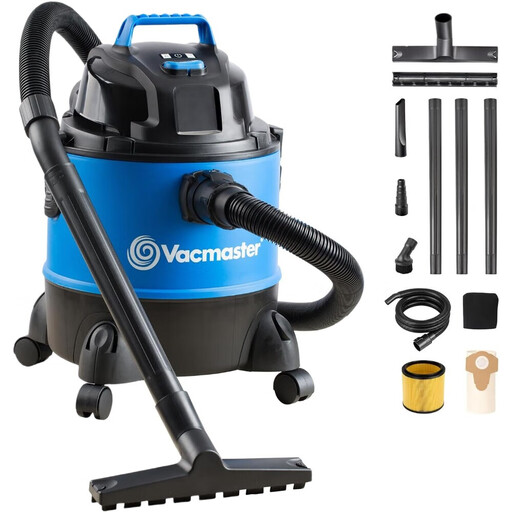 Image unavailable
Vacmaster VQ1220PF 20 L wet and dry vacuum
An option for occasional cleaning of dry or damp debris in the home, garage or car.
This model is listed with a 20 L tank, a 1250 W motor and a blow function.
Check the exact contents of the box and the filter or bag instructions before wet vacuuming. Do not use it for hazardous dust.
Joybuy
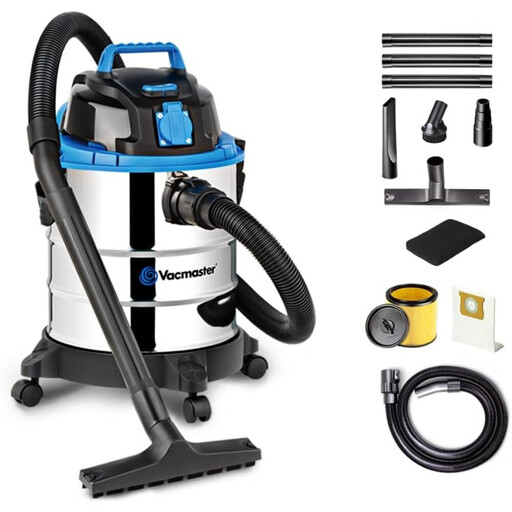 Image unavailable
Vacmaster VQ1220SC 20 L wet and dry vacuum with tool socket
This model is designed for dry debris and non-hazardous liquids in the home, garage or domestic workshop.
It is advertised with a 20 L stainless steel tank, a 1250 W motor, a blow function and a socket for power tools.
The tool socket alone does not confirm that the hose is compatible with your tool or that automatic start-up is supported: check these points before buying. The model is specified for a dry indoor environment and is not suitable for hazardous dust.
Joybuy
Frequently asked questions
Can I vacuum plaster dust, wood dust, wood shavings and small pieces of rubble?
Yes, but only if the product page for the exact model states that it is suitable for the relevant dry dirt, dust or wood shavings. UFC-Que Choisir says wet and dry vacuums are useful for major jobs, fine dust and small pieces of rubble; also check the filter, any required bag and the recommended accessories.
Do I need to remove or change the filter to vacuum water?
Follow the instructions for the exact model. Wet and dry appliances may accept both dry and damp waste, but the filter and bag configuration and the emptying conditions vary from one model to another.
What tank capacity should I choose after a small DIY project?
Choose the capacity according to the amount of waste and the available storage space, rather than power alone. The examples reviewed range from 22 L to 30 L: a larger tank means less frequent emptying, but is more cumbersome; a drain plug or screw is useful for non-hazardous liquids.
What should I check after buying?
Before ordering, check the filters, bags, accessory kits and warranty conditions. Nilfisk specifically lists separate bags, filters and kits for the Multi II 22; check their compatibility and availability for your chosen model.
Can I use a domestic wet and dry vacuum if I suspect asbestos or another hazardous dust?
No, do not choose an ordinary domestic wet and dry vacuum in this situation. INRS reminds us that asbestos is toxic when inhaled and that drilling, sanding or cutting affected materials can release fibres; in this context, INRS recommends a Class H vacuum with a very high-efficiency filter. If you are unsure about the material, stop cleaning and have the risk assessed before vacuuming.


