What should you check before buying?
Start with the waste you need to collect, then check filtration and how easy the vacuum is to move and store. Tank capacity alone won’t answer all these questions.
| What to consider |
What to check |
Your needs |
| Type of waste |
Check that the model can handle the dry and wet waste you have in mind. For leaves and small pieces of rubble, compare the diameter of the tube, hose and nozzles; UFC-Que Choisir highlights the importance of their width. |
I want to collect leaves or small pieces of rubble without choosing accessories designed only for dust. |
| Filtration and maintenance |
Check the manual to see which bags and filters are suitable for the type of dust, and how to clean or replace them. UFC-Que Choisir recommends letting a washed filter dry completely before putting it back. |
After dusty DIY work, I want to be able to maintain the vacuum as instructed in its manual. |
| Working range and storage |
Compare the cable and hose lengths with the distance to the socket. Also check the weight, dimensions and fittings for storing the tubes and cable. |
The socket is a long way from my patio, or I need to fit the vacuum into a limited storage space. |
| Unidentified dust |
Identify the material before using a household vacuum. INRS says that precautions depend on the type of dust; a vacuum’s class does not replace this assessment or the appropriate procedures. |
If the dust comes from drilling, sanding or an old surface coating, I need to identify the material before deciding how to clean it. |
Which brands are worth considering?
These examples show different configurations. Always check the specifications and manual for the model you’re considering.
Kärcher
The Home & Garden range includes wet and dry vacuums for use around the home.
- Kärcher lists a 25 L tank, 5 m cable, 2.2 m hose, blower function and filter-cleaning system for the KWD 5 V-25/5/22.
- These specifications don’t establish whether this model is suitable for hazardous or unidentified dust.
Nilfisk
The Multi II range includes wet and dry vacuums for indoor and outdoor use around the home.
- Nilfisk says the Multi II 22 Inox has a 22 L tank, a 2.2 m hose and a filter-cleaning indicator. The product details also list a bag and several nozzles.
- The indicator doesn’t remove the need to clean the filter or check which consumables are suitable for the waste you plan to collect.
STIHL
STIHL’s range includes the SE 33, designed for cleaning around the home.
- STIHL lists a 12 L tank, a weight of 5.5 kg, a 2 m hose and a blower function for the SE 33.
- Consider whether the 12 L tank suits the amount of waste you need to clear and how often you’re happy to empty it.
Bosch Professional
The range includes M- and H-class construction vacuums, which may be worth considering when the type of dust calls for a specific assessment.
- Bosch Professional lists M-class filtration and automatic filter cleaning for the GAS 35 M AFC. Its product details specify a 35 L gross tank capacity and a weight of 12.4 kg.
- Don’t choose a class based only on the name of a material: INRS stresses that precautions must take the actual type of dust into account.
Joybuy options for cleaning around the home
These two Vacmaster models are options to consider if you’re looking for a canister vacuum for the home or garage. When choosing between them, follow the instructions for the specific model, particularly if you plan to collect water or clean a patio.
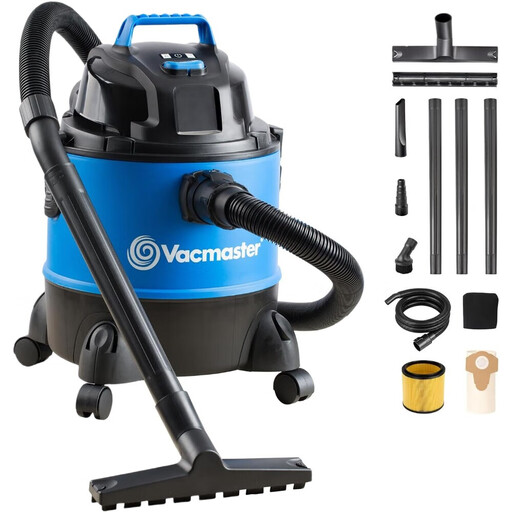 Image unavailable
Vacmaster VQ1220PF wet and dry vacuum, 20 L
Designed for cleaning around the home or in the garage, this model is described as suitable for dry and wet waste.
Its product title lists a 1250 W motor, 200 AW suction power and a blower function. Before using it for fine dust, leaves or small pieces of rubble, check the manual for the filters, bags and nozzles suitable for the waste you need to collect.
View on Joybuy
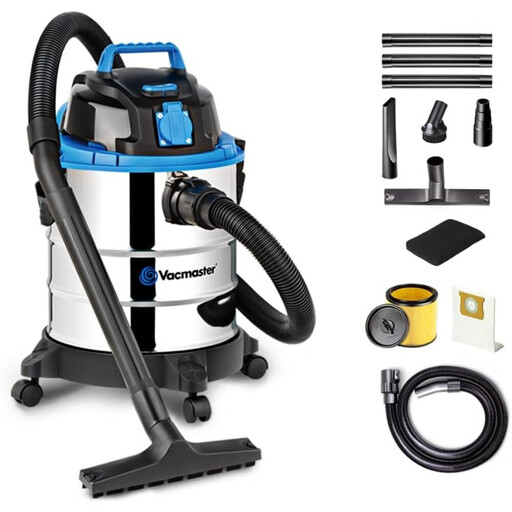 Image unavailable
Vacmaster VQ1220SC, 20 L
This model fits the cleaning scenario described if you need to collect dry waste at home, in the garage or in the workshop.
Its product title lists a 1250 W motor, 20 kPa suction and a tool socket rated at 2430 W. Wet use is also mentioned in the title, but one instruction specifies a dry, indoor environment. Check the manual to clarify what uses are permitted before planning to collect water or clean a patio. Also check the accessories and tank material for the version on sale.
View on Joybuy
Frequently asked questions
Is a standard household vacuum enough after DIY?
Don’t assume it is if you need to collect water, leaves or small pieces of rubble: UFC-Que Choisir recommends canister vacuums for this type of waste. Before using any vacuum, also check what the dust is made of and follow the machine’s instructions.
Which tube should I choose for leaves or small pieces of rubble?
Look for wider tubes and hoses: UFC-Que Choisir highlights the benefits of a larger diameter for this type of waste, while narrower accessories may be suitable for fine dust. If you’ll use the vacuum for different tasks, check which nozzles are included or available.
What should I check after vacuuming fine dust?
Follow the filter maintenance instructions for your model and check which bags or filters are compatible with the dust you’ve collected. UFC-Que Choisir reminds users that a washed filter must be completely dry before it is put back.
Can I use a household canister vacuum if I suspect asbestos?
Don’t assume that a household vacuum is suitable. The French ministry responsible for the environment says that asbestos may still be present in some buildings and that drilling, sanding or cutting can lead to exposure. Identify the material and make sure the appropriate procedure is followed.
Do I need an M- or H-class vacuum for a patio?
Not simply because you’re cleaning a patio. For leaves, water and known, everyday dirt, consider a suitable wet and dry vacuum. If the dust comes from DIY work, INRS says that precautions should be chosen according to the type of dust.


