After small DIY jobs
To clear ordinary dust and small bits of rubble after drilling or DIY, check which waste the vacuum can handle, the tank capacity and, if needed, whether it connects to your tool.


For ordinary dust, small bits of rubble or leaves, choose a drum vacuum whose instructions confirm it can handle this type of waste, and make sure it comes with accessories suited to the areas you need to clean. If you also need to vacuum up water or wet dirt, check that the model is explicitly designed for wet and dry use. If you come across unknown or potentially hazardous construction dust, identify the material first. According to INRS, the filtration class matters when dealing with hazardous dust, and the word ‘construction’ alone does not mean that a vacuum is suitable.
To clear ordinary dust and small bits of rubble after drilling or DIY, check which waste the vacuum can handle, the tank capacity and, if needed, whether it connects to your tool.
If you need to clear leaves, ordinary debris and wet dirt, wet and dry compatibility becomes an important factor. Accessories also matter when you need to reach into corners.
If you don’t know what the dust contains, have the material identified before choosing a vacuum. INRS guidance on filtration classes does not mean you can assume a domestic vacuum is suitable for a hazardous substance.
Start with the materials you need to pick up, then consider filtration, emptying and how easy the vacuum will be to move around your cleaning area.
| Factor | What to check | What I need |
|---|---|---|
| Waste and accessories | Compare the materials listed in the instructions with the dust, small rubble or leaves you need to clear. Check the nozzles and tube diameter are suitable for the debris. | I want to clean up after DIY without assuming that every drum vacuum can handle the same types of waste. |
| Water and emptying | If you need to vacuum up liquids, confirm that the exact model is designed for wet and dry use. Check the instructions for the filter, tank and emptying. | In my garage or on my patio, I sometimes need to clear water or wet dirt, not just dry waste. |
| Type of dust | Identify the material before vacuuming any potentially hazardous dust. INRS distinguishes between L, M and H classes under the NF EN 60335-2-69 standard. Its guidance on H-class filtration relates in particular to professional operations that produce dust which may contain toxic or carcinogenic substances. | If I don’t know where the dust came from, I won’t choose a vacuum based solely on the word ‘construction’ or its power rating. |
| Moving the vacuum and using tools | Compare the tank, cable and hose, and check how much storage space you have. If you want to vacuum while using a tool, check the connector and confirm that the vacuum is compatible with it. | I need to be able to move the vacuum around a cluttered garage and reach the work area without using unsuitable accessories. |
A large tank or a ‘construction’ label does not prove that a vacuum can capture hazardous dust.
Identify the material before cleaning. If you suspect a hazardous substance is present, ask a suitably qualified professional what steps to take and what equipment you need.
You can’t tell whether a vacuum can handle liquids just by looking at the shape of its tank. This must be specified for the model in question.
If you expect to vacuum up water or wet dirt, choose a model explicitly designed for wet and dry use, and follow its instructions for the filter and emptying.
Kärcher says its wet and dry vacuum cleaners are not suitable for ash, so some types of dry waste may require different equipment.
Check the exclusions in your vacuum’s instructions. For ash, only use a solution that the manufacturer says is suitable.
Power consumption does not determine the filtration class. A larger tank can also make a vacuum less convenient to move or store.
Compare the types of waste it can handle, filtration, accessories, cable and hose reach, and emptying method based on how you plan to use it.
These manufacturers’ models illustrate features to compare from one model to another. They don’t, on their own, determine which vacuum is right for the waste you need to clear.
The WD range includes wet and dry vacuum cleaners designed for tasks such as DIY and car cleaning.
Bosch offers wet and dry vacuum cleaners for the home, garage and workshop, with features that vary by model.
Nilfisk distinguishes its wet and dry vacuum cleaners from its dust extractors, which are rated for specified dust classes.
These two Vacmaster models are intended for wet and dry cleaning in a garage or workshop. Before vacuuming DIY debris, check the instructions to see which waste they can handle and how they should be used.
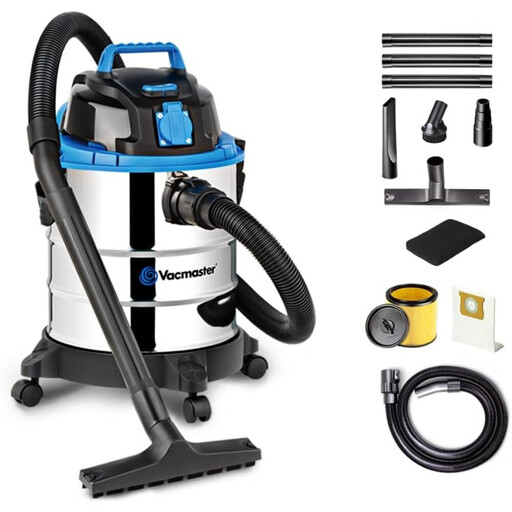 Image unavailable
Designed for wet and dry cleaning in the garage or workshop, this model is listed with a 20 L tank, a 1250 W motor, a blower function and a tool socket rated at 2430 W. Check the instructions for the exact conditions for vacuuming liquids, the accessories included and whether the socket is compatible with your tool. Don’t assume it is suitable for hazardous or unidentified dust.
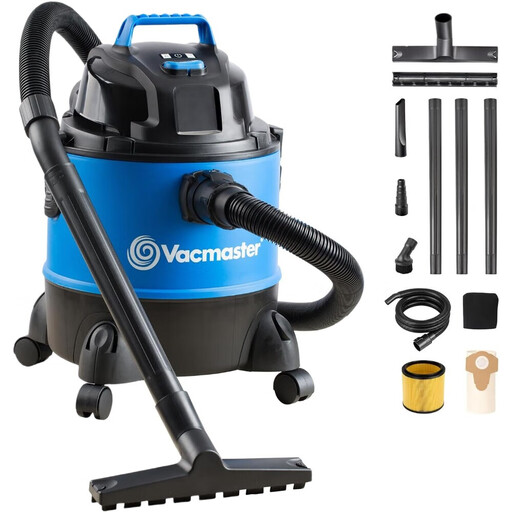 Image unavailable
For the garage or car, this model’s name highlights its wet and dry vacuuming, 20 L tank and blower function. Check the accessories and types of waste it can handle before using it for rubble. Don’t assume it is suitable for hazardous or unidentified dust.
Choose a model explicitly designed for water and dry waste if you need to vacuum up liquids or wet dirt. Check the model’s instructions for the filter and emptying. This feature does not guarantee that it is suitable for hazardous dust.
Yes, as long as the model is designed to handle this ordinary waste. UFC-Que Choisir lists small bits of rubble, dust and leaves among the uses for drum vacuums. Also check the tubes, accessories and filter on the model you’re considering.
Not automatically. Kärcher says its wet and dry vacuum cleaners are not suitable for ash and recommends using a pre-separator or a dedicated ash vacuum cleaner. Check the exclusions in your model’s instructions.
Don’t assume a domestic vacuum is suitable: have the material identified first and seek advice from a suitably qualified professional. INRS distinguishes between L, M and H classes, and specifies H-class filtration for certain professional operations that produce dust which may contain toxic or carcinogenic substances. This guidance does not replace an assessment of your own situation.
No. Power consumption alone doesn’t tell you which types of waste a vacuum can handle, whether it can be used with water or what filtration class it has. Compare these points first, then look at the tank, hose and accessories you’ll need for cleaning.