
Livraison le jour même ou le lendemain

Qualité garantie

Débloquez vos offres de bienvenue: Livraison GRATUITE | Jusqu'à -80 % | 30 jours d'essai gratuits à JoyPlus
Téléchargez l'application
A wet and dry vacuum cleaner can be a real workhorse around the house: crumbs on the floor, spilled liquid, dust trapped in the crevices of a car seat, stains on a sofa or cleaning a carpet. But behind the ‘multifunction’ label, not all appliances cover the same uses.
Before you place an order, take the time to distinguish between three functions: solid suction, liquid suction and fabric cleaning. A compact model will be perfect for quick, small cleaning jobs, while an appliance with separate tanks will be more at home on rugs, carpets and sofas.
A power rating expressed in watts primarily tells you about the motor’s energy consumption. On its own, it doesn’t predict the appliance’s real effectiveness. The suction pressure, usually expressed in kPa, gives a more relevant indication of its ability to pick up dust and liquids. The design of the nozzle, the airflow and the type of filter also play an important role.
A motor rated at 1,300 or 1,700 W can be perfectly suitable for a corded appliance intended for large areas. Conversely, a cordless handheld vacuum cleaner focuses more on manoeuvrability, at the cost of limited battery life.
The ‘wet and dry’ label doesn’t necessarily mean the appliance can wash a sofa or pick up any kind of liquid. Some models are limited to small amounts of water, while others have separate tanks for clean and dirty water.
For a carpet and sofa washing vacuum cleaner, look for a spray function, a dirty water recovery system and accessories suited to fabrics. For picking up a liquid spill on a hard floor, a standard wet and dry vacuum cleaner may be sufficient.
A clogged filter reduces airflow and can lead to unpleasant odours. A washable HEPA filter, when clearly stated in the specifications, makes maintenance easier. However, it must be rinsed and then thoroughly dried before being put back in place. Appliances that use water also require rinsing of the hoses and tanks after each use.
Start by identifying your main need:
A cordless appliance is easy to carry from the house to the office and then to the car. However, be aware: the stated battery life usually depends on the power level selected. For a quick job, 15 to 30 minutes may be enough. For cleaning a family car or several rooms, a corded model will avoid having to stop the session to recharge the battery.
The capacity of the dustbin or tanks must also be suited to the area you need to clean. A 150 to 500 ml dustbin is fine for small top-up jobs, while a 23 l tank will be more suitable for longer sessions.
Check for a washable filter, the number of suction levels and, most importantly, the list of accessories actually included. A fabric brush, a crevice tool and an extension hose are particularly useful with a fabric and car seat vacuum cleaner. A blower function can also come in handy for keyboards, air vents and gaps, but it in no way replaces liquid suction.
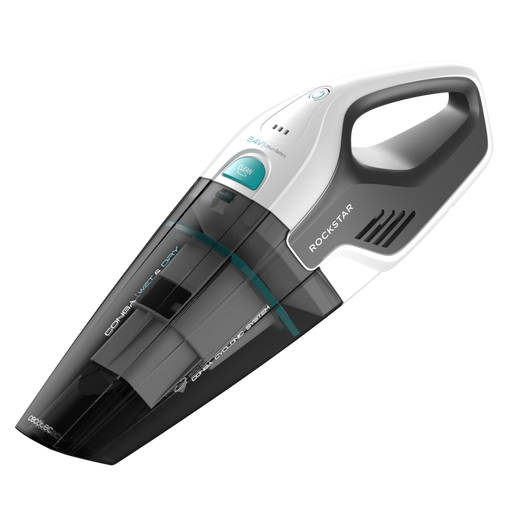
Why this choice suits this profile: Its handheld format is ideal for small cleaning jobs around the house, in the office or in the car, without a cable trailing behind you.
Its specifications state it can be used for solids and liquids, with a 500 ml dustbin and a bagless design. However, its stated 20-minute battery life is a limitation to keep in mind before buying.
Stated cyclone technology, HEPA-type filter and accessories for furniture and hard-to-reach areas.
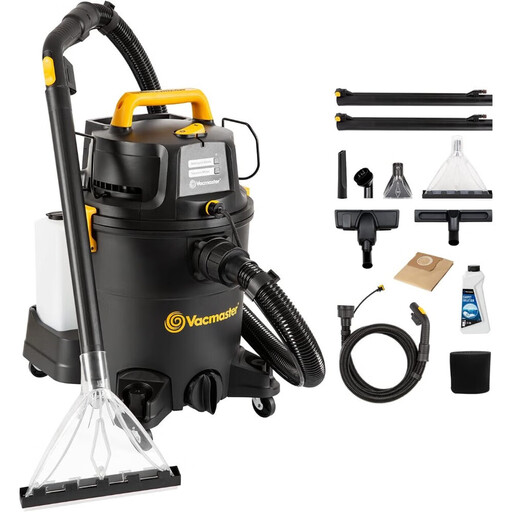
Why this choice suits this profile: With its 23 l tank and stated 10 m reach, it is designed for homes, offices and garages where cleaning sessions go on for longer.
The specifications distinguish between suction, washing and drying functions. The separate tanks prevent clean and recovered water from mixing.
Stated 1,300 W motor, maximum pressure indicated at 18 kPa and accessories for floors, carpets and fabrics.
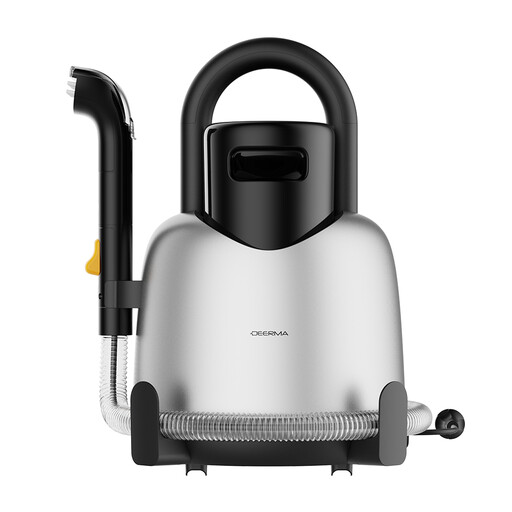
Why this choice suits this profile: This corded appliance targets stains on fabrics, rugs, carpets, sofas and car seats. An interesting option for households with children or pets.
The specifications mention three washing modes, a self-cleaning function and two tanks of 1.7 l and 1.4 l. Still, check the fabric compatibility before you start.
Stated 1,700 W power, suction indicated at 13 kPa and five brushes to suit different surfaces.
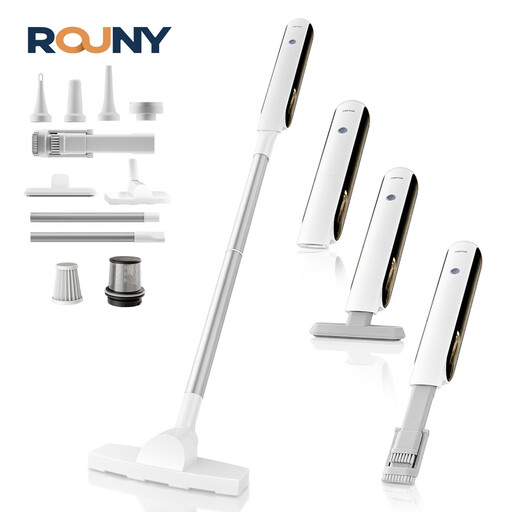
Why this choice suits this profile: Its LED light, seven attachments and blower function are well suited to seats, dashboards, keyboards and the smallest gaps.
The specifications clearly state that you should not pick up water with this appliance. A welcome indication to avoid confusing a dry vacuum cleaner with a true wet and dry model.
Two power levels, suction stated up to 18 kPa, washable HEPA filter and battery life indicated at 15 to 30 minutes.
We have compiled a comprehensive, real-time updated selection of products that meet these demanding criteria, while complying with European safety regulations.
Yes, but only if the instructions explicitly state that the appliance can handle liquids. A bagless vacuum cleaner designed for dust should never be used with water, even if its dustbin is removable. According to the manufacturer’s recommendations, you will also need to remove the filter or use a suitable model.
It all depends on how often you use it, how well you maintain the filters, whether you replace worn parts and whether you respect the fill levels. After washing, rinse the tanks and let the various components dry before reassembling the appliance. This helps to limit odours and build-up.
A cordless model consumes electricity when charging and may need its battery replacing after a few years. A corded appliance, on the other hand, consumes power according to its wattage and usage time. For a spot cleaner, also factor in the cost of compatible cleaning solution, filters and any replacement brushes.