Start by considering the debris you need to collect. For fine DIY dust, check which filter and bag the manual recommends; for small rubble, leaves or liquids that the model is designed to handle, also look at the hose diameter and tank. A power tool socket, drain plug or blower function is only useful if your work calls for it. If you suspect there may be asbestos dust, don’t use a domestic vacuum cleaner, in line with the INRS warning.
Who is this guide for?
For fine DIY dust
After sanding or sawing, the filter, compatible bag and how to maintain them matter more than simply having a large tank. If you want to vacuum close to a tool, check whether the model has a tool-activated socket and which connector you’ll need.
For mixed debris in the garage or workshop
If your work leaves small rubble, dry dirt and sometimes liquids that the vacuum is designed to handle, check the tank capacity, how it can be emptied and which accessories are included.
For the patio or garden
For occasional leaf collection or reaching into corners, check the tube and hose diameters as well as the cable length. A blower function can help gather leaves before you collect them.
Which features should you check first?
After DIY work at home, start with the type of debris that will be the main reason for your purchase. Fine dust filtration, collecting mixed waste and reaching outdoor areas all call for different checks.
| Feature |
What to check before buying |
Who it’s for |
| Fine dust |
Check the manual for the filter and bag compatible with your dust, and the tool connector if you need one. According to Bosch Professional, Class L is for common, non-hazardous dust, not hazardous dust. |
After sanding or sawing, I want to collect fine dust with equipment suited to the job; around 42% of consumers would make this their priority. |
| Tank and mixed debris |
Compare the tank capacity, which liquids the manual says you can vacuum and whether there’s a drain plug if you regularly collect water. |
When I clean the garage after DIY work, I need to collect small rubble and sometimes damp dirt without having to empty the tank too often; around 33% of consumers would put mixed waste collection first. |
| Leaves and outdoor access |
Check the diameter of the intake, then the cable and hose lengths. Only look for a blower function if you plan to use it. |
On a patio, I want to reach into corners and collect leaves without constantly moving the machine; nearly 25% of consumers would prioritise outdoor use. |
Which mistakes should you avoid?
-
Treating all DIY dust as ordinary dust
According to the INRS, a domestic vacuum cleaner must never be used to vacuum asbestos dust. If you’re unsure what a dust contains, don’t treat it as ordinary DIY waste.
If the material you’ve worked on may contain asbestos, stop cleaning and get advice on the appropriate procedure before vacuuming anything.
-
Choosing based on power or tank size alone
For fine dust, the filter and its maintenance can make all the difference. Que Choisir notes in particular that some very fine dust can damage a vacuum cleaner if it gets past the motor filter.
Identify the dust you need to collect, then check the filters, bags and instructions in the manual before comparing other features.
-
Overlooking the tube and hose diameter
Que Choisir distinguishes between an intake suited to fine dust and one better suited to leaves and small rubble. An accessory chosen for one type of use may not work well for the other.
Think about which debris you’ll collect most often, then check the diameters and the accessories supplied with the model.
-
Forgetting about moving and storing it
A large tank takes up space, while the cable and hose lengths each limit how far you can reach. It’s also worth checking the weight if you’ll often move the machine between rooms.
Check the dimensions, weight, castors and stated cable and hose lengths, then make sure you have somewhere to store the machine.
Brands to know
These features apply to the models listed, not to every machine made by each brand. Compare the manuals with the debris you actually plan to vacuum.
Kärcher
In Kärcher’s WD/KWD wet and dry range, the WD 6 P S V-30/8/35/T is designed for uses including DIY and garage cleaning.
- According to Kärcher France, this model has a 30 l stainless steel tank, an 8 m cable, a 3.5 m hose and a tool-activated socket for compatible tools.
- These features alone don’t tell you which types of dust the filter can collect; check the manual for your specific use.
Einhell
The TE-VC 2230 SA combines wet and dry vacuuming with useful features for DIY at home.
- According to Einhell France, it has a 30 l stainless steel tank, a blower connection, a tool-activated socket and a drain plug.
- For fine dust, check the manual to confirm which filters and bags are compatible with the materials you’re working on.
Bosch Professional
The GAS 35 L AFC is designed for jobs where connecting the vacuum to a tool and maintaining the filter are important considerations.
- According to Bosch Professional France, this model is Class L, has automatic filter cleaning and a gross tank capacity of 35 l, with a stated net capacity of 23 l.
- Bosch recommends Class L for common, non-hazardous dust; this doesn’t make the model suitable for hazardous dust.
Nilfisk
The Multi II 30 T combines features for occasional collection of dry or damp dirt, both indoors and outdoors.
- According to Nilfisk France, it has a 30 l tank, a 4 m hose, a blower function and a tool adapter; a filter and bag are included.
- Check which consumables are compatible and read the manual for usage limits before considering it for fine DIY dust.
An option on Joybuy
For occasional cleaning at home or in the garage, this model combines a tank with a blower function and can collect dry debris and liquids it’s designed to handle. If fine dust is your priority, check the filters and bags listed in the manual first.
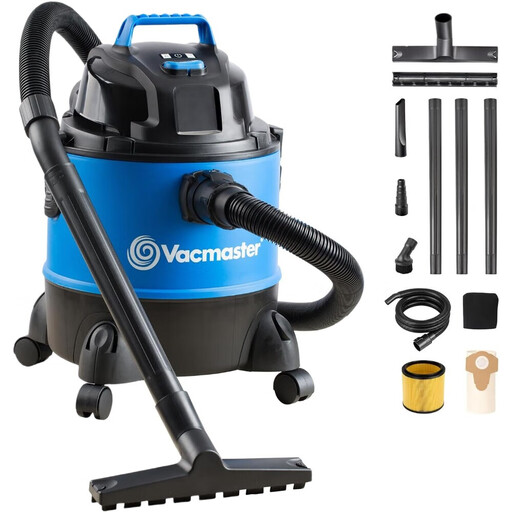 Image unavailable
Vacmaster VQ1220PF 3-in-1, 20 l wet and dry vacuum cleaner with blower function
For occasional cleaning at home or in the garage, this model can vacuum compatible dry or damp dirt and has a blower function.
It has a stated tank capacity of 20 l. Before using it after sanding or sawing, check the manual to see which types of dust it can handle and which filters and bags are compatible.
View on Joybuy
Frequently asked questions
Can I vacuum dust that may contain asbestos after DIY work?
No, not with a domestic vacuum cleaner: the INRS says these machines must never be used to vacuum asbestos dust. If a material may contain asbestos, stop cleaning and find out what procedure to follow.
Do I need a bag if my vacuum cleaner already has a filter?
Follow the manual for the debris you want to collect: having a filter doesn’t necessarily mean you can do without a compatible bag. For fine dust, check which consumables are required and how to maintain them; Que Choisir reminds readers that filters need regular maintenance.
What tank capacity should I choose after DIY work at home?
Choose a tank that suits the amount of waste you need to collect, while bearing in mind the weight of the machine and the space you’ll need to store it. Que Choisir says drum vacuum cleaners generally have a tank or bag of more than 10 l for the volumes of waste typically left after DIY work; a larger tank is only useful if your cleaning needs justify it.
Does the blower function mean I don’t need to vacuum up leaves?
No. On models with this feature, it can help gather leaves or clear a corner before you collect the debris. To vacuum the leaves afterwards, also check that the tube and hose have an intake wide enough for them, as Que Choisir recommends for bulky debris.


