
Livraison le jour même ou le lendemain

Qualité garantie

Débloquez vos offres de bienvenue: Livraison GRATUITE | Jusqu'à -80 % | 30 jours d'essai gratuits à JoyPlus
Téléchargez l'application
First you vacuum, then you mop. It's a chore we know all too well, and one that eats up precious time. The wet-dry vacuum promises to combine these two tasks into a single pass, sucking up dry debris while washing hard floors. The problem? Faced with an overwhelming market and sometimes misleading marketing claims, it's easy to make the wrong choice.
As the Head of Product Recommendations at Joybuy, my role is to help you cut through the noise. Together, we'll break down the features that truly matter and identify the pitfalls to avoid. The goal: to guide you toward a device that will genuinely simplify your daily routine, with no unpleasant surprises.
The market is flooded with models making tempting promises. But be warned: some highlighted features can hide flaws that quickly make the device frustrating to use. Here are the three most common mistakes to avoid.
Spec sheets love to display impressive numbers in Pascals (Pa) to highlight suction power. While a high number might seem reassuring, it's no guarantee of effective cleaning. Real-world performance depends on a combination of factors: the design of the brush head, the quality of the motor, and how suction is maintained when the device handles liquids and solids simultaneously. A poorly designed unit can lose efficiency as soon as it takes in a little water, leaving wet streaks and debris behind.
The self-cleaning function is a major selling point. But be warned: a simple rinse of the brush with cold water on its base is far from sufficient. This type of express cycle often leaves behind residue and moisture, promoting the growth of mould and bad odours. A high-performance system must include a deep clean, which absolutely must be followed by hot-air drying to ensure perfect hygiene and a device that's always ready to go.
A heavy, unwieldy wet-dry vacuum with short battery life or tiny tanks quickly turns the chore into a nightmare. Two design flaws are particular deal-breakers:
To avoid these pitfalls, simply focus on a few key criteria that truly make a difference in quality and versatility.
Not all "wet and dry" devices are created equal. It's crucial to distinguish between them to choose the one that truly fits your needs.
As we've seen, this is a non-negotiable point. Check if the model you're interested in offers a hot water cleaning cycle and, most importantly, hot-air brush drying. Devices like the Dreame H12 Dual or the Deerma VX200 integrate this technology, a real safeguard against the proliferation of bacteria and bad odours.
For a truly complete clean, opt for models with an edge-to-edge brush. This design allows for cleaning right up to baseboards and into corners, where dirt loves to hide. If you need to get under furniture, also look for a 180° lay-flat capability, a feature that is still rare but very practical, found on devices like the JONR H2 or the Tineco Floor One Stretch S6.
Rather than an endless list, here are a few models that stand out by meeting specific needs, all while respecting the criteria we've just discussed.
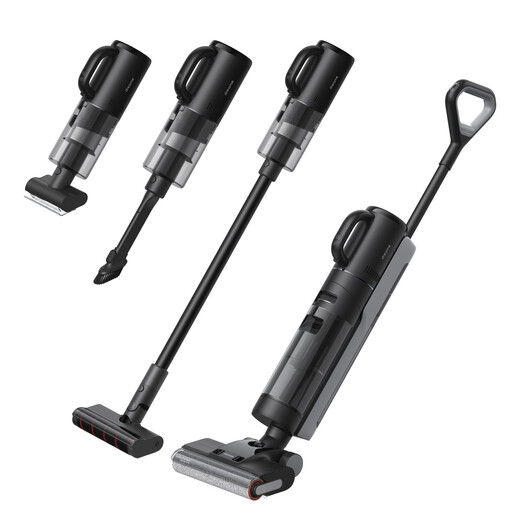
Why it's the right choice: This device is the ultimate all-in-one solution for active households. Its 4-in-1 versatility, with a motor unit that detaches to become a handheld vacuum, allows you to clean not only floors but also sofas, countertops, or the inside of your car. Perfect for managing pet hair and everyday spills and messes.
It avoids the pitfall of inadequate self-cleaning with its 55°C hot-air drying that eradicates odours. Its edge-to-edge brush (cleaning within 6 mm of the wall) solves the problem of imperfect finishes along baseboards.
4-in-1 versatility (floor washer + handheld vac). Smart dirt detection to adjust power. Hygienic maintenance thanks to hot-air drying.
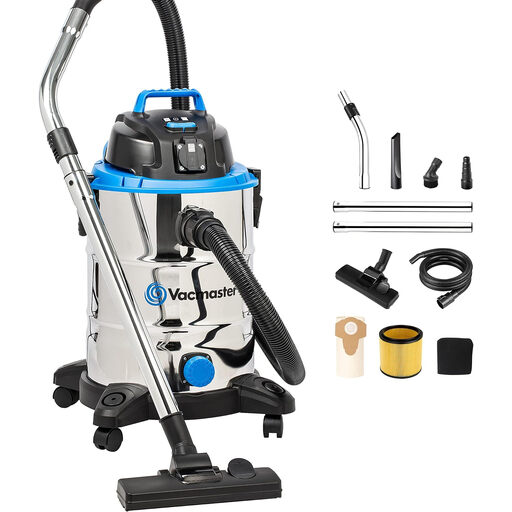
Why it's the right choice: For those looking for raw power and large capacity for the garage, workshop, or renovation sites. This vacuum is no-nonsense: it devours sawdust, debris, liquids, and fine dust without ever faltering. Its 30L stainless steel tank and blower function make it a formidable work tool.
It doesn't pretend to be a "smart" device. It focuses on its primary mission: uncompromising power and durability. It avoids the gadget trap by offering genuinely useful features for DIY, like the power take-off socket for power tools.
Very large 30L capacity. Robust stainless steel tank. Integrated power take-off socket for power tools. Very practical blower function.
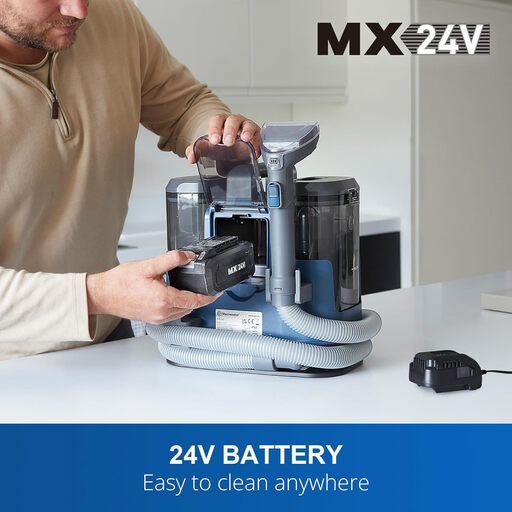
Why it's the right choice: Perfect for those who want a specialised device for treating stains on fabrics. Its cordless design makes it ultra-convenient for cleaning a wine stain on a rug, refreshing a sofa, or deep-cleaning car seats without being tethered by a cord.
It doesn't try to do everything. By specialising as a spot cleaner, it offers targeted and incredibly effective performance. Its cordless portability solves the main ergonomic headache of cleaning stairs or a vehicle's interior.
Completely cordless for maximum freedom of movement. Compact and portable. Specialised in deep cleaning upholstery.
We have compiled a complete and up-to-date selection of products that meet these demanding selection criteria and current regulations.
1. Do I need to use a special detergent for a wet-dry vacuum? Yes, it's essential. Manufacturers recommend using their own cleaning solutions, which are designed to be low-foaming. Using a standard floor detergent can create excessive foam that can damage the motor, clog the circuits, and, ironically, leave streaks on your floors.
2. What is the lifespan of a cordless wet-dry vacuum? The lifespan depends on the build quality and, most importantly, the thoroughness of its maintenance. A well-maintained model can perform optimally for many years (often 5 years or more). The key points are regular cleaning of the filters, consistent use of the self-cleaning function after each use, and following the battery's charging cycles.
3. Can a wet-dry vacuum completely replace my canister vacuum? For homes with mostly hard floors (tile, hardwood, vinyl), a good wet-dry vacuum can indeed replace the vacuum-and-mop duo for routine maintenance. However, for long-pile carpets and rugs, a traditional canister vacuum often remains more effective. Some versatile models with a detachable module, like the Dreame H12 Dual, offer an excellent compromise.