For cleaning up identified, non-hazardous waste after minor DIY jobs, consider a wet and dry vacuum whose instructions say it can handle the dust and debris in question. If you also need to vacuum up water, check the recommended set-up for liquids. For regular work with a tool that can be connected to the vacuum, a tool-trigger socket and filter-cleaning system may be useful. If the material could contain asbestos, silica or lead, identify the risk and the necessary precautions before choosing a machine: a domestic vacuum is not enough to address this.
Who is this advice for?
DIYers cleaning up after small jobs
You need to clear ordinary dust or small debris after drilling, sawing or light sanding. Distinguish between cleaning up once the job is finished and extracting dust while using the tool: for the latter, check that the connection is suitable and that the vacuum can handle the dust produced.
Garage and patio users
You move between the garage, patio and car to pick up coarse dirt, leaves and sometimes water. Cable and hose length matter when you’re using the vacuum, while its weight and the space taken up by the tank matter when you’re moving and storing it.
Anyone dealing with an unknown material
Identify any old or suspect material before cleaning up the residue. INRS lists silica, lead and asbestos among hazardous dusts; ADEME warns that some work on asbestos-containing materials can release fibres that are dangerous if inhaled. Choosing an everyday vacuum does not replace the appropriate precautions.
What should you check before buying?
Start by identifying the waste and tasks you expect to deal with, then compare the hose, filtration set-up and ease of moving the vacuum.
| Criteria | What to check | What I need |
|---|
| Waste and liquids |
Check the instructions for the types of debris and liquids the vacuum can handle, as well as the recommended filter and bag set-up. Check the tube and hose diameter for rubble or leaves: UFC-Que Choisir recommends wider ducts for this type of debris. |
I want to pick up ordinary dust, small pieces of rubble or leaves without assuming that the words “wet and dry” mean it can handle every type of building waste. |
| Moving and storage |
Compare the tank capacity with the space available, then check the weight, handle, cable, hose and storage options. UFC-Que Choisir highlights how much space wet and dry vacuums can take up. |
I need to be able to move the vacuum between the garage, patio and indoors, and find somewhere to store it once I’ve finished cleaning. |
| Using it with a tool |
Check for a tool-trigger socket, a connector that fits the tool and a filter-cleaning system. If a dust class is stated, check that it’s suitable for the dust actually produced. |
For regular drilling or sanding, I want to look at dust extraction at the tool, not just picking up dust from the floor once the job is done. |
| Suspect material |
Identify the material before starting work and establish the appropriate precautions. INRS lists silica, lead and asbestos among hazardous dusts that require particular attention to filtration and containment. |
If an old or unknown material could produce hazardous dust, I’ll hold off choosing a general-purpose vacuum until I’ve identified the risk. |
What mistakes should you avoid?
-
Choosing based on wattage alone
This figure tells you nothing about the types of waste the vacuum can handle, the hose diameter or whether you can connect a tool.
Start with the materials you need to vacuum, then check the permitted uses, accessories, tank and filter maintenance in the instructions.
-
Overlooking the weight and noise of a stainless steel tank
UFC-Que Choisir says a stainless steel tank can be heavier and noisier when you vacuum up gravel. The size of the tank also affects how much storage space you’ll need.
Check the weight, handle and available space at home. If you regularly vacuum up liquids, also check how the tank should be emptied.
-
Leaving the bag in without checking the wet-use instructions
A vacuum supplied with a filter bag is not necessarily approved for use with liquids in the same configuration.
Follow the instructions when switching from dry cleaning to vacuuming liquids, and choose bags that match your model number.
Replace filter bags as needed, following the manufacturer’s guidance.
-
Treating an unknown material like ordinary dust
INRS lists asbestos, silica and lead among hazardous dusts. ADEME warns that some work involving asbestos can release fibres that are dangerous if inhaled.
Stop work on any suspect material, identify it and establish the appropriate working and disposal measures before choosing equipment.
Which ranges should you consider?
These models illustrate some features worth comparing. The specifications and instructions for the exact model are what matter when it comes to the waste you need to vacuum.
Kärcher
Kärcher presents its WD range for the garage, garden and DIY, with the WD 5 and WD 6 aimed at more demanding jobs.
- According to Kärcher France, the WD 6 P S V-30/8/35/T has a 30 L tank, an 8 m cable, a 3.5 m hose and a tool-trigger socket.
- These features alone don’t establish whether it’s suitable for hazardous dust. Check the permitted uses for the exact model.
Bosch Professional
The range includes wet and dry vacuums, with dust classes and filter-cleaning features that vary by model.
- Bosch Professional France describes the GAS 35 L AFC as a Class L vacuum with automatic filter cleaning.
- Bosch separately describes the GAS 35 H AFC as a Class H model for carcinogenic and pathogenic dusts. Don’t assume this classification applies to the GAS 35 L AFC or the whole range.
Nilfisk
Nilfisk offers wet and dry vacuums for jobs around the home, as well as models for professional use.
- Nilfisk France describes the Multi I 20 Inox L-Class as having a 20 L tank and being suitable for Class L dust.
- For the ATTIX 33-2L IC, Nilfisk describes an automatic filter-cleaning system and a Class M PTFE filter. Check the full product documentation to confirm the vacuum’s applicable dust class and whether it’s suitable for the dust in question.
STIHL
STIHL’s range includes the SE 62 E, a wet and dry vacuum for jobs around the home that can be connected to tools.
- According to STIHL France, the SE 62 E has a 20 L tank, a connection for power tools and a filtration system with a bag.
- STIHL’s statement about the main filter alone isn’t enough to determine whether the vacuum is suitable for hazardous dust. Check the instructions and consider how you plan to use it.
Wet and dry vacuums on Joybuy
These two wet and dry vacuums are options for light DIY clean-ups at home, in a garage or in a workshop. Before choosing either for fine dust or specific types of rubble, check the instructions to see what waste they can handle. Neither has been established as suitable for hazardous dust.
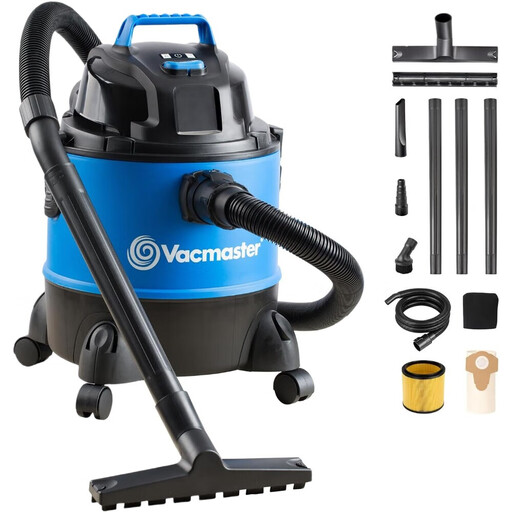 Image unavailable
Vacmaster VQ1220PF 3-in-1 wet and dry vacuum, 20 L
This model is presented for dry cleaning and vacuuming liquids at home or in the garage. Its name also indicates a blower function, a 1250 W motor and a 20 L tank. Before vacuuming fine dust or rubble, check the instructions for the types of waste it can handle and the hose diameter. Also check the bag and filter configuration recommended for liquids.
View on Joybuy
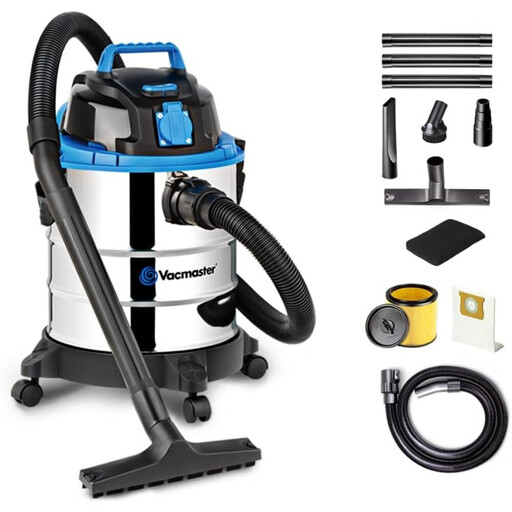 Image unavailable
Vacmaster VQ1220SC, 20 L, with tool socket
The advertised tool socket is worth considering if you want to connect compatible equipment while you work. The product name also indicates a 20 L tank, a 1250 W motor and a blower function. Before buying, check the instructions to clarify whether wet use is permitted, as product descriptions for this model conflict on this point. Also check the tank material, the types of dust and rubble it can handle, and the hose diameter.
View on Joybuy
Frequently asked questions
Can I vacuum up rubble, leaves and water with the same machine?
Yes, if the instructions for your model allow each of these uses and specify the filter and bag configuration for liquids. For rubble and leaves, UFC-Que Choisir recommends checking that the tube and hose are wide enough. Also follow the stated fill limits when vacuuming water.
Is a filter bag useful after building work?
A compatible bag can reduce direct contact with ordinary dust when you empty the vacuum. Check the instructions to find out when to fit or remove it, particularly before vacuuming liquids. Having a bag does not make the vacuum suitable for hazardous dust.
When is a tool-trigger socket useful?
It can be useful if you regularly use a compatible power tool and want the vacuum to start with it, extracting dust at the tool. Check the connection, adapter and electrical compatibility. This feature alone doesn’t determine which types of dust the vacuum can handle.
Is an ordinary wet and dry vacuum suitable for silica, lead or asbestos?
Don’t assume an ordinary wet and dry vacuum is sufficient for these dusts. INRS lists silica, lead and asbestos among hazardous dusts that call for specific filtration and containment requirements. Identify the material and the necessary precautions before starting work.
What should I do if I suspect a material contains asbestos?
Avoid breaking, sawing or drilling the suspect material until you’ve clarified the risk. ADEME warns that some work can release asbestos fibres that are dangerous if inhaled. Identifying the material and arranging for any waste to be handled appropriately come before choosing a vacuum.


