
Livraison le jour même ou le lendemain

Qualité garantie

Débloquez vos offres de bienvenue: Livraison GRATUITE | Jusqu'à -80 % | 30 jours d'essai gratuits à JoyPlus
Téléchargez l'application
Wet dog food appeals with its soft texture, appetising aroma and high water content. However, not every tin or tray is suitable for every dog. Your choice should take into account age, weight, activity level, size and any food sensitivities.
Before adding anything to your basket, watch out for these three common pitfalls:
Adult wet dog food does not necessarily meet the needs of a growing animal. For a puppy, look for an explicit statement such as ‘complete food for puppies’ or ‘junior’, along with feeding guidelines based on age and weight.
The MJAMJAM Junior recipe, for example, is presented as a complete food for puppies. Its ingredients include 66% chicken, 4% egg and 11% crude protein, with separate feeding recommendations for puppies aged 2 to 5 months and 6 to 12 months. These guidelines help you adjust portions, but they do not replace veterinary advice when your pet has specific needs.
For an adult dog, check that the recommended portion matches its weight and activity level. A highly active, neutered or weight-prone dog may need adjusted quantities.
Ingredients are listed in descending order by quantity. So, when assessing high-meat wet dog food, start with this list rather than the recipe name or the image on the packaging.
So-called single-protein recipes are based on one main animal protein source. They can make things easier for owners who want to limit the number of proteins offered to their dog. However, bear in mind that ‘single-protein’ does not automatically mean ‘suitable for an allergy’ or ‘free from intolerance risks’. Check the full ingredients list, including additives and any traces indicated on the packaging.
Grain-free wet dog food is not enough on its own to guarantee a suitable diet. This feature should be considered alongside the complete recipe and your dog’s actual needs. Complete food must also provide the necessary vitamins and minerals, in line with its labelling.
Wet dog food often contains considerably more water than dry food. It is therefore normal for its crude protein content, shown ‘as fed’, to appear lower. To compare two products, consider their moisture content and daily feeding allowance rather than relying on a single figure shown on the label.
The pack size depends on your dog’s weight and meal routine:
After opening, place the tin, tray or terrine in the fridge in a covered container, then follow the storage period stated on the label. Several products featured below recommend eating them within 24 to 48 hours. Serve wet food at room temperature and always make sure fresh water is available.
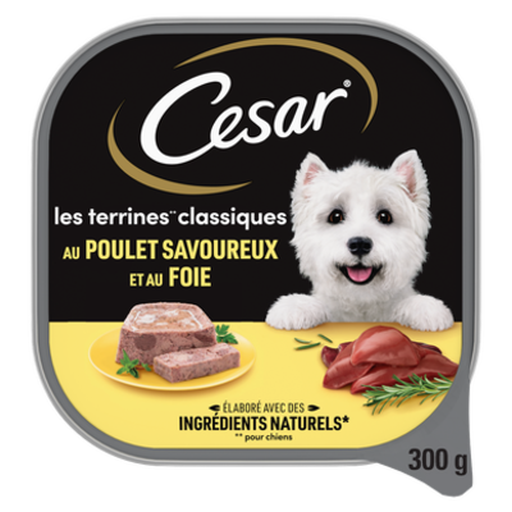
Why this product suits this profile : At 300 g, this pack lets you try a terrine before moving on to a larger multipack. This product is presented as complete food for small-breed adult dogs.
The product information specifies the age and size of the dogs it is intended for, as well as the ingredients and daily quantities. This means you avoid choosing based solely on the flavour highlighted.
63% meat and animal derivatives, 10% crude protein and easy-to-measure portions.
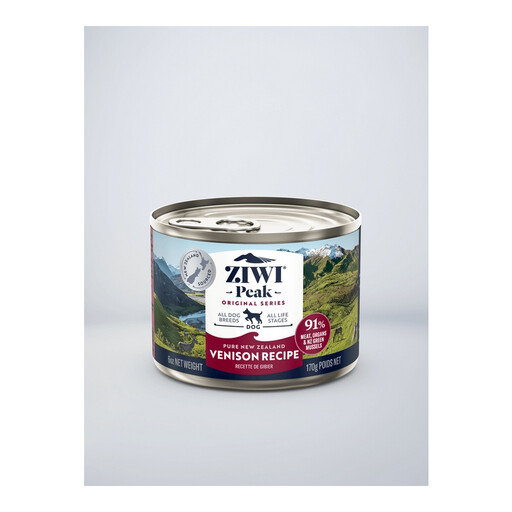
Why this product suits this profile : This 170 g tin focuses on a single animal source, venison, and provides detailed ingredient information. Its size makes it easy to split into separate meals.
The recipe goes beyond a marketing claim: it details its ingredients and analytical constituents, and includes a seven-day transition guide.
92% venison, offal and bone ; a grain-free recipe and 78% moisture content.
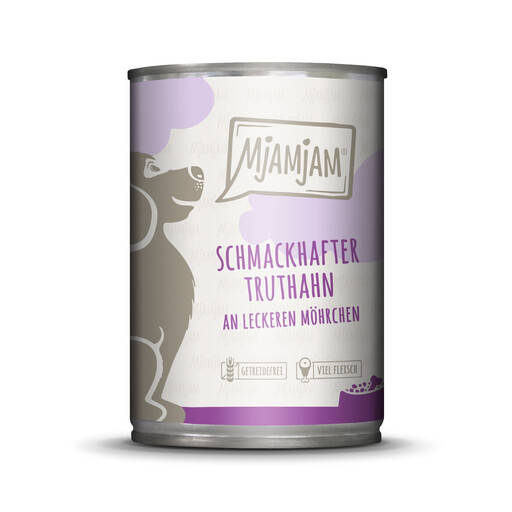
Why this product suits this profile : At 400 g, this size suits households that regularly serve wet food and are looking for a single-protein recipe for their adult dog.
The product information clearly distinguishes portions by weight and states that it can be kept in the fridge for up to 24 hours after opening.
66% turkey, including heart, liver and stomach ; a recipe described as grain-free, gluten-free, lactose-free, with no added sugars or synthetic preservatives.
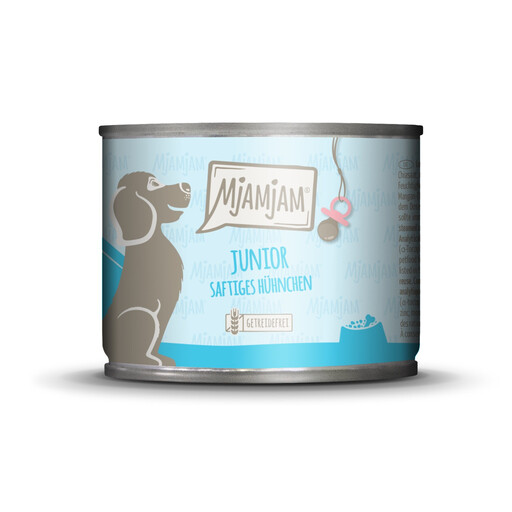
Why this product suits this profile : This product supports puppies during growth, while its 200 g size is easy to divide into several meals.
The target age, calcium and phosphorus levels, and weight-based feeding guidelines are all stated, rather than relying on a simple growth-related claim.
66% chicken, 4% egg, a grain- and gluten-free recipe, and a complete-food designation for puppies.
We have brought together a comprehensive selection, updated in real time, of products that meet these strict criteria and European safety requirements.
To help prevent digestive problems, introduce any new wet food for sensitive dogs gradually over several days. Mix a small amount of the new recipe with the old one, then gradually increase the proportion according to your dog’s tolerance. If symptoms persist or your dog is following a prescribed diet, ask your vet for advice.
Weigh your dog regularly and adjust the portion stated on the packaging. If you combine wet food with dry food, remember to reduce the amount of dry food as well. Finally, compare the cost per day rather than the price of the tin : a recipe with a very high water content may require a larger portion.
Yes, provided the packaging clearly states ‘complete food’ for the relevant age and profile. Complementary food must be combined with another nutritional source, in accordance with the manufacturer’s recommendations.
This depends on the brand and pack size. The products featured generally recommend refrigeration and consumption within 24 to 48 hours. Always check the label and use an airtight container.
It can make choosing a protein source easier, but it is not a substitute for diagnosis or treatment. Check the full ingredients list, introduce the recipe gradually and ask your vet for advice if your dog has ongoing sensitivities.