
Livraison le jour même ou le lendemain

Qualité garantie

Débloquez vos offres de bienvenue: Livraison GRATUITE | Jusqu'à -80 % | 30 jours d'essai gratuits à JoyPlus
Téléchargez l'application
Choosing wet dog food is not simply a matter of picking a recipe your companion enjoys. Between claims such as “high in meat”, “grain-free”, “organic” and “natural”, some information is highlighted while other details are much harder to find. A recipe may therefore look appealing without necessarily being suitable for your dog’s age, size or dietary needs.
Here are the criteria to consider before buying a tin of dog food, tray, terrine or pouch of wet dog food.
The wording “complete food” means that the product is designed to make up a dog’s daily ration, provided you follow the feeding guidelines shown on the packaging. By contrast, complementary food — such as certain bites or treats — cannot replace regular meals.
The MeatyWay chicken and banana product, for example, is described as a complementary food. It can be added to a meal or used as a reward, but it does not replace complete wet food for adult dogs.
A “chicken” recipe does not necessarily contain a large amount of chicken. To find out what it really contains, check the detailed composition and see whether the stated percentage refers to chicken alone, all the meat or the category “meat and animal derivatives”.
Some CESAR terrines, for example, give a general category combining meat and animal derivatives, then detail the proportion of chicken, beef or turkey. This presentation should not be confused with that of high-meat wet food, whose composition specifies a high proportion of meat and offal.
Grain-free wet dog food may suit a particular preference regarding ingredients, but this claim alone does not tell you whether the recipe is nutritionally balanced. Also check the protein, fat and fibre levels, moisture content and the wording “complete food”.
Any change of diet should also be made gradually over several days to help minimise digestive problems caused by a sudden transition.
Ingredients are generally listed in descending order by weight. When comparing several types of wet dog food, pay particular attention to:
Single-protein recipes may appeal to owners who want to limit the number of animal protein sources in their dog’s bowl. However, they are not a diagnosis or veterinary recommendation in cases of food sensitivity.
Wet dog food often contains a great deal of water. Nutritional values must therefore be read in context: the figures shown for dry food cannot be compared directly with those for wet food.
For guidance, Edgard & Cooper chicken and turkey wet food contains 9 % protein, 5 % fat and 82 % moisture, according to the information provided for the product. The MjAMjAM chicken and carrot recipe lists 10.1 % protein, 6.5 % fat and 79 % moisture. These figures make it possible to compare recipes objectively, but they do not establish an overall ranking.
For a small dog, wet food for small dogs packaged in 100 g portions helps to minimise leftovers. Large 390 or 400 g tins are more suitable for households serving several meals or living with several dogs.
After opening, most products should be stored in the fridge and consumed within the period stated by the brand, generally 24 to 48 hours. Serve wet food at room temperature and always make sure your dog has access to fresh water.
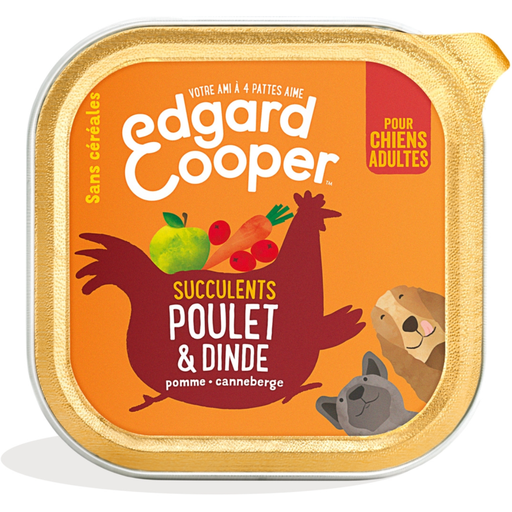
Why this choice suits this profile : The individual 100 g portions make it easy to introduce wet food gradually, vary meals and minimise leftovers for a small or medium-sized adult dog.
The composition clearly distinguishes 30 % chicken and 26 % turkey. The recipe is advertised as grain-free, with no added sugars or artificial additives.
A stated 56 % chicken and turkey content, with carrot, cranberry, tomato, pumpkin and apple. The recipe is also available as a pack of 18 100 g trays.
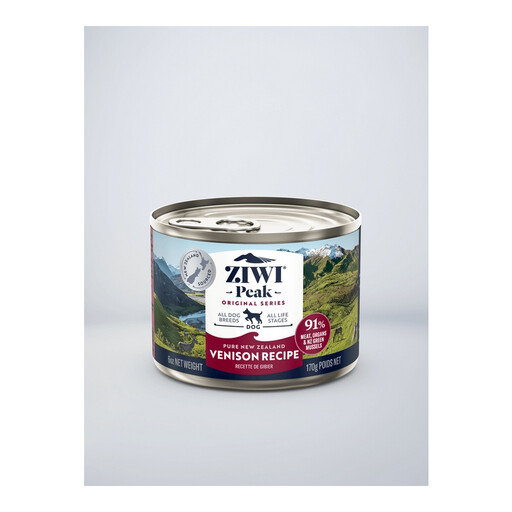
Why this choice suits this profile : Its 170 g format is suitable for owners looking for a single-protein recipe and wanting precise control over portions.
The product information presents venison as the main source of protein and states that it contains 92 % meat, offal and bone. Always check the label on the packaging you receive.
A grain-free recipe containing at least 10 % crude protein, including New Zealand green-lipped mussel.
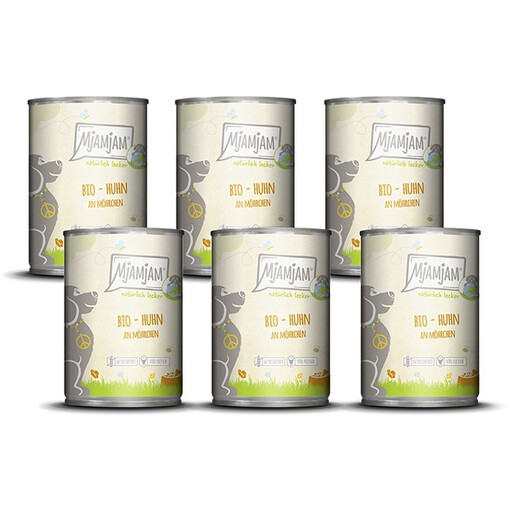
Why this choice suits this profile : The pack of six 400 g tins is suitable for regular feeding, particularly in a household with a medium or large dog.
The product information describes it as complete, organic, grain-free and free from added sugars. The composition specifies 67 % organic chicken, including offal.
The recipe contains 10.1 % protein and 6.5 % fat. Once opened, the tin can be stored in the fridge for up to 24 hours.
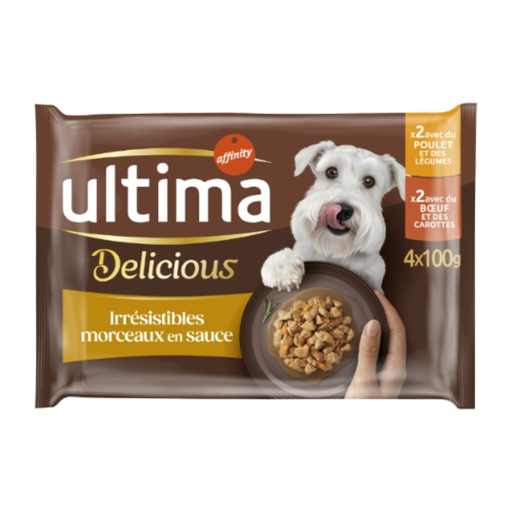
Why this choice suits this profile : The small pieces and 100 g pouches are designed for adult dogs weighing less than 10 kg. They also make it easier to serve two meals a day.
The age and size category is clearly stated. The product information also gives daily quantities according to weight and distinguishes between feeding wet food alone and a mixed ration.
Two recipes are available: chicken with vegetables and beef with carrots, each containing a stated 35 % meat and animal derivatives.
We have put together a complete, real-time updated list of products that meet these demanding selection criteria and European safety regulations.
The amount depends on your dog’s weight, age, activity level and the recipe’s energy density. Start by following the feeding table on the packaging, then gradually adjust portions according to your dog’s body condition. If feeding a mixed diet, reduce the amount of wet food accordingly.
Transfer leftovers to an airtight container and store them in the fridge. Depending on the product, wet food should generally be consumed within 24 to 48 hours. Always follow the storage period stated on the label of the product concerned.
A grain-free recipe may meet certain selection criteria, but this claim alone is not enough to determine whether your dog will tolerate it well. Check the full ingredients list, avoid making repeated food changes and consult a vet if a reaction persists or if your dog has specific dietary needs.