
Livraison le jour même ou le lendemain

Qualité garantie

Débloquez vos offres de bienvenue: Livraison GRATUITE | Jusqu'à -80 % | 30 jours d'essai gratuits à JoyPlus
Téléchargez l'application
Choosing the right food for your dog is a crucial decision. Faced with an overwhelming number of wet dog food options on the shelf, it can be difficult to navigate. You want the best for your companion—healthy, suitable nutrition—but deciphering labels often feels like a puzzle.
This guide is here to help you make an informed choice. We will break down the compositions, give you objective selection criteria, and present our favorite products, all of which meet a very rigorous set of standards.
By the Joybuy editorial team, July 10, 2026
Before diving into our selection, let's review the key points for identifying a quality wet dog food.
Your first step: scrutinize the ingredient list. A quality natural wet dog food must list a clearly identified source of animal protein as the first ingredient (e.g., "chicken," "lamb"), not vague terms like "meat and animal by-products."
Opt for short ingredient lists with components you could almost find in your own kitchen: real meat, vegetables, fruits, and high-quality oils. The absence of artificial colors, flavors, and synthetic preservatives is, of course, an excellent sign.
Because every dog is unique, so are its needs. Understanding this jargon will help you find the perfect formula:
Wet food comes in various formats: cans, individual trays, or fresh-pack pouches. If you have multiple dogs or a large breed, buying a bulk pack of wet dog food is often a more economical and practical solution.
A crucial point: always check the storage instructions after opening. Most wet foods should be refrigerated and consumed within 48 to 72 hours to ensure optimal freshness and food safety.
We have selected products that stand out for their transparent compositions and nutritional value.
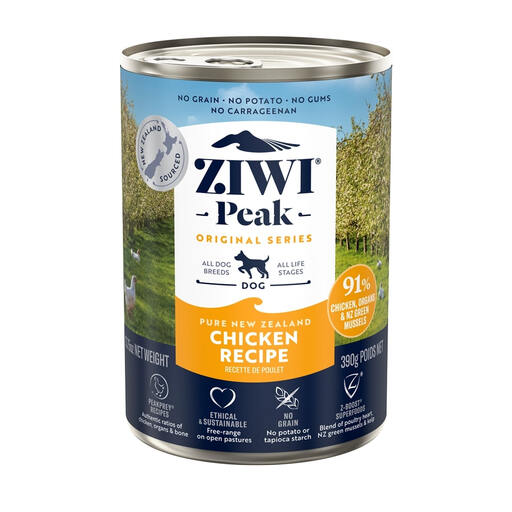
The highlights Ziwi Peak focuses on a single-protein approach with chicken as the star ingredient. The composition includes high-quality organ meats (liver, heart, gizzards) and New Zealand green mussels for a natural supply of essential nutrients. The result is a complete and balanced food that closely mimics a natural, meat-based diet.
Advantages
Who is it for? For owners seeking a very high-protein diet and for dogs sensitive to meats other than chicken.
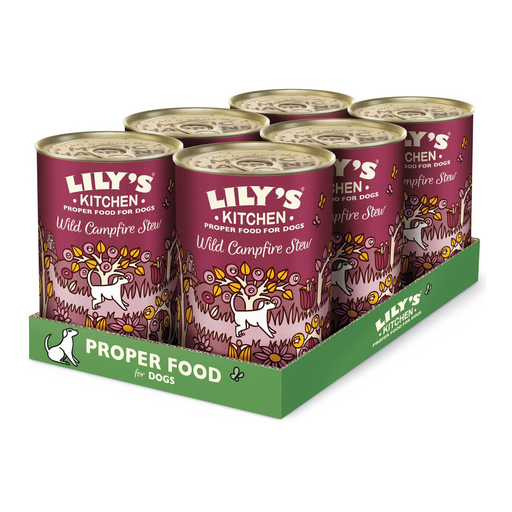
The highlights This recipe from Lily's Kitchen combines novel proteins (venison, quail, salmon) in a grain-free formula. It is enriched with vegetables, fruits, and botanical herbs for a complete and varied nutritional profile. The salmon and linseed oil ensure an excellent supply of omega-3 fatty acids.
Advantages
Who is it for? For adult dogs (from 4 months) whose owners want to add variety with a natural, grain-free diet.
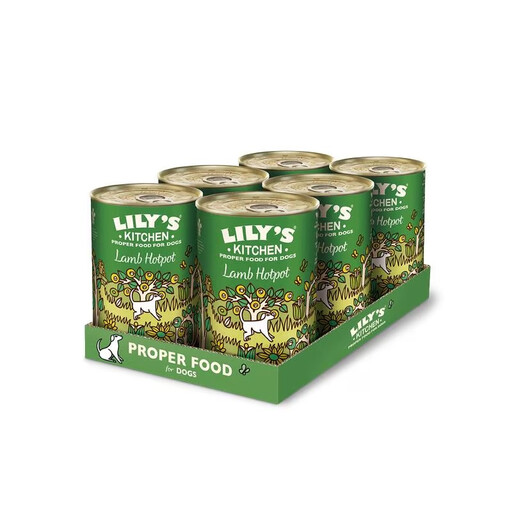
The highlights This option from Lily's Kitchen is an excellent hypoallergenic and single-protein wet food, with 60% fresh lamb. It is supplemented with organic ingredients like pumpkin, apple, and brown rice. Its recipe, which is especially gentle on the stomach, is guaranteed free of wheat, corn, and soy.
Advantages
Who is it for? Ideal for dogs with sensitive digestion or known allergies, and for owners who prioritize organic ingredients.
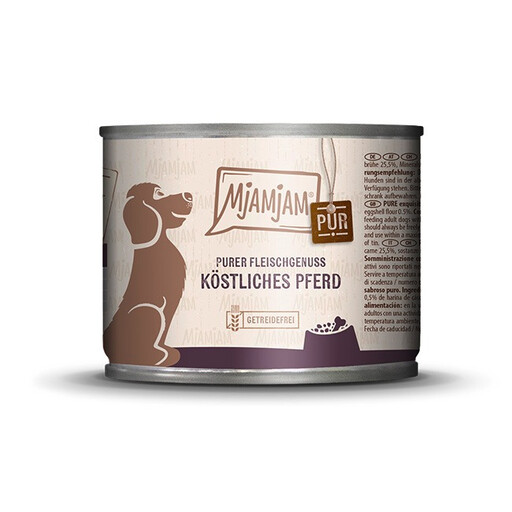
The highlights MjAMjAM gets straight to the point with its "pure meat" recipe containing 73% horse meat. As horse is a novel protein, it's a prime choice for the most sensitive or polyallergic dogs. The formula is ultra-simple: meat, cooking broth, minerals, and eggshell powder. That's it. No grains, sugar, or artificial preservatives.
Advantages
Who is it for? A must-have for dogs suffering from multiple allergies who need the simplest and most digestible diet possible.
Does your companion have particular tastes or very specific needs? Finding the perfect bowl sometimes requires a little exploration. Every dog is unique, after all!
To explore a wider selection of wet food, kibble, and treats, feel free to browse our complete pet supply department.
Discover Our Entire Pet Product Range
The main difference is their moisture content. Wet dog food, or p?té, contains about 70-80% water. This is a real plus for hydration and often makes it irresistible to their taste buds. Kibble, on the other hand, contains only about 10% water. It is convenient to store and contributes to oral health through the mechanical action of chewing. Mixed feeding is often the ideal compromise to get the best of both worlds.
To avoid any digestive upset, a gradual transition is essential. Over 7 to 10 days, progressively incorporate the new food into their old diet. Start with a ratio of 25% new food to 75% old, then move to 50/50, then 75/25, before reaching 100% of the new formula.
Absolutely, provided it is a "complete food" (the label must be on the packaging). A complete food is specifically formulated to cover 100% of your dog's daily nutritional needs. If you opt for a 100% wet diet, be sure to closely monitor their oral hygiene (regular brushing, dental chews, etc.). The soft texture of wet food does not have the abrasive effect on tartar that kibble does.