
Livraison le jour même ou le lendemain

Qualité garantie

Débloquez vos offres de bienvenue: Livraison GRATUITE | Jusqu'à -80 % | 30 jours d'essai gratuits à JoyPlus
Téléchargez l'application
Choosing wet cat food is about more than simply picking the flavour your pet seems to prefer. Between pâté, pouches, mousses, bites in gravy, soups and liquid treats, differences in ingredients and intended use can have a significant impact on both your budget and your cat’s nutritional balance.
Two mistakes are particularly common. The first is confusing a complete food with a complementary food: a soup or lickable treat can accompany a meal, but is not intended to replace it. The second is relying solely on the picture of tuna, chicken or meat on the packaging without checking the actual proportion stated in the ingredients.
The legal designation should come before everything else. Complete wet food for adult cats is formulated to form the basis of your cat’s diet, provided you follow the feeding recommendations on the packaging. By contrast, complementary cat food is better suited to use as a reward, an occasional extra or a small addition.
Sheba fillets, soups and liquid treats are specifically described as complementary foods in their feeding instructions. They can add variety in terms of texture and contribute to your cat’s fluid intake, but should not routinely replace complete meals.
European regulations require the percentage of certain highlighted ingredients to be stated on the packaging. So a ‘tuna and chicken cat food’ recipe may contain 4% tuna and 4% chicken, with the remainder made up of other animal-derived ingredients, minerals or texturising agents.
It is therefore better to check the full ingredients list, analytical constituents and legal designation rather than relying solely on the picture or product name.
A large pack of cat food is convenient and can help prevent you from running out. However, it becomes poor value if your pet turns its nose up at a particular texture or flavour. For your first order, a small selection of mousses, bites in gravy and pouches will help you identify your cat’s preferences without building up a supply of unused products.
Look for the descriptions ‘complete food for adult cats’ or ‘complementary food’. This distinction should determine how often the product is served.
Wet food generally contains considerably more water than dry food. Depending on the recipe, the products featured here contain between 77.5% and 93% moisture. A cat soup or lickable treat may therefore have a very liquid texture, but you should also take into account its low protein content or its status as a complementary food.
Also check the percentages of protein, fat, ash and fibre. These figures make it possible to compare products in the same category objectively, without turning a nutritional figure into a health claim.
40 g or 85 g pouches make portioning easier and help minimise leftovers. Once opened, products should generally be stored in the fridge and consumed within the period specified by the manufacturer: often 24 hours for soups and liquid treats, or up to two days for some trays and pouches.
Serve the food at room temperature and always make sure fresh water is available. If your cat is sensitive to changes, introduce new recipes gradually.
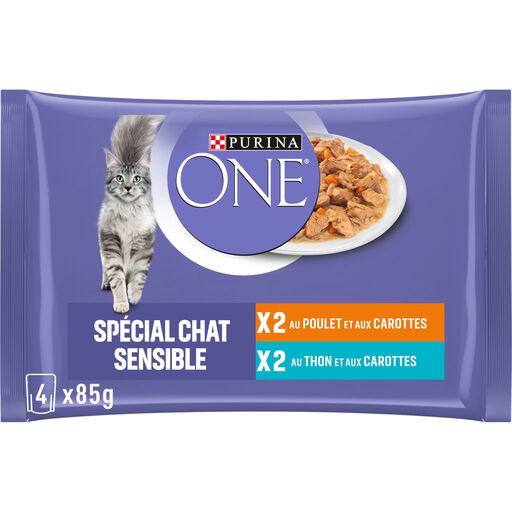
Why this choice suits this profile : This small pack lets you try two flavours in individual portions before moving on to a larger pack.
This is a complete food for adult cats, rather than a simple treat or liquid supplement.
Four 85 g pouches, two flavours, 78% moisture and 12.5% analytical protein.
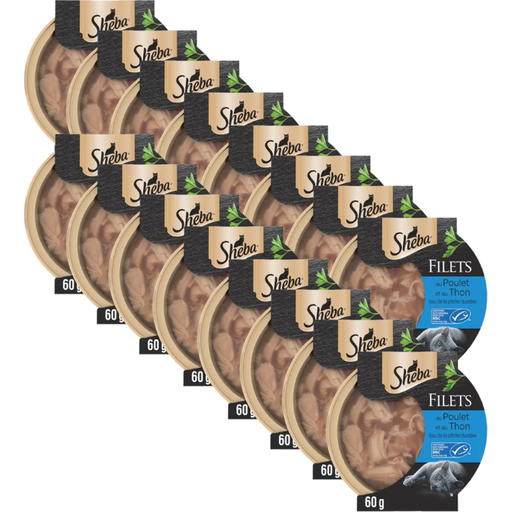
Why this choice suits this profile : Chicken and tuna fillets served in a light sauce will appeal to anyone looking for variety and an elegant presentation.
Its status as a complementary food is clearly stated, so it cannot be mistaken for a main meal.
Sixteen 60 g portions, 35% chicken fillets, 4% tuna fillets and 84% moisture.
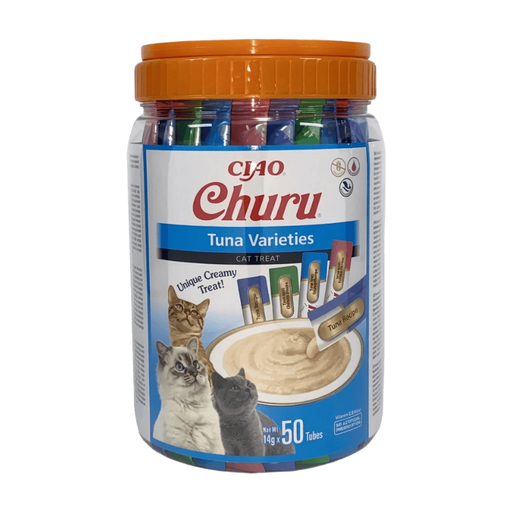
Why this choice suits this profile : This large pack is ideal for households that regularly use a liquid treat as a reward or topping.
The listing describes it as a complementary food and recommends one to two portions a day, helping you keep quantities under control.
50 portions, 91% moisture, 10% analytical protein and suitable for serving alone or as a topping.
We have put together a complete, real-time selection of products that meet these demanding criteria and the requirements of European safety regulations.
Yes, provided it is described as a complete food and the daily ration is adjusted to your cat’s weight, age and activity level. However, soup, liquid treats and some fillets in gravy remain complementary foods.
Place any leftovers in the fridge and follow the manufacturer’s instructions. Soups and liquid treats often need to be consumed within 24 hours, while some portions of pâté or fillets can be kept for up to two days. Remember to serve them at room temperature afterwards.
A multipack can reduce the price per portion and make shopping easier, but only if the recipes are actually eaten. Before ordering, compare the price per kilogram, whether the product is complete or complementary, and the weight of each portion.