
Livraison le jour même ou le lendemain

Qualité garantie

Débloquez vos offres de bienvenue: Livraison GRATUITE | Jusqu'à -80 % | 30 jours d'essai gratuits à JoyPlus
Téléchargez l'application
Choosing a wet cat food for adult cats isn’t just about picking the prettiest tin or your pet’s favourite recipe. Between so-called ‘gourmet’ preparations, bulk packs and nutritional promises, certain details can quickly push up the bill or make daily life more complicated.
Three common pitfalls keep cropping up:
Here are the main criteria to consider before choosing a wet cat food, followed by a selection of formats suited to different needs.
For everyday meals, look on the packaging for the phrase ‘complete food for adult cats’, or an equivalent statement. This means the product is designed to make up the cat’s daily ration, in line with the manufacturer’s recommendations.
In contrast, a complementary wet cat food, such as certain soups, should be offered alongside a complete food, not instead of it. The Sheba Soup Tuna & Chicken Fillet product, for example, is described as a complementary liquid preparation to be served as an extra, at a rate of one sachet per day.
The daily ration depends on the cat’s weight, age, activity level and whether it has been neutered. The guidelines on the packaging provide a starting point, but should be adjusted according to the animal’s physical condition.
A recipe that highlights a particular meat or fish doesn’t necessarily mean that ingredient makes up the bulk of the formula. In several products marketed as ‘with chicken’, ‘with rabbit’ or ‘with tuna’, the star ingredient accounts for just 4% of the recipe.
That doesn’t automatically make the product unsuitable, but it does allow you to compare different options on a more objective basis. In particular, look at:
Analytical values can’t be compared without taking the moisture content into account. Wet food often contains more than 75% water: two recipes showing different protein levels may therefore need a closer look.
Wet cat food in sachets makes it easy to serve a fresh portion and cuts down on leftovers. The 50 g sizes are ideal for cats that eat little at each meal, or for households that like to vary the recipes without having to store an opened portion.
The 85 g sachets are a common size, suitable for one meal or part of the daily ration. Wet cat food in tins can be a good option for stocking up, as with the 85 g Gourmet Gold tins. On the downside, each opened tin must be kept in the fridge and used within the recommended time.
Serve wet food at room temperature and always leave fresh water available. After opening, follow the manufacturer’s instructions: depending on the product, fridge storage is usually limited to 24 or 48 hours.
The products below are compared according to their format, texture, variety range and the nutritional information provided on their product page. They are not a substitute for veterinary advice in the case of a specific diet or health issue.
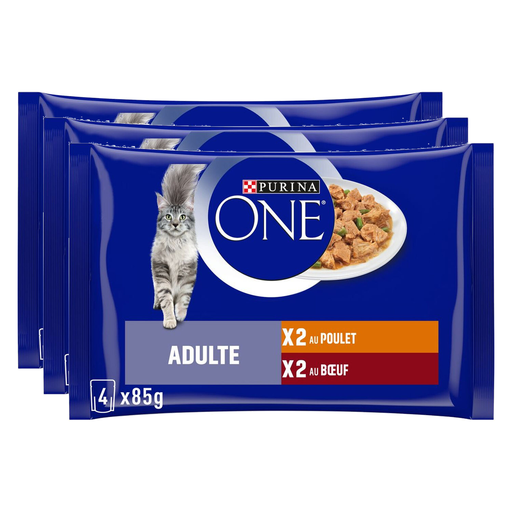
Why this choice suits this profile: This pack of 12 x 85 g sachets lets you start without building up too large a stock, with two recipes based on chicken and beef.
The product page presents it as a complete food for adult cats and details the percentages of chicken, beef and vegetables according to the recipes.
12 x 85 g sachets, 12% crude protein and separate recommendations for an all-wet or mixed diet.
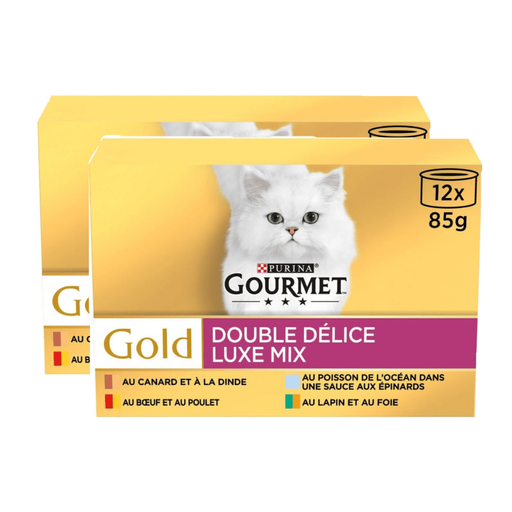
Why this choice suits this profile: Its dual-texture recipes and assortment of 24 tins are aimed at households looking for more variety at each meal.
The ingredients and analytical constituents are listed for the different recipes, rather than relying solely on a texture promise.
24 x 85 g tins, four flavour combinations and 10% crude protein according to the product page data.
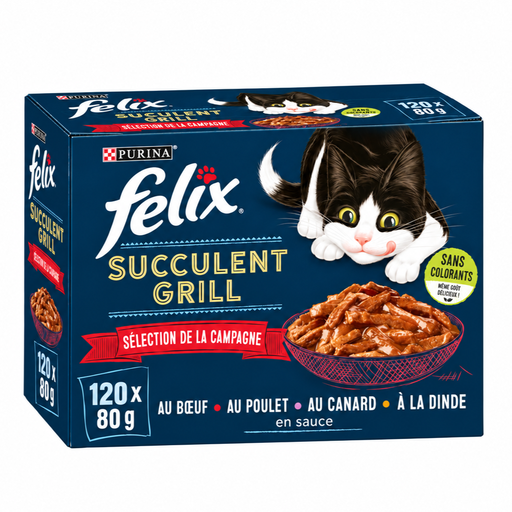
Why this choice suits this profile: This large pack of 120 sachets is ideal for households that regularly feed wet food and want to space out their orders.
The four varieties are clearly detailed and the product is described as a complete food for adult cats, not just a treat.
120 x 85 g sachets, with beef, chicken, duck and turkey recipes, plus 9% crude protein stated.
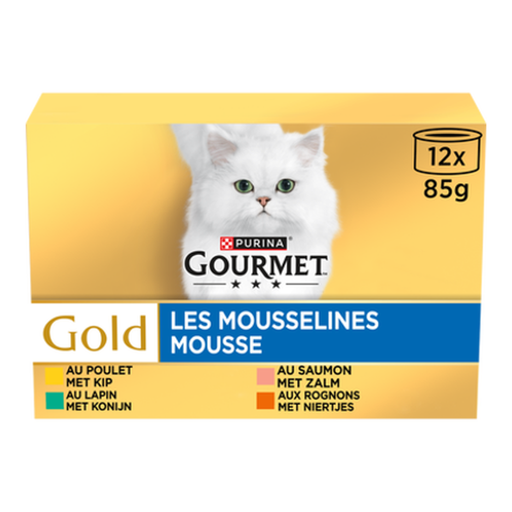
Why this choice suits this profile: Its mousse texture is ideal for cats that turn their noses up at chunks or shredded pieces in sauce, while letting you try several flavours.
This trial pack of 12 tins limits the risk of building up a large stock before checking whether your cat accepts the texture.
A smooth mousse, four varieties and a complete food for adult cats label on the product page.
We’ve put together a full, real-time updated list of products that meet these exacting criteria and European safety regulations.
The amount depends on the cat’s weight, activity level and the recipe. As a guide, several products packed in 85 g sachets recommend around 2 to 3 sachets per day for a 4 kg cat. Follow the table on the packaging and reduce the portion if your cat also eats dry food.
It all depends on the price per kilo, the number of portions and any current promotions. To compare different packs of wet cat food, divide the total price by the net weight. Also consider potential waste: 50 g sachets can help reduce leftovers, while a large pack of tins may bring the unit price down if your cat eats all the recipes.
Put the remaining portion in the fridge and stick to the time limit given by the brand, usually between 24 and 48 hours. Then serve the wet food at room temperature. A bulging tin, a damaged sachet or an unusual smell are good reasons not to use the product.